Group · Fruit
Banana
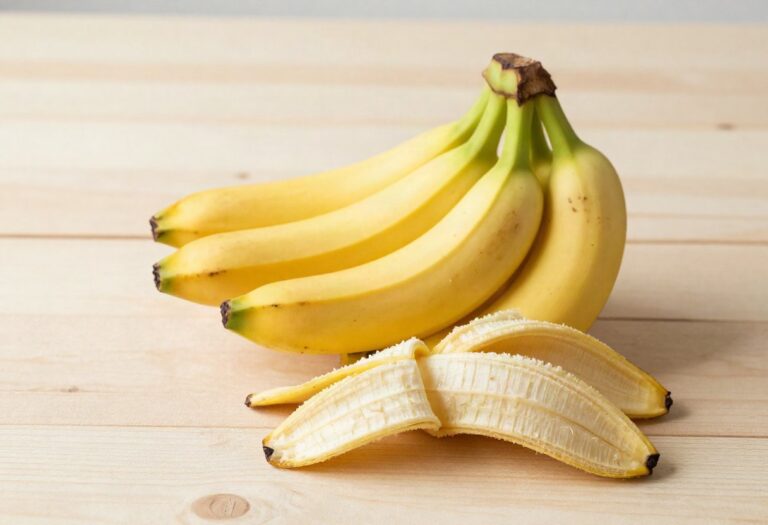
The banana is one of the most widely eaten fruits in the world, valued for its convenience, its sweetness and its readily available energy. Grown in the tropics, it comes in several varieties: the classic Cavendish, the small, sweet lady finger banana, and the cooking banana, or plantain. With around 87.6 kcal per 100 g, it provides 19.7 g of carbohydrate, 2.7 g of fibre and just 0.3 g of fat. Rich in potassium and vitamin B6, it fits well into a balanced diet, at breakfast or as a snack. Its creamy texture and naturally sweet taste make it a versatile fruit, in sweet and savoury cooking alike.
Macronutrient breakdown
Nutrition table per 100 g
| Calories | 88 kcal |
| Kilojoules | 371 kJ |
| Protein | 1,1 g |
| Carbohydrate | 19,7 g |
| Fat | 0,3 g |
| Fibre | 2,7 g |
Micronutrients per 100 g
All measured nutrients, ranked by share of the daily reference intake.
- Manganese0,36 mg18 %
- Potassium320 mg16 %
- Vitamin B60,18 mg13 %
- Vitamin C7,16 mg9 %
- Magnesium28 mg7 %
- Copper0,06 mg6 %
- Vitamin B50,31 mg5 %
- Vitamin B10,05 mg5 %
- Vitamin B9dietary folate equivalents19 µg
See the other 7 nutrients
- Phosphorus29 mg4 %
- Vitamin B30,39 mg2 %
- Iron0,2 mg1 %
- Zinc0,14 mg1 %
- Total omega-30,03 g1 %
- Calcium5,1 mg1 %
- Vitamin A2,38 µg0 %
ANSES Ciqual 2025 (French food composition table). Source: Anses, 2025, Ciqual food composition table
Tips
There are countless ways to enjoy a banana: on its own, sliced over porridge, mashed into a homemade compote, blended into a smoothie or frozen and whipped into « nice cream ». The riper it gets, the more simple sugars it contains and the higher its glycaemic index: a fully yellow banana is sweeter and easier to digest, while a slightly green one, richer in resistant starch, keeps you fuller for longer. To store it, keep it at room temperature and separate it from the bunch to slow down ripening.
On the nutrition side, the banana is an excellent source of potassium, and also provides magnesium, vitamin B6 and vitamin C. Its fibre supports healthy digestion and helps you feel full. It combines energy-giving carbohydrate with valuable micronutrients, which makes it ideal for an active lifestyle.
For active people, the banana is a great choice. Before exercise, it provides quickly absorbed carbohydrate without feeling heavy. After training, it helps restore glycogen stores, and its potassium supports fluid and mineral balance. Pair it with a source of protein, such as yoghurt, quark or a protein shake, to support recovery.
- Breakfast: sliced over oats or on wholemeal toast with a little nut butter.
- Snack: on its own, easy to carry, perfect for an energy dip.
- Light dessert: frozen and blended into an ice cream with no added sugar.
- Baking: in pancakes, muffins or banana bread.
If you are watching your weight, the banana is moderately calorific but contains more sugar than most watery fruits. A medium banana weighs around 120 g, or about 105 kcal. One or two a day fit easily into a balanced diet, as long as you vary them with other fruits such as apples or low-sugar berries. Eaten in moderation, the banana remains a natural, filling and wholesome snack.
The benefits of bananas
Thanks to its potassium (around 400 mg per fruit), fibre and antioxidants, the banana supports heart health: potassium helps balance sodium and regulate blood pressure. Its soluble fibre (pectin) promotes regular digestion and feeds the gut microbiota. As a natural source of carbohydrate, it is ideal before or after exercise to top up glycogen and limit muscle fatigue.
How to choose and store bananas
Choose firm, bright yellow fruit with a few small brown spots, a sign of peak ripeness. Keep them at room temperature if you will eat them soon, or in the fridge to slow down ripening: the skin turns black but the flesh stays good for several days. You can also freeze slices for smoothies or a quick homemade ice cream.
Do bananas make you put on weight?
No: at around 90 to 105 kcal, a banana is comparable to other fresh fruit. Its fibre is filling and helps curb snacking, which makes it an ally of a balanced diet rather than an obstacle. Its glycaemic index remains moderate, especially when eaten with protein or healthy fats. Only people with an allergy (sometimes linked to latex) or those on treatment for kidney disease or blood pressure, because of the potassium, should ask a health professional for advice.