Group · Starchy foods
Quinoa
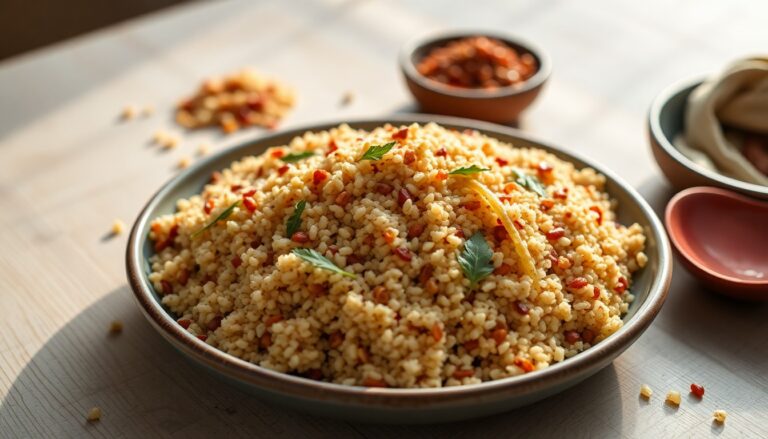
Quinoa is a small seed from the Andes, often grouped with starchy foods because of its carbohydrate profile, even though botanically it is a pseudo-cereal. It comes in several forms: white, red, black or a tricolour mix, as well as flakes and flour. Naturally gluten-free, it wins people over with its slightly crunchy texture and subtle nutty flavour. Cooked, it contains around 149 kcal per 100 g, with 5 g of protein, 27.9 g of carbohydrates, 1.1 g of fat and 3.8 g of fibre. Popular with active people and anyone who pays attention to their diet, it has its place on a balanced, varied plate.
Macronutrient breakdown
Nutrition table per 100 g
| Calories | 149 kcal |
| Kilojoules | 631 kJ |
| Protein | 5 g |
| Carbohydrate | 27,9 g |
| Fat | 1,1 g |
| Fibre | 3,8 g |
Micronutrients per 100 g
All measured nutrients, ranked by share of the daily reference intake.
- Manganese0,7 mg35 %
- Phosphorus180 mg26 %
- Copper0,21 mg21 %
- Magnesium71 mg19 %
- Vitamin B10,14 mg13 %
- Zinc1,2 mg12 %
- Iron1,6 mg11 %
- Potassium220 mg11 %
- Vitamin B9dietary folate equivalents49,9 µg
See the other 10 nutrients
- Vitamin B50,61 mg10 %
- Vitamin E0,88 mg7 %
- Vitamin B60,09 mg6 %
- Omega-6 LA0,49 g5 %
- Total omega-30,09 g4 %
- Omega-3 ALA0,07 g4 %
- Calcium23 mg3 %
- Vitamin B30,2 mg1 %
- Vitamin B20,01 mg1 %
- Vitamin A0,21 µg0 %
Anses Ciqual 2025. Source: Anses, 2025, Ciqual food composition table
Tips
Quinoa lends itself to countless dishes, from hot meals to fresh salads. Before cooking, rinse it thoroughly in clean water to remove the saponin, the thin coating with a bitter taste. Then allow about two volumes of water to one volume of seeds, and simmer for around ten minutes until the little spiral germ appears. A reasonable portion is around 60 to 80 g raw per person.
- In a salad: with crunchy vegetables, fresh herbs, a drizzle of olive oil and lemon.
- As a side: instead of rice or pasta, with pan-fried seasonal vegetables.
- At breakfast: as a sweet porridge with fruit and a little plant-based milk.
In terms of nutrition facts, quinoa stands out for its relatively complete plant protein and its high fibre, magnesium, iron and manganese content. Its moderate glycaemic index makes it a useful carbohydrate for keeping your energy steady without a sharp spike. Naturally gluten-free, it is a good option if you want to vary your starchy foods, as our feature on understanding and managing gluten intolerance points out. To explore other alternatives, take a look at buckwheat or millet, which are also gluten-free.
For active people: quinoa combines complex carbohydrates and protein, which makes it a top choice after exercise to replenish glycogen stores and support muscle recovery. You can include it in a post-workout meal, with a lean source of protein and vegetables. When bulking, it easily tops up your energy intake without feeling heavy. To find out more about planning your meals, read our guidelines on fitness nutrition.
Weight control: at 149 kcal per 100 g cooked, quinoa has a reasonable calorie density, but watch your portions and rich sauces, which quickly push the total up. Choose gentle cooking and light seasonings. You will find all the calories and useful comparisons in our food calorie table, and more ideas in the starchy foods family. As for storage, cooked quinoa keeps for two to three days in the fridge, ideal for batch cooking.