Group · Noix & Graines
Walnuts
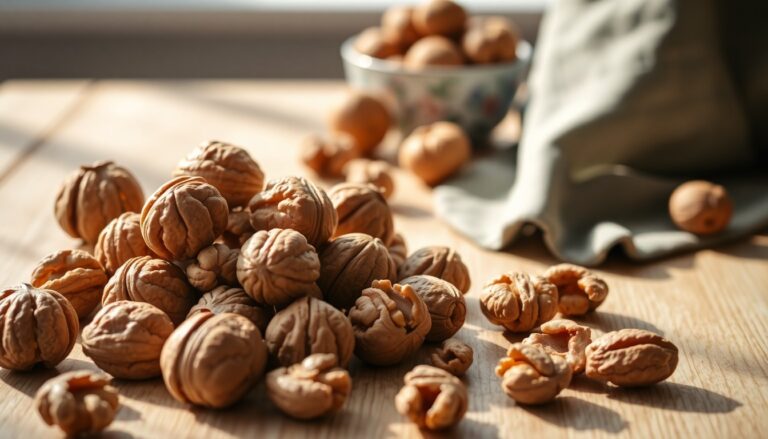
The walnut is the nut of the walnut tree, recognisable by its two-lobed kernel enclosed in a hard shell. Eaten since ancient times, it comes in several varieties (Franquette, Mayette, Lara) and can be found fresh in autumn or dried all year round. Rich in healthy fats, notably plant-based omega-3, it also provides protein, fibre and useful minerals. With around 709 kcal per 100 g, it is a dense food best enjoyed in small amounts. Walnuts fit naturally into a balanced diet, as a snack, in salads or in baking. They are a classic among nuts, popular with food lovers and people who exercise alike.
Macronutrient breakdown
Nutrition table per 100 g
| Calories | 709 kcal |
| Kilojoules | 2930 kJ |
| Protein | 15,7 g |
| Carbohydrate | 6,9 g |
| Fat | 67,3 g |
| Fibre | 6,7 g |
Micronutrients per 100 g
All measured nutrients, ranked by share of the daily reference intake.
- Omega-3 ALA7,5 g375 %
- Omega-6 LA36,1 g361 %
- Total omega-37,52 g301 %
- Manganese2,9 mg145 %
- Copper1,1 mg110 %
- Phosphorus360 mg51 %
- Magnesium140 mg37 %
- Vitamin B10,3 mg27 %
- Vitamin B9dietary folate equivalents120 µg
See the other 12 nutrients
- Zinc2,7 mg27 %
- Potassium430 mg22 %
- Iron2,2 mg16 %
- Vitamin E1,67 mg14 %
- Vitamin B60,19 mg14 %
- Vitamin B50,67 mg11 %
- Calcium75 mg9 %
- Vitamin B20,05 mg4 %
- Vitamin K12,4 µg3 %
- Vitamin B30,4 mg3 %
- Vitamin C0,77 mg1 %
- Vitamin A1,73 µg0 %
Anses Ciqual 2025. Source: Anses, 2025, Ciqual food composition table
Tips
The walnut is a concentrated source of energy: its nutrition facts show 67.3 g of fat, 15.7 g of protein and 6.88 g of carbohydrate per 100 g. The recommended portion is around a small handful, or 25 to 30 g, which is 4 to 6 kernels. This amount already provides a good dose of omega-3 (alpha-linolenic acid), magnesium, copper, manganese and vitamin E, which has antioxidant properties.
In the kitchen, walnuts work in all sorts of dishes: crushed over a lamb’s lettuce and goat’s cheese salad, added to muesli or yoghurt, or used in a loaf cake, a pesto or a sauce. They go well with cheese, apples, pears or chicory. Eat them raw or very lightly toasted to protect their delicate fatty acids, in line with the principles of gentle cooking. Keep shelled kernels somewhere cool in an airtight container to stop them going rancid.
If you exercise, walnuts make a handy, nourishing snack. Before a workout, a few kernels provide lasting energy thanks to their fat and fibre. After training, pair them with fruit or a source of carbohydrate to support recovery. You can also add them to homemade protein snack recipes to top up your intake. For more on balancing your plate when training, see our fitness nutrition guide.
If you are watching your weight, bear in mind the high calorie density of walnuts: all those calories mean they need to be portioned. The good news is that their fibre and fat help you feel full, which helps limit snacking. The weight-loss trick is to count them in your daily energy budget rather than eating them mindlessly in front of a screen.
- Glycaemic index: very low, ideal for steady energy.
- Benefits: rich in omega-3, fibre and minerals.
- Alternate with other nuts such as almonds or hazelnuts.
Want to discover other nuts and seeds to include in your daily diet? Explore the Nuts & Seeds family to put together tasty, balanced snacks.