Group · Starchy foods
Potato
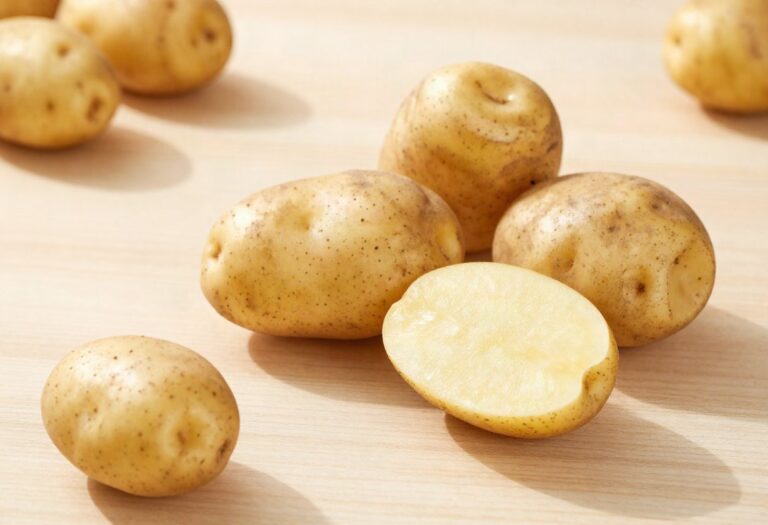
The potato is one of the most widely eaten starchy foods in the world, and for good reason: versatile, inexpensive and filling, it turns up in every cuisine. This tuber comes in many varieties (waxy, such as Charlotte or Ratte, or floury, such as Bintje), each suited to a particular use in the kitchen. With around 91.4 kcal per 100 g, it mainly provides carbohydrates (19 g), little protein (2.5 g) and almost no fat. A natural source of potassium and vitamin C, it is a useful staple in a balanced diet. It all depends on how it is cooked, though: between a steamed potato and chips, the nutrition facts change dramatically.
Macronutrient breakdown
Nutrition table per 100 g
| Calories | 91 kcal |
| Kilojoules | 387 kJ |
| Protein | 2,5 g |
| Carbohydrate | 19 g |
| Fat | 0,2 g |
| Fibre | 2,2 g |
Micronutrients per 100 g
All measured nutrients, ranked by share of the daily reference intake.
- Potassium535 mg27 %
- Vitamin B60,31 mg22 %
- Copper0,12 mg12 %
- Vitamin C9,6 mg12 %
- Manganese0,22 mg11 %
- Phosphorus70 mg10 %
- Vitamin B31,41 mg9 %
- Iron1,08 mg8 %
- Vitamin B9dietary folate equivalents28 µg
See the other 9 nutrients
- Magnesium28 mg7 %
- Vitamin B50,38 mg6 %
- Vitamin B10,06 mg6 %
- Zinc0,36 mg4 %
- Vitamin B20,05 mg3 %
- Vitamin K12 µg3 %
- Calcium15 mg2 %
- Vitamin E0,04 mg0 %
- Vitamin A0,5 µg0 %
Anses Ciqual 2025. Source: Anses, 2025, Ciqual food composition table
Tips
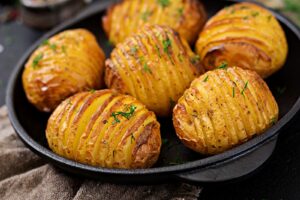
The key to enjoying the benefits of potatoes without piling on the calories is the cooking method. Steamed, boiled or baked in their skins, they stay light and keep most of their nutrients. Fried or sautéed in oil, their calorie density rises sharply. To preserve vitamins and minerals, choose gentle cooking and keep the skin, which is rich in fibre.
- Recommended portion: around 150 to 200 g cooked, the equivalent of one portion of starchy food per meal.
- Storage: in a cool, dry, dark place to prevent them turning green and sprouting.
- Pairings: with green vegetables, a source of lean protein (fish, egg, poultry) and a drizzle of olive oil.
In terms of nutrition facts, the potato is mainly a source of complex carbohydrates (starch), potassium and vitamin C. Its glycaemic index varies with cooking: it is higher when mashed or well cooked, and more moderate when eaten cold (the starch then becomes partly resistant). For variety in both flavour and nutrients, you can alternate with other starchy foods such as baked sweet potato, brown rice or quinoa, which are richer in fibre and micronutrients.
Tips for active people: the potato is an excellent way to replenish your glycogen stores after exercise. Its high carbohydrate and potassium content makes it an ideal option for recovery, especially steamed and paired with a portion of protein. When bulking, it provides easily digestible energy; to find out more, read our guidelines on fitness nutrition.
Weight control: a plain potato is not a high-calorie food in itself, but watch out for rich preparations (chips, gratins, sauté potatoes) and added butter or cream, which quickly push up the total. To stay organised and keep control of your portions, batch cooking is a handy trick. You will find other starchy foods and their detailed nutrient content on the starchy foods family page. Eaten in moderation and cooked well, the potato has its place on a balanced, tasty plate.
If you have diabetes: the glycaemic index of potato ranges from 53 boiled to 86 as instant mash. Full details in our potatoes and diabetes guide.