Foods high in potassium: ranked by real portion
The short answer
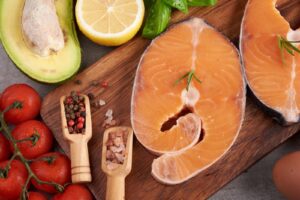
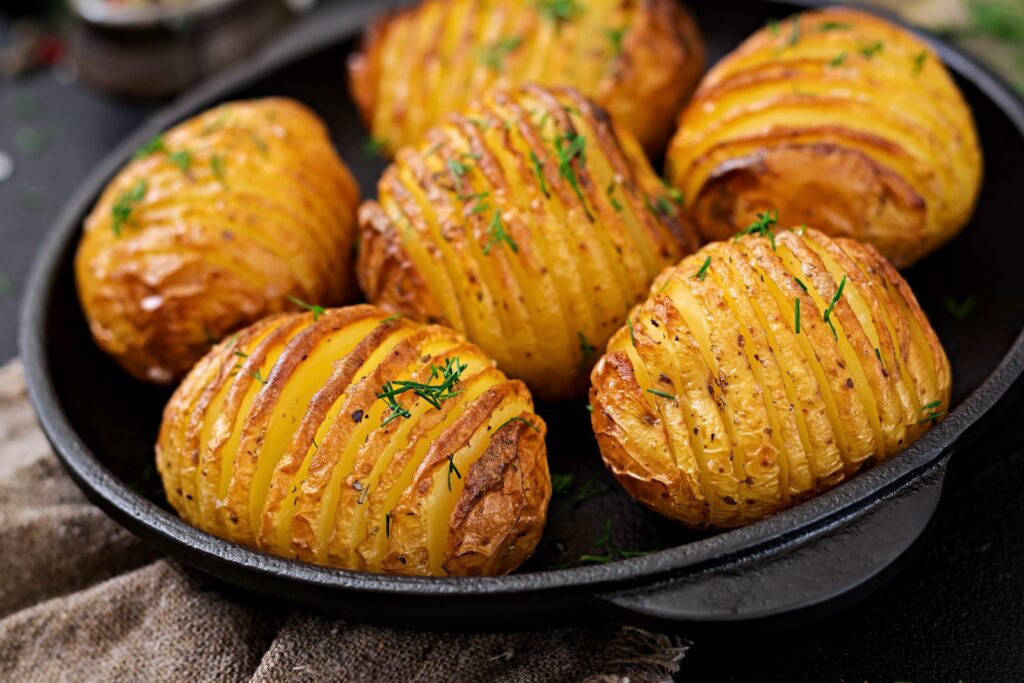
Yam comes top with 1,005 mg of potassium per 150 g portion, or 29% of the 3,500 mg daily reference. Next come horse mackerel (986 mg per 100 g) and baked potato (803 mg). The banana, quoted everywhere, gives you only 384 mg per fruit: a baked potato provides twice as much.
The ranking, sorted by what a portion really provides
Per 100 g, the potassium table is topped by dried parsley (4,490 mg) and cocoa powder (3,900 mg). That’s accurate and useless: you only use a few grams. The ranking below works by typical portion, which pushes tubers, fish and cooked vegetables up the list.
| Food | Portion | Potassium | Share of 3,500 mg | Calories |
|---|---|---|---|---|
| Yam, boiled | 150 g | 1,005 mg | 29% | 164 kcal |
| Horse mackerel | 100 g | 986 mg | 28% | 116 kcal |
| Potato, baked | 150 g | 803 mg | 23% | 137 kcal |
| Parsnip, cooked | 150 g | 765 mg | 22% | 137 kcal |
| White beans (coco), cooked | 150 g | 720 mg | 21% | 195 kcal |
| Pink sea bream | 100 g | 690 mg | 20% | 102 kcal |
| Jerusalem artichoke, cooked | 150 g | 678 mg | 19% | 104 kcal |
| Red kuri (Hokkaido) squash | 150 g | 654 mg | 19% | 84 kcal |
| Avocado | 150 g | 645 mg | 18% | 305 kcal |
| Globe artichoke, cooked | 150 g | 640 mg | 18% | 50 kcal |
| Squid, cooked | 100 g | 637 mg | 18% | 149 kcal |
| Brussels sprouts, cooked | 150 g | 615 mg | 18% | 67 kcal |
| Spinach, cooked | 150 g | 594 mg | 17% | 29 kcal |
| Sweet potato, cooked | 150 g | 530 mg | 15% | 119 kcal |
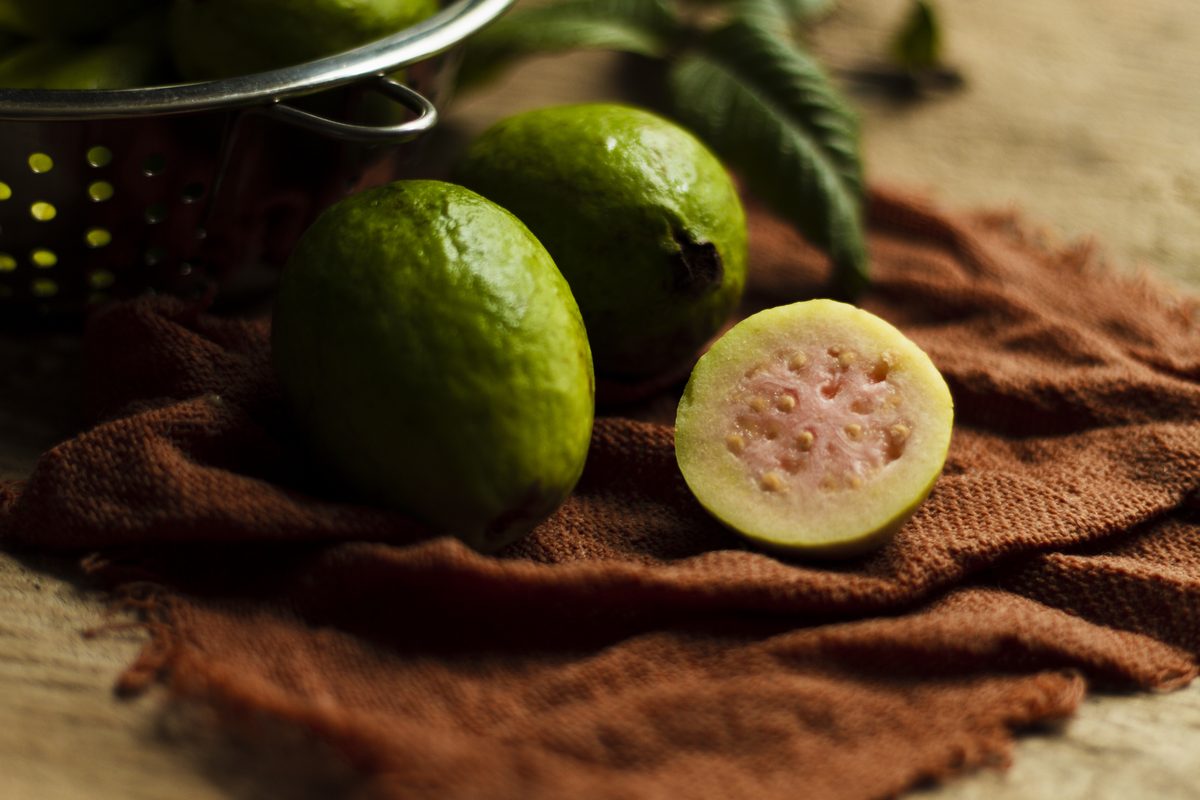
| Guava | 120 g | 500 mg | 14% | 82 kcal |
| Beetroot, cooked | 150 g | 480 mg | 14% | 62 kcal |
| Banana | 120 g | 384 mg | 11% | 105 kcal |
The banana is not the king of potassium
With 320 mg per 100 g, or 384 mg for a 120 g fruit, it covers 11% of the reference. Decent, nothing more. A portion of baked potato gives you 803 mg, twice as much, and a portion of yam 1,005 mg, 2.6 times as much. Among fruits, guava beats it: 500 mg per fruit.
Spinach, the champion per calorie
594 mg for 150 g and only 29 kcal: that’s 20 mg of potassium per kilocalorie, the best ratio in the ranking. Artichoke follows with 13 mg per kilocalorie. The banana is below 4 mg per kilocalorie.
Fish nobody mentions
Horse mackerel, with 986 mg per 100 g, and pink sea bream, with 690 mg, beat almost every vegetable. The usual lists forget them, because they just copy bananas, dried fruit and chocolate.
The best in each food group
| Food group | Richest | Per portion |
|---|---|---|
| Tubers | Yam | 1,005 mg / 150 g |
| Fish | Horse mackerel | 986 mg / 100 g |
| Vegetables | Parsnip | 765 mg / 150 g |
| Pulses | White beans (coco) | 720 mg / 150 g |
| Molluscs | Squid | 637 mg / 100 g |
| Fruit | Guava | 500 mg / 120 g |
| Dried fruit | Raisins | 288 mg / 30 g |
| Nuts and seeds | Hemp seeds | 360 mg / 30 g |
| Sweet foods | Dark chocolate 70% | 188 mg / 25 g |
Dried fruit: rich per 100 g, modest per portion
Raisins show 960 mg per 100 g, dried figs 680 mg, prunes 610 mg. But a 30 g handful only gives 288, 204 and 183 mg, less than a banana, for 97 kcal in the case of raisins. Unsweetened cocoa does better: 10 g, one tablespoon, provides 390 mg for 39 kcal, as much as a banana.
Boiling drives potassium out
Potassium is water-soluble: it leaches into the cooking water, which you pour away. The Ciqual table shows this clearly.
| Food | Cooking method that preserves it | Boiled |
|---|---|---|
| Broccoli | steamed: 340 mg | 90 mg |
| Spinach | cooked: 396 mg | 160 mg |
| Potato | baked in its skin: 535 mg | 363 mg |
Steam, bake or pan-fry instead, and keep the skin on your potatoes: without the skin, a baked potato drops to 391 mg. If you do boil, use little water and reuse it in a soup.
How much potassium per day
| Profile | Adequate intake |
|---|---|
| Adult men and women | 3,500 mg/day |
| Pregnant women | 3,500 mg/day |
| Breastfeeding women | 4,000 mg/day |
| Teenagers aged 15 to 17 | 3,500 mg/day |
| Children aged 11 to 14 | 2,700 mg/day |
| Children aged 7 to 10 | 1,800 mg/day |
| Children aged 4 to 6 | 1,100 mg/day |
Anses based this reference on potassium’s link with blood pressure: an intake of 3,500 mg a day has a beneficial effect on adult blood pressure, and lower intakes are associated with a higher risk of stroke. That is also why the DASH diet focuses on fruit, vegetables and pulses.
3,500 mg is a demanding target. Here’s a day that gets close, with ordinary foods: a banana (384 mg) and a kiwi fruit (348 mg) during the day, 150 g of lentils (323 mg) and 150 g of spinach (594 mg) at lunch, a baked potato (803 mg) and 100 g of sea bream (690 mg) at dinner, 30 g of almonds (240 mg) as a snack. Total: 3,382 mg, or 97% of the reference. You need plant foods at every meal.
In France, intakes fall short of the reference
Potassium is one of the few minerals for which the French average sits well below the reference. The Anses INCA 3 study (the French national food consumption survey, 2014-2015) measured actual intakes.
| Population | Mean intake | Median | Share of reference |
|---|---|---|---|
| Men aged 18 to 79 | 3,484 mg | 3,395 mg | 100% |
| Women aged 18 to 79 | 2,755 mg | 2,694 mg | 79% |
| Boys aged 11 to 17 | 2,814 mg | 2,730 mg | 80 to 104% |
| Girls aged 11 to 17 | 2,538 mg | 2,347 mg | 73 to 94% |
| Children aged 0 to 10 | 2,124 mg | – | – |
Men only just reach the reference on average, which means half of them fall below it. Women stay on average 750 mg under the 3,500 mg. That’s roughly two bananas missing every day.
The real problem: the ratio with sodium
The WHO doesn’t look at potassium on its own. It sets its reference relative to sodium, with a simple goal: as much potassium as sodium, in number of molecules. With a maximum of 2,000 mg of sodium a day, that means at least 3,510 mg of potassium. Anses adopted the principle of this approach.
Yet in INCA 3, men consume 3,599 mg of sodium and women 2,789 mg a day. Converted into numbers of molecules, that’s about 1.7 times more sodium than potassium, in men and women alike. So the imbalance comes from both sides: too much salt, not enough plant foods. Eating more potassium without touching your salt only fixes half the problem.
What potassium really does to blood pressure
The most cited meta-analysis on the subject was published in the BMJ in 2013. It pooled 22 controlled trials (1,606 participants) and 11 cohorts (127,038 participants). Its results, in figures:
- Increasing potassium intake lowered systolic blood pressure by 3.5 mmHg and diastolic by 2 mmHg in adults.
- The effect was seen in people with high blood pressure, not in those whose blood pressure was normal.
- When intake reached 90 to 120 mmol a day, about 3,500 to 4,700 mg, the drop in systolic pressure rose to 7.2 mmHg.
- In the cohorts, a higher intake was associated with a 24% lower risk of stroke. No clear link appeared with heart attack, however.
- No adverse effect was found on kidney function or blood lipids in the adults studied.
Two takeaways. The benefit on blood pressure is real but concentrated in people with hypertension. And the effective range, around 3,500 to 4,700 mg, matches the Anses reference almost exactly. If you have high blood pressure and take medication, talk to your doctor before changing your diet.
For breastfeeding, the reference rises to 4,000 mg. The EFSA (European Food Safety Authority) calculation is simple: about 400 mg of potassium passes into breast milk each day, the body absorbs about 90%, so you need 444 mg more on your plate.
Chips, crisps, mash: the potato in every form
The potato is the mainstay of potassium intake in France. But depending on the form, the same portion can provide anywhere from single to double. The Ciqual table gives the figures.
| Form | Portion | Potassium | Calories |
|---|---|---|---|
| Baked potato | 200 g | 1,070 mg | 183 kcal |
| Frozen chips, deep-fried | 150 g | 1,026 mg | 387 kcal |
| Boiled potato | 200 g | 726 mg | 162 kcal |
| Instant mash made with milk | 200 g | 540 mg | 137 kcal |
| Crisps | 30 g | 390 mg | 160 kcal |
Baking keeps everything, boiling loses a third, and instant mash almost halves what a baked potato provides. Chips and crisps are the surprise: as they lose their water, they concentrate potassium. A small 30 g bag of crisps provides as much as a banana. But it also brings 0.4 g of salt and 160 kcal. What you gain on one side of the sodium-potassium ratio, you lose on the other.
Tomatoes: richer when concentrated
Same logic for tomatoes: 210 mg per 100 g of raw round tomato, 798 mg for tinned passata and 1,010 mg for tomato purée. Two tablespoons of purée, 30 g, provide 303 mg for 30 kcal. It’s a useful addition to a sauce, a soup or a lentil bolognese such as our lentil bolognese spaghetti.
Who needs to be careful
In a healthy person, the kidneys get rid of excess dietary potassium. That’s no longer the case with kidney failure, and Anses also flags risks for people with heart failure, high blood pressure, diabetes or older people when they use potassium chloride salt substitutes. Too much potassium in the blood, hyperkalaemia, can cause heart rhythm problems. If you’re being treated for one of these conditions or take long-term medication, ask your doctor before sharply increasing your potassium or using a low-sodium salt.

Why no maximum dose has been set
The EFSA judged the data insufficient to set a tolerable upper intake level for potassium, and its position is unchanged in its summary updated in August 2025. In healthy people, no harmful effect has been reported with usual dietary intakes. Supplements are another matter: the EFSA reports cases where supplementation of 5,000 to 7,000 mg a day had adverse effects on the heart in healthy adults.
Hyperkalaemia starts at around 5.5 mmol/L in the blood. When mild, it causes non-specific signs: weakness, nausea, diarrhoea. Above about 6.5 mmol/L, it can cause serious heart rhythm problems. According to Anses, dehydration and older age increase the risk. That’s why you should get potassium from your plate rather than from capsules, unless prescribed.
Frequently asked questions
Which food is highest in potassium?
Per portion, yam: 1,005 mg per 150 g, or 29% of the 3,500 mg reference. Per 100 g, it’s dried parsley (4,490 mg), but you only use 2 g.
Are bananas high in potassium?
Moderately: 384 mg per 120 g fruit, or 11% of the reference. A baked potato provides twice as much, and guava beats it among fruits.
Which fruit is highest in potassium?
Guava, with 500 mg per 120 g fruit. Avocado, classed as a vegetable by Ciqual, provides 645 mg per 150 g, but also 305 kcal.
Which vegetable is highest in potassium?
Cooked parsnip, with 765 mg per 150 g, followed by Jerusalem artichoke, globe artichoke and Brussels sprouts. Cooked spinach offers the best ratio per calorie.
Does cooking reduce potassium?
Yes, boiling does: broccoli goes from 340 mg per 100 g steamed to 90 mg boiled. Steam, bake or pan-fry instead.
How much potassium do you need a day?
Anses sets an adequate intake of 3,500 mg a day for adults and pregnant women, and 4,000 mg while breastfeeding.
Is too much potassium dangerous?
Not from food in a healthy person. The risk mainly concerns kidney failure and the use of potassium chloride salt substitutes by vulnerable people: in those cases, ask your doctor.
Are crisps high in potassium?
Yes, surprisingly: 1,300 mg per 100 g according to Ciqual 2025, or 390 mg for a 30 g bag, as much as a banana. But with 160 kcal and 0.4 g of salt in that small bag, they worsen the imbalance between sodium and potassium rather than correcting it.
Is coconut water a good source of potassium?
Decent: 200 mg per 100 g, or 660 mg for a 330 ml bottle, for 39 kcal (Ciqual 2025). That’s more than a 250 ml glass of pure orange juice (412 mg). Coconut water is still a drink, not a substitute for vegetables.
Do French people eat enough potassium?
Not women: 2,755 mg a day on average in the INCA 3 study, or 79% of the 3,500 mg reference. Men only just reach it, with 3,484 mg. And both sexes consume about 1.7 times more sodium than potassium, whereas the WHO aims for a balance.
Does eating more potassium lower blood pressure?
In people with high blood pressure, yes: the 2013 BMJ meta-analysis found an average drop of 3.5 mmHg in systolic pressure, up to 7.2 mmHg for an intake of 3,500 to 4,700 mg a day. The effect doesn’t appear in people with normal blood pressure. If you’re on medication, check with your doctor before making any change.
Our other rankings
Same method, based on the Ciqual table: foods high in iron, foods high in magnesium, foods high in calcium, foods high in vitamin B12, foods high in vitamin C, foods high in omega-3.
Our sources
- Ciqual 2025 table (Anses), Potassium column in mg/100 g, cross-checked with the site’s food pages. Portions are given in each table.
- Anses, Les références nutritionnelles en vitamines et minéraux, opinion and collective expert report, March 2021.
- Anses, Les substituts au sel de table : un risque pour la santé, 28 May 2025.
- Anses, Étude individuelle nationale des consommations alimentaires 3 (INCA 3), April 2017: tables 44, 50 and 63.
- Anses, Les références nutritionnelles en vitamines et minéraux, collective expert report, referral 2018-SA-0238, February 2021: section 2.2.25 Potassium (WHO approach, breastfeeding, upper limit).
- Aburto N. J. et al., Effect of increased potassium intake on cardiovascular risk factors and disease: systematic review and meta-analyses, BMJ, 2013, PMID 23558164.
- EFSA, Overview on Tolerable Upper Intake Levels as derived by the SCF and the NDA Panel, version 11, August 2025.