Group · Vegetables
Broccoli
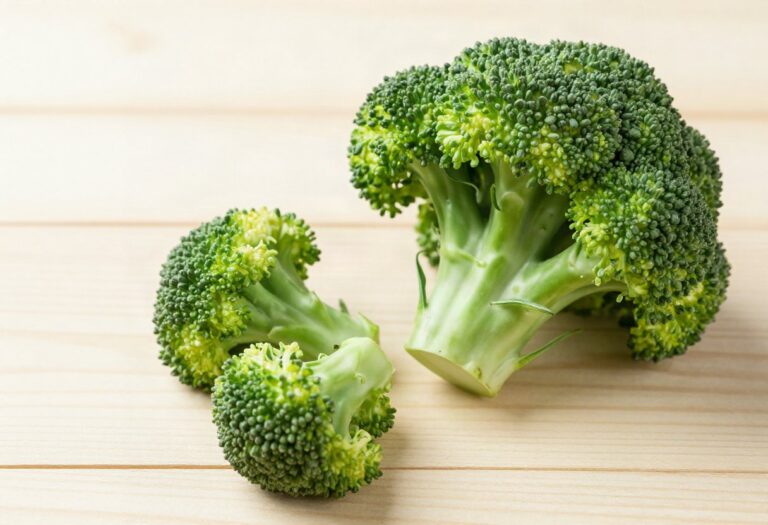
Broccoli is a green vegetable from the large cabbage family (the crucifers), easy to recognise by its small, tightly packed green florets. There are several varieties, from classic broccoli to Romanesco with its geometric spikes, as well as tenderstem shoots. Versatile, it can be steamed, stir-fried, made into a gratin or soup, or even eaten raw in a salad. With only 30 kcal per 100 g, high in fibre and water and low in fat, it is ideal for a balanced diet and a weight-loss plan. In terms of nutrition facts, it provides plant protein, moderate carbohydrates and plenty of micronutrients. It is one of the most popular green vegetables for its nutrient density.
Macronutrient breakdown
Nutrition table per 100 g
| Calories | 30 kcal |
| Kilojoules | 126 kJ |
| Protein | 3,2 g |
| Carbohydrate | 1,8 g |
| Fat | 0,6 g |
| Fibre | 2,6 g |
Micronutrients per 100 g
All measured nutrients, ranked by share of the daily reference intake.
- Vitamin K136,2 µg48 %
- Vitamin C19,4 mg24 %
- Vitamin E1,99 mg17 %
- Manganese0,23 mg12 %
- Potassium217 mg11 %
- Copper0,09 mg9 %
- Vitamin B50,51 mg9 %
- Phosphorus55,8 mg8 %
- Vitamin B9dietary folate equivalents53,7 µg
See the other 12 nutrients
- Vitamin B60,1 mg7 %
- Omega-3 ALA0,12 g6 %
- Vitamin A47,6 µg6 %
- Total omega-30,14 g6 %
- Calcium39,4 mg5 %
- Magnesium17,1 mg5 %
- Vitamin B20,06 mg4 %
- Zinc0,36 mg4 %
- Iron0,46 mg3 %
- Vitamin B10,03 mg3 %
- Vitamin B30,43 mg3 %
- Omega-6 LA0,07 g1 %
Anses Ciqual 2025. Source: Anses, 2025, Ciqual food composition table
Tips
Broccoli has countless uses in the kitchen. To preserve its vitamins and bright green colour, steam it briefly (5 to 7 minutes) or stir-fry it quickly in a wok. Gentle cooking limits the loss of water-soluble nutrients, unlike long boiling. You can also eat it raw, thinly sliced in a salad, to make the most of its crunchy texture and fibre.
Nutritionally, broccoli is packed with vitamin C, vitamin K, folate and minerals such as potassium. Its fibre (2.59 g per 100 g) helps you feel full and keeps your digestion regular. Its low glycaemic index and low calorie density make it a great ally for weight management: it fills your plate without adding many calories. You can compare its figures with other vegetables in the food calorie table.
Pair it cleverly for complete meals:
- with a source of protein (egg, fish, tofu) for a filling dish;
- with a drizzle of olive oil or a few seeds to better absorb its fat-soluble vitamins;
- in a light gratin, a velouté soup or roasted in the oven with garlic.
In terms of benefits, broccoli is one of the vegetables richest in protective micronutrients. It fits perfectly into a diet built around foods rich in antioxidant compounds. If you like crucifers, try cauliflower or Brussels sprouts too, which have similar nutritional profiles.
For active people, broccoli is an excellent recovery vegetable: low in calories, it provides potassium, which helps fluid balance, and fibre that rounds off a meal rich in carbohydrates and protein. When cutting or losing weight, it fills you up while keeping you in a calorie deficit. Add it to your batch cooking dishes to save time during the week.
Storage and things to watch: keep fresh broccoli for a few days in the vegetable drawer of the fridge, or freeze it after blanching it briefly. Broccoli is very well tolerated, but eating a lot of it can cause bloating in sensitive people: introduce it gradually. Discover more ideas in the vegetable family to vary your meals.