Foods high in vitamin C: ranked by real portion
The short answer
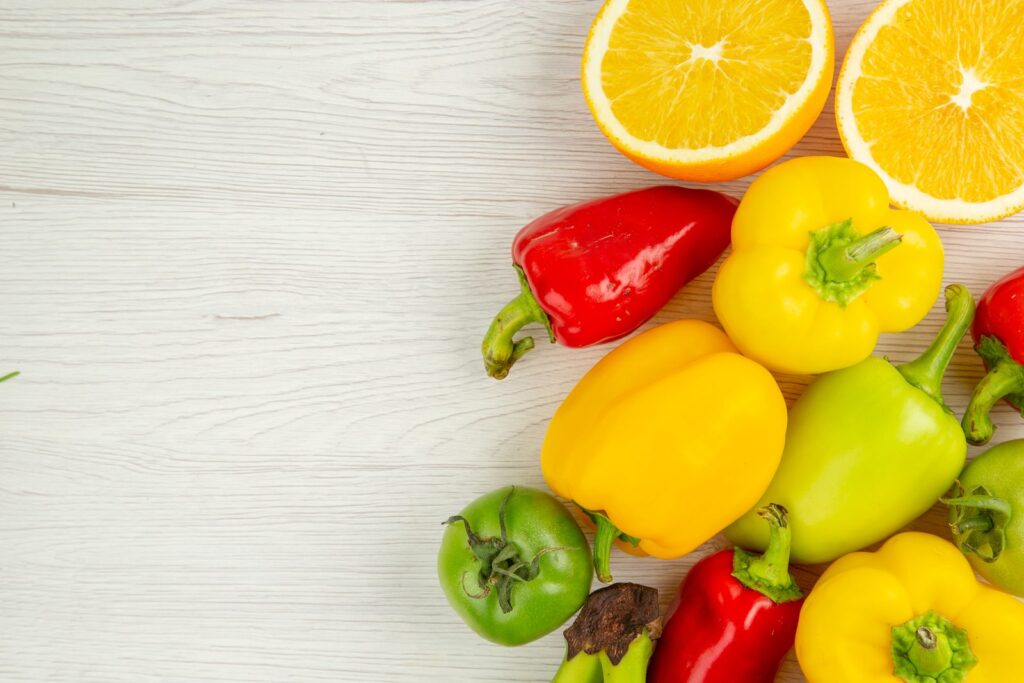
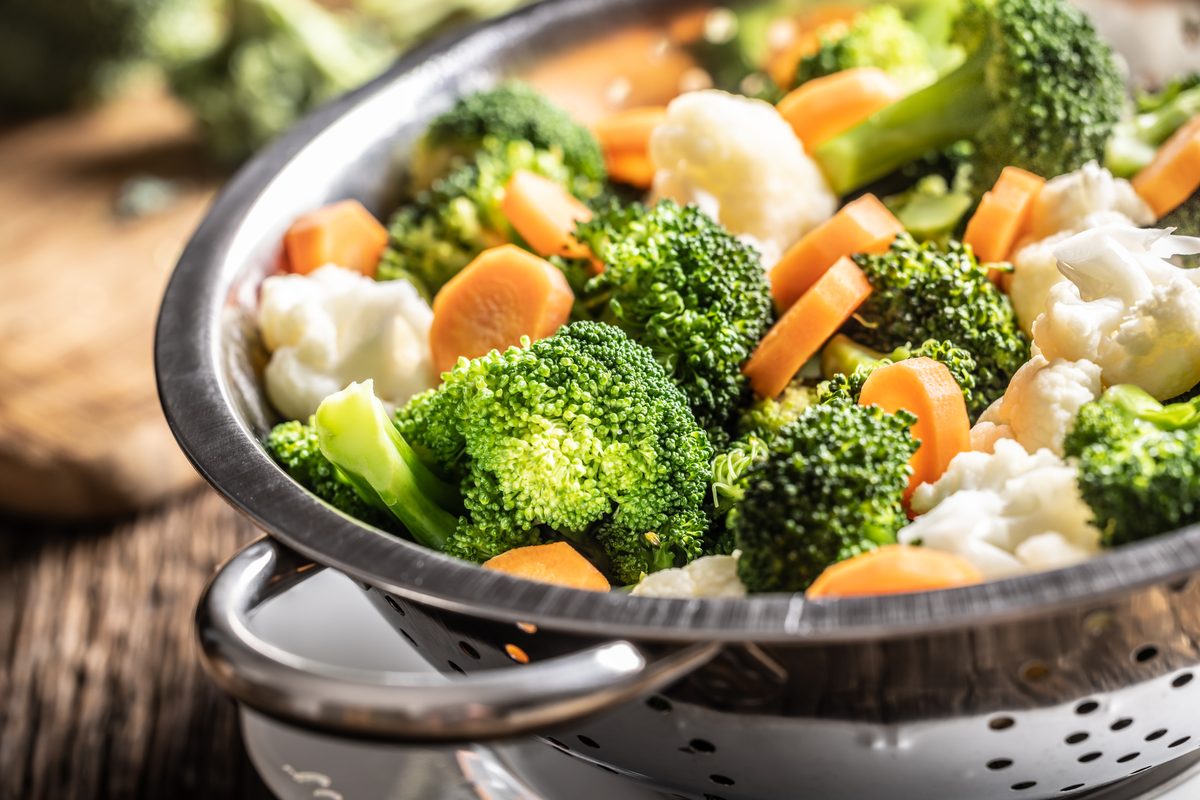
Guava comes out on top with 274 mg of vitamin C per fruit, 2.5 times the daily reference of 110 mg. Next come blackcurrants (217 mg per bowl) and raw red pepper (182 mg). The orange, the classic symbol of vitamin C, only ranks fifteenth with 57 mg. And cooking matters as much as the food itself: broccoli loses almost 80% of its vitamin C when cooked, even when steamed.
The ranking, sorted by what a portion actually provides
| Food | Portion | Vitamin C | Share of 110 mg | Calories |
|---|---|---|---|---|
| Guava | 120 g | 274 mg | 249% | 82 kcal |
| Blackcurrants | 120 g | 217 mg | 197% | 84 kcal |
| Red pepper, raw | 150 g | 182 mg | 165% | 50 kcal |
| Kale, raw | 150 g | 140 mg | 127% | 52 kcal |
| Romanesco, raw | 150 g | 132 mg | 120% | 45 kcal |
| Orange juice from concentrate | 250 ml | 111 mg | 100% | 114 kcal |
| Kiwi fruit | 120 g | 98 mg | 89% | 73 kcal |
| Brussels sprouts, cooked | 150 g | 83 mg | 76% | 67 kcal |
| Papaya | 120 g | 78 mg | 71% | 48 kcal |
| Pomelo | 120 g | 73 mg | 67% | 46 kcal |
| Sorrel, raw | 150 g | 72 mg | 65% | 35 kcal |
| Pak choi, raw | 150 g | 68 mg | 61% | 22 kcal |
| Strawberries | 120 g | 65 mg | 59% | 42 kcal |
| Clementine or mandarin | 120 g | 59 mg | 54% | 55 kcal |
| Orange | 120 g | 57 mg | 52% | 50 kcal |
| Pineapple | 120 g | 55 mg | 50% | 62 kcal |
| Broccoli, cooked | 150 g | 29 mg | 26% | 45 kcal |
The orange is not the champion
At 47.5 mg per 100 g, a 120 g orange covers half the reference. That is good, but guava provides 4.8 times more, red pepper 3.2 times more and a simple kiwi fruit 1.7 times more. A glass of orange juice from concentrate does reach the reference, 111 mg per 250 ml, but with 114 kcal and none of the fruit’s fibre.
Red pepper, the richest vegetable
182 mg for 150 g and 50 kcal: one portion of raw red pepper covers a whole day’s reference on its own. The cabbage family comes next, led by kale and romanesco, as long as you eat them raw or lightly cooked.
Cooking destroys vitamin C
Vitamin C is fragile: it is sensitive to heat, water and air. The Ciqual table shows how large the losses are.
| Food | Raw | Cooked |
|---|---|---|
| Broccoli | 91 mg | 21 mg steamed, 18 mg boiled |
| Cauliflower | 48 mg | 21 mg steamed, 10 mg boiled |
| Spinach | 28 mg | less than 0.5 mg boiled |
| Brussels sprouts | 85 mg | 55 mg boiled |
| Red pepper | 121 mg | 144 mg pan-fried, 81 mg cooked |
Two lessons. Steaming does not save everything: for broccoli, it does barely better than boiling according to Ciqual. And raw is still the best option for vegetables that lend themselves to it: peppers, kale, romanesco. Pan-fried peppers, on the other hand, keep all their vitamin C. Fruit, eaten raw, avoids the problem altogether. Our tips for limiting losses are in the guide to gentle cooking.
How much vitamin C a day
| Profile | Nutritional reference |
|---|---|
| Adult men and women | 110 mg/day |
| Pregnant women | 120 mg/day |
| Breastfeeding women | 170 mg/day |
| Teenagers aged 15 to 17 | 100 mg/day |
| Children aged 11 to 14 | 70 mg/day |
| Children aged 7 to 10 | 45 mg/day |
| Children aged 4 to 6 | 30 mg/day |
It is one of the easiest references to meet: a kiwi fruit and a clementine (98 + 59 mg) already exceed it. A portion of raw red pepper in a salad is enough on its own. No supplement is needed if you eat raw fruit and vegetables every day. If you take one anyway, our vitamin C comparison compares real prices.
Vitamin C also helps your body absorb iron from plant foods: a piece of fruit or some raw pepper with a meal that includes lentils, for example, is a good habit. The details are in our guide to foods high in iron.
Pomelo, with 61 mg of vitamin C per 100 g, beats the orange: see pomelo, benefits and precautions.

Frequently asked questions
Which food is highest in vitamin C?
Guava, with 228 mg per 100 g, or 274 mg per fruit: 2.5 times the daily reference. Blackcurrants follow with 181 mg per 100 g.
Which vegetable is highest in vitamin C?
Raw red pepper, with 121 mg per 100 g, or 182 mg per portion. Raw kale and romanesco come next.
Does a kiwi fruit have more vitamin C than an orange?
Yes: 81.9 mg per 100 g against 47.5 mg, which means 98 mg per kiwi fruit against 57 mg for an orange of the same weight.
Does cooking destroy vitamin C?
Largely, yes: broccoli drops from 91 mg raw to 21 mg steamed and 18 mg boiled, spinach from 28 mg to less than 0.5 mg. Pan-fried peppers are the exception.
How much vitamin C do you need a day?
Anses sets 110 mg a day for an adult, 120 mg during pregnancy and 170 mg while breastfeeding. A kiwi fruit and a clementine are enough.
Is orange juice a good source?
A 250 ml glass of juice from concentrate provides 111 mg, a full day’s reference, but also 114 kcal of sugars without the fruit’s fibre. The whole fruit is still the better choice.
Other rankings
Same method, based on the Ciqual table: foods high in iron, foods high in magnesium, foods high in potassium, foods high in calcium, foods high in vitamin B12, foods high in omega-3.
Our sources
- Ciqual 2025 table (Anses), Vitamin C column in mg/100 g, cross-checked against the food pages on this site. Portions are shown in each table.
- Anses, Les références nutritionnelles en vitamines et minéraux, March 2021.