Group · Fruit
Pineapple
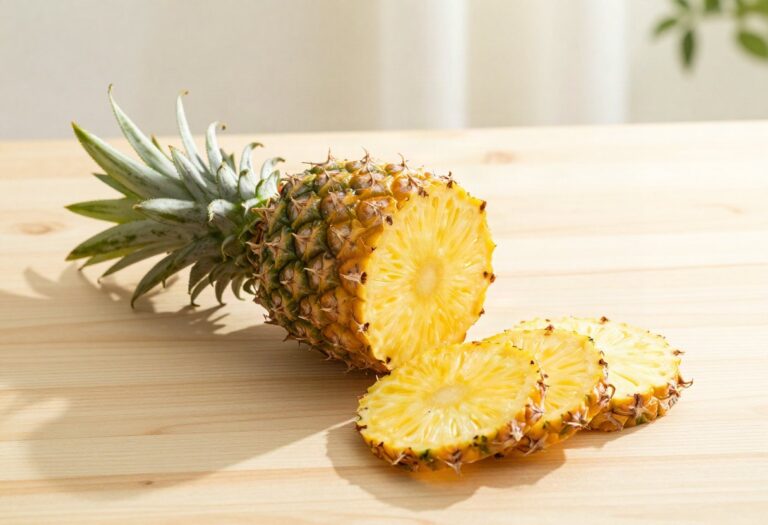
The pineapple is a tropical fruit recognisable by its scaly skin and juicy yellow flesh, both sweet and tangy. Originally from South America, it comes in several forms: fresh, in slices, in chunks, as juice or dried. With just 51.6 kcal per 100 g, its nutrition facts are appealing if you are watching your weight: little fat (0.12 g), natural carbohydrate (11.7 g) and fibre (1.2 g). Rich in water, vitamin C and flavour, pineapple fits naturally into a balanced diet, at breakfast, for dessert or as a tasty, refreshing snack.
Macronutrient breakdown
Nutrition table per 100 g
| Calories | 52 kcal |
| Kilojoules | 219 kJ |
| Protein | 0,3 g |
| Carbohydrate | 11,7 g |
| Fat | 0,2 g |
| Fibre | 1,2 g |
Micronutrients per 100 g
All measured nutrients, ranked by share of the daily reference intake.
- Vitamin C46,1 mg58 %
- Manganese0,84 mg42 %
- Potassium140 mg7 %
- Copper0,06 mg6 %
- Vitamin B10,06 mg5 %
- Magnesium15 mg4 %
- Vitamin B60,05 mg4 %
- Vitamin B50,17 mg3 %
- Vitamin B9dietary folate equivalents19,6 µg
See the other 8 nutrients
- Vitamin B20,03 mg2 %
- Vitamin B30,31 mg2 %
- Iron0,17 mg1 %
- Total omega-30,03 g1 %
- Phosphorus8,1 mg1 %
- Calcium8 mg1 %
- Zinc0,08 mg1 %
- Vitamin A5,58 µg1 %
Anses Ciqual 2025. Source: Anses, 2025, Ciqual food composition table
Tips
Fresh pineapple is delicious as it is, in slices, in cubes in a fruit salad or on skewers. To choose a good one, go by the smell at the base and how easily the central leaves give. Once cut, keep it in the fridge in an airtight container for two to three days to preserve its freshness and vitamin C.
- Reference portion: around 100 to 150 g, or two to three slices, is enough for a refreshing snack.
- Cooking: grilled or pan-fried, it develops caramelised flavours with no added fat. Avoid versions in syrup, which are sweeter.
- Pairings: with quark, natural yoghurt, or in a smoothie with mango and banana.
In terms of benefits, pineapple provides vitamin C, manganese and bromelain, a natural enzyme found in the flesh and the core. Its fibre content contributes to digestive comfort, while its moderate glycaemic index and high water content make it a light fruit. Be careful, though: candied, dried or tinned versions concentrate the sugars and quickly climb in calories. Choose fresh if your goal is weight loss.
If you exercise, pineapple is a natural ally. Before a workout, its readily available carbohydrate gives you an easily digested energy boost. After training, paired with a source of protein (quark, a shake), it helps replenish your stores and supports recovery. Its high water content also helps with hydration. You can add it to a protein snack or to a post-workout bowl.
In the kitchen, pineapple works in both sweet and savoury dishes: it livens up stir-fried chicken, special fried rice or a mixed salad. It is at its best in winter and early spring, when it reaches full ripeness. You can vary things with other exotic fruits such as kiwi or passion fruit, which are just as refreshing.
To compare what it provides with other fruit and plan balanced menus, explore the whole fruit family and check the food calorie table. In short, pineapple is a tasty, low-calorie and versatile fruit, best eaten fresh and in moderation to make the most of its qualities.
If you have diabetes: two slices of pineapple make one portion of fruit; juice provides far more carbohydrate. The figures are in our guide to pineapple and diabetes.