What to eat before and after exercise
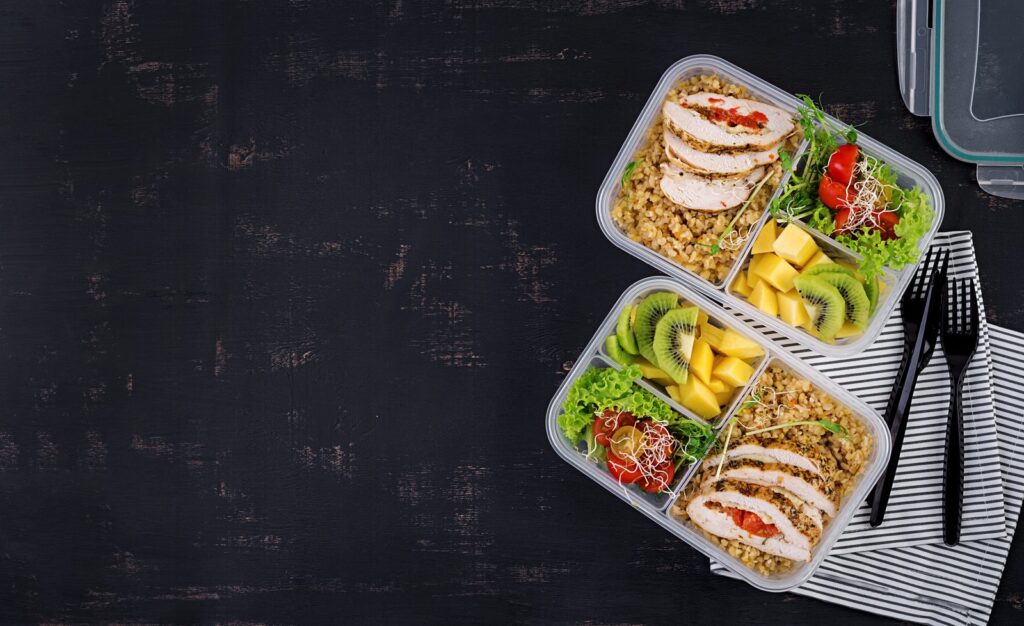
Eating well around your training makes all the difference: more energy during the session, better recovery and better results. There is no need to complicate things with powders: a few simple pointers on the timing and content of your meals are enough for the vast majority of people who exercise.
The short answer
After exercise, aim for 20 to 40 g of good-quality protein, or 0.25 to 0.40 g per kilo of body weight, within two hours, together with carbohydrates to refill your stores. The famous 30-minute window is a myth: what matters most is your total protein intake over the day, spread across several servings. Before exercise, a carbohydrate-rich meal 1 to 3 hours beforehand is enough.
The anabolic window: what’s left of it
For a long time we were told to get our protein down within 30 minutes of a session. A 2013 meta-analysis of 23 trials on muscle size settled the question: once other factors are accounted for, timing has no significant effect on strength or muscle size. The best predictor of muscle gain was total protein intake.
In its 2017 position stand, the International Society of Sports Nutrition (ISSN) writes that a serving of good-quality protein from immediately after up to 2 hours after exercise strongly stimulates muscle protein synthesis, and that the key is still to reach your daily total, ideally in servings spaced about 3 hours apart. It also notes that the size and timing of your pre-session meal change what you need afterwards.
How much protein and carbohydrate after exercise?
| Your weight | Protein per serving (0.25 to 0.40 g/kg) | Carbohydrate if you train again within 4 h (1.2 g/kg per hour) |
|---|---|---|
| 55 kg | 14 to 22 g | 66 g per hour |
| 70 kg | 18 to 28 g | 84 g per hour |
| 85 kg | 21 to 34 g | 102 g per hour |
For most people, a normal meal with a source of protein and starchy foods in the following hours is enough. The « aggressive » carbohydrate refuelling described by the ISSN is for those doing two sessions close together. A protein requirements calculator can help you work out your total needs.
Before exercise: fuelling up
The pre-workout meal aims to fill your energy stores without weighing down your digestion. Go for carbohydrates 1 to 3 hours beforehand, with a little protein and not much fat. A bowl of oats with a banana, or brown rice with chicken, are effective classics. If you are eating less than an hour before, keep it light: a banana, a few dates or some apple purée.
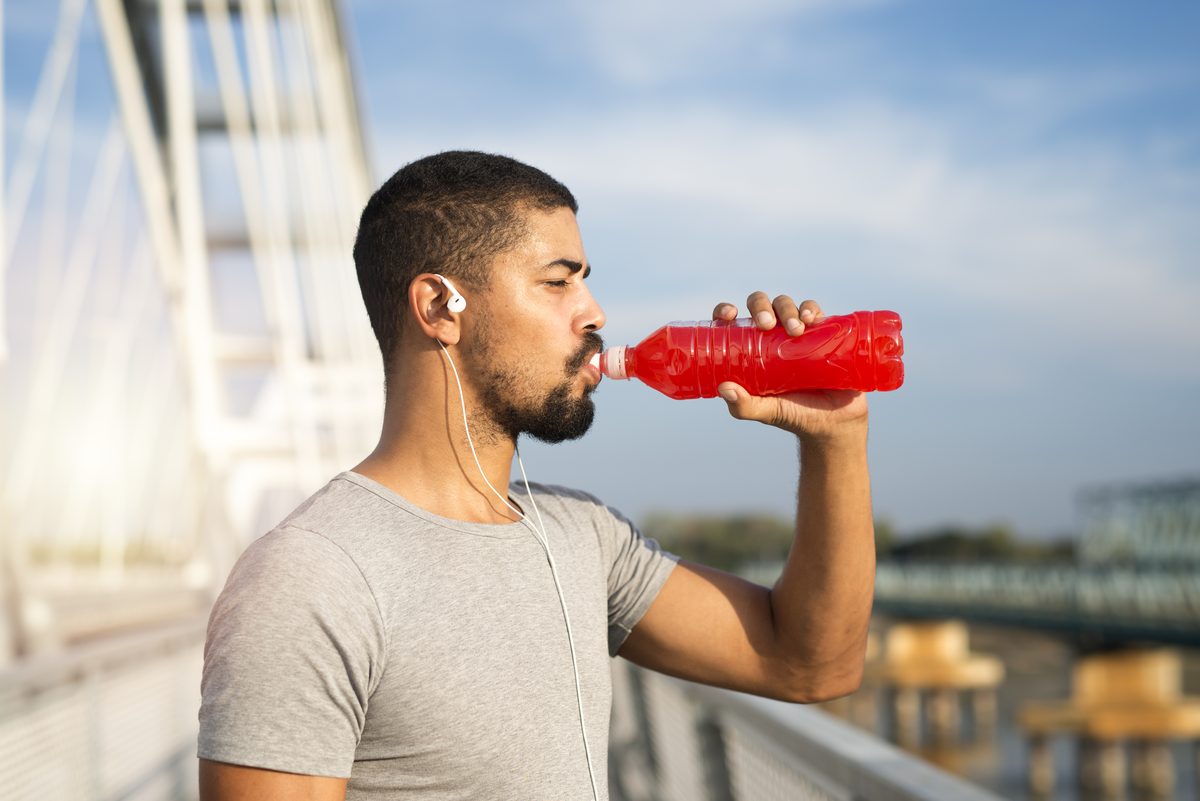
For intense exercise lasting more than 60 minutes, the ISSN recommends about 30 to 60 g of carbohydrate per hour during exercise, as a drink containing 6 to 8% carbohydrate.
What 30 g of carbohydrate looks like
Guidelines talk in grams of carbohydrate, not in foods. To translate one into the other, here is the amount of some common foods that provides 30 g of carbohydrate, the bottom of the hourly range advised during a long session. Fibre matters too: the more there is, the slower digestion is, which is an advantage well before your session and a drawback just before it.
| Food | Carbohydrate per 100 g | Amount for 30 g of carbohydrate | Fibre in this amount |
|---|---|---|---|
| Honey | 82.1 g | 37 g | 0 g |
| Dried dates | 64.7 g | 46 g | 3.4 g |
| White bread (baguette, loaf) | 58.3 g | 51 g | 1.4 g |
| Rolled oats (raw) | 57.7 g | 52 g | 5.8 g |
| Cooked white rice | 33.2 g | 90 g | 1.3 g |
| Cooked pasta | 31.4 g | 96 g | 2.1 g |
| Apple purée (average) | 22.4 g | 134 g | 2.0 g |
| Peeled banana | 19.7 g | 152 g | 4.1 g |
In practice: if you are eating less than an hour before, low-fibre options (white bread, honey, apple purée, white rice) often sit better. Two to three hours before, rolled oats or wholemeal bread are perfectly suitable.
During exercise: matching carbohydrate to duration
We have already mentioned the ISSN’s range of 30 to 60 g per hour for intense exercise lasting more than an hour. A key review by Burke and colleagues (Journal of Sports Sciences, 2011) explains how to adjust this according to duration:
| Duration of exercise | Suggested carbohydrate intake |
|---|---|
| About 1 hour, high intensity | Small amounts are enough; even simply rinsing your mouth with a sugary drink improves performance, through an effect on the nervous system |
| Longer sessions | 30 to 60 g per hour |
| More than 2 h 30 | Up to 90 g per hour, using blends of different sugars that are absorbed better at this rate |
The ISSN advises sipping this 6 to 8% carbohydrate drink in small amounts every 10 to 15 minutes, especially beyond 70 minutes. For a standard weights session or a 45-minute jog, none of this is necessary: water is enough, and your pre-session meal does the job.
3 post-exercise meals and snacks, with their macros
| Recipe | Calories | Protein | Carbohydrate | Fat |
|---|---|---|---|---|
| Banana and cocoa recovery shake | 429 kcal | 39.7 g | 54.7 g | 4.3 g |
| Protein waffles | 222 kcal | 21 g | 22.8 g | 4.5 g |
| Chicken teriyaki with rice | 373 kcal | 38.6 g | 35.7 g | 7.7 g |
The shake is the quickest option if you train away from home. The protein waffles make a light snack, at the lower end of the protein range. The chicken teriyaki is a proper recovery meal; you can make the homemade teriyaki sauce in advance. Other high-protein ideas: a beef and rice protein bowl, salmon with brown rice and broccoli, or protein overnight oats.
Two sessions in one day: refuelling fast
If you have less than 4 hours between two sessions, the ISSN (Kerksick, 2017) describes two ways to refill your stores quickly. The first: 1.2 g of carbohydrate per kilo per hour, preferably from high glycaemic index foods (above 70). The second: slightly less carbohydrate, 0.8 g per kilo per hour, combined with 0.2 to 0.4 g of protein per kilo per hour. For 70 kg, that comes to, for example, 56 g of carbohydrate and 14 to 28 g of protein per hour, by our calculation. Outside this situation, your usual meal is enough.
How much protein over the day?
Since your daily total matters more than exact timing, you need to know how to put a figure on it. The ISSN position stand on protein (Jäger, 2017) recommends 1.4 to 2.0 g per kilo per day for most athletes who want to build or maintain muscle mass. It adds that higher intakes, from 2.3 to 3.1 g per kilo, may help preserve muscle during a period of calorie restriction in trained resistance athletes.
| Your weight | Daily total (1.4 to 2.0 g/kg) | In a calorie deficit, resistance training (2.3 to 3.1 g/kg) |
|---|---|---|
| 55 kg | 77 to 110 g | 127 to 171 g |
| 70 kg | 98 to 140 g | 161 to 217 g |
| 85 kg | 119 to 170 g | 196 to 264 g |
The same position stand makes three practical points. Servings should be spread every 3 to 4 hours. Each serving benefits from containing 700 to 3,000 mg of leucine and the full range of essential amino acids. Finally, the anabolic effect of a session lasts at least 24 hours, which is why there is no rush down to the minute. For 70 kg and 4 meals, 98 to 140 g a day gives about 25 to 35 g per meal, right in the per-serving range seen above.
Training on an empty stomach: what the studies show
Fasted exercise, in the morning before breakfast, has its fans. A meta-analysis of 46 studies (Aird, Scandinavian Journal of Medicine and Science in Sports, 2018) compared the two situations. Eating before exercise improves performance in prolonged endurance exercise, but not in shorter endurance exercise. Conversely, fasted exercise increases free fatty acids in the blood after the session and may promote certain metabolic adaptations in muscle and fat tissue, which the authors say still needs confirming.
Put simply: for an easy 30 to 45-minute jog, going out fasted is no problem for performance if it suits you. For a long run, a race or an intense session, eat beforehand. And if you have diabetes or take medication that lowers blood sugar, ask your doctor for advice before any fasted training.
Coffee before your session: useful, at the right dose
Caffeine is one of the few substances whose effect on performance is well established. According to the ISSN position stand (Guest, 2021), it consistently improves performance at doses of 3 to 6 mg per kilo, most often taken 60 minutes before exercise. The benefits are most consistent in endurance exercise. Very high doses (9 mg/kg) cause many side effects without being necessary, and the response varies from person to person, particularly for sleep and anxiety.
On safety, EFSA considers that single doses of up to 200 mg (about 3 mg/kg) pose no concern for healthy adults, including less than two hours before intense exercise, and that intakes of up to 400 mg a day spread over the day are safe. For a 70 kg person, 3 mg/kg comes to 210 mg: the top of the ISSN range therefore already exceeds EFSA’s safety threshold for a single dose. A coffee before an evening session can also disrupt your sleep, which matters for recovery. During pregnancy, EFSA sets the benchmark at 200 mg a day from all sources.
Adapting to your goal
- Building muscle: increase your overall portions and aim for your daily protein total.
- Weight loss: keep protein at every meal and adjust carbohydrates to your training volume.
- Endurance: focus mainly on carbohydrates, before, during long sessions and after.
Three sample days depending on when you train
Here is how to apply these pointers without counting anything, using recipes from the site. Adjust the amounts to your appetite and your goal.
Early morning session
- Before (if you have less than an hour): a banana, a slice of white bread with honey, or some apple purée. If you prefer to run fasted and the session is short, that’s fine.
- After: a high-protein breakfast, for example protein porridge with blueberries or a protein omelette with ham and quark, with bread.
- Then: a normal lunch and dinner, each with a source of protein.
Lunchtime session
- Before: a breakfast with carbohydrates, such as chocolate and banana overnight oats made the night before.
- After: a complete lunch you can take with you, for example a lentil and chicken salad or a chicken, avocado and salad wrap.
- Afternoon snack: a yoghurt or a high-protein snack if dinner is late.
Late afternoon or evening session
- Before (1 to 3 hours): a carbohydrate-rich snack, such as oat and banana bars or bread with a little quark.
- After: a dinner with protein, starchy foods and vegetables, for example wholewheat pasta with chicken and pesto.
- Coffee: avoid it before a late session if you sleep badly afterwards.
Frequently asked questions
Do you need to eat within 30 minutes of exercise?
No. A 2013 meta-analysis found no significant effect of timing once other factors were taken into account. Eating within the following 2 hours is still a good habit.
How much protein after a weights session?
20 to 40 g, or 0.25 to 0.40 g per kilo of body weight, according to the ISSN.
What should you eat after exercising in the evening?
A normal dinner with a source of protein, vegetables and starchy foods. The ISSN also notes that about 30 to 40 g of casein before bed increases muscle protein synthesis overnight.
Is whey protein essential?
No. A high-protein meal does the same job; powder is just a handy fallback.
Do you need carbohydrates after exercise?
Yes, to refill your stores, especially after a long session or if you are training again later that day.
Should you eat before a morning session?
Not necessarily for a short, moderate session. A meta-analysis of 46 studies shows that eating beforehand mainly improves prolonged endurance exercise, not shorter sessions (Aird, 2018).
Is coffee before exercise useful?
Yes, caffeine improves performance at 3 to 6 mg per kilo, taken about 60 minutes beforehand (ISSN, 2021). EFSA considers a single dose of up to 200 mg safe for healthy adults.
How much protein a day when you exercise?
1.4 to 2.0 g per kilo per day is enough for most athletes, according to the ISSN, ideally spread every 3 to 4 hours.
Do you need to eat during a one-hour session?
Generally not. For intense exercise lasting about an hour, small amounts of carbohydrate are enough, and even a mouth rinse can help (Burke, 2011). The 30 to 60 g per hour applies to longer sessions.
What about supplements?
Food comes first. If you want a convenient supplement, protein powder is a handy fallback after a session, and creatine can be worthwhile in some cases. Some price benchmarks, recorded in September and October 2026: compare whey by the kilo of protein, from 41.23 EUR for a native whey concentrate in a 4 kg bag to more than 60 EUR in a small tub, and Creapure creatine in a 1 kg bag drops below 6 EUR per 100 g. For a snack without a shaker, there are protein bars; if you avoid dairy, there is plant protein.
Our sources
- Kerksick C. M. et al., International Society of Sports Nutrition position stand: nutrient timing, Journal of the International Society of Sports Nutrition, 2017.
- Schoenfeld B. J. et al., The effect of protein timing on muscle strength and hypertrophy: a meta-analysis, Journal of the International Society of Sports Nutrition, 2013.
- Jäger R. et al., International Society of Sports Nutrition position stand: protein and exercise, Journal of the International Society of Sports Nutrition, 2017, PMID 28642676.
- Burke L. M., Hawley J. A., Wong S. H., Jeukendrup A. E., Carbohydrates for training and competition, Journal of Sports Sciences, 2011, PMID 21660838.
- Aird T. P., Davies R. W., Carson B. P., Effects of fasted vs fed-state exercise on performance and post-exercise metabolism: a systematic review and meta-analysis, Scandinavian Journal of Medicine and Science in Sports, 2018, PMID 29315892.
- Guest N. S. et al., International Society of Sports Nutrition position stand: caffeine and exercise performance, Journal of the International Society of Sports Nutrition, 2021, PMID 33388079.
- EFSA, Scientific opinion on the safety of caffeine, 2015 (caffeine topic page).
- Anses, Ciqual food composition table, 2025.
This article is for information only and does not replace advice from a health professional. If in doubt, if you suspect a deficiency or if you have a medical condition, ask your doctor for advice.