Soft-boiled egg in pregnancy: not recommended, which eggs are safe
The short answer
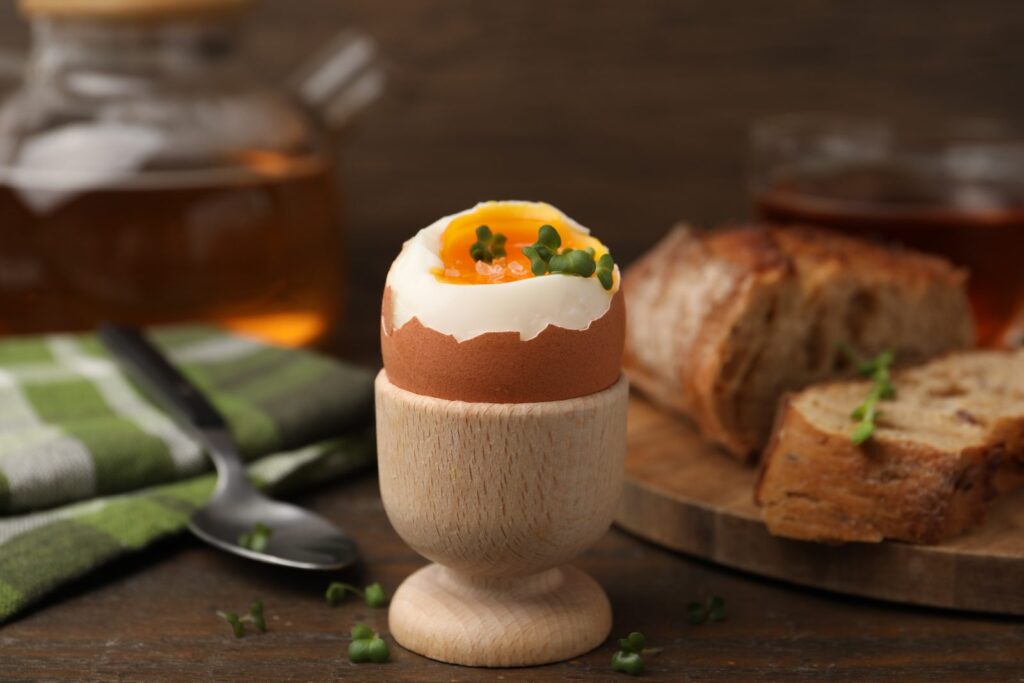
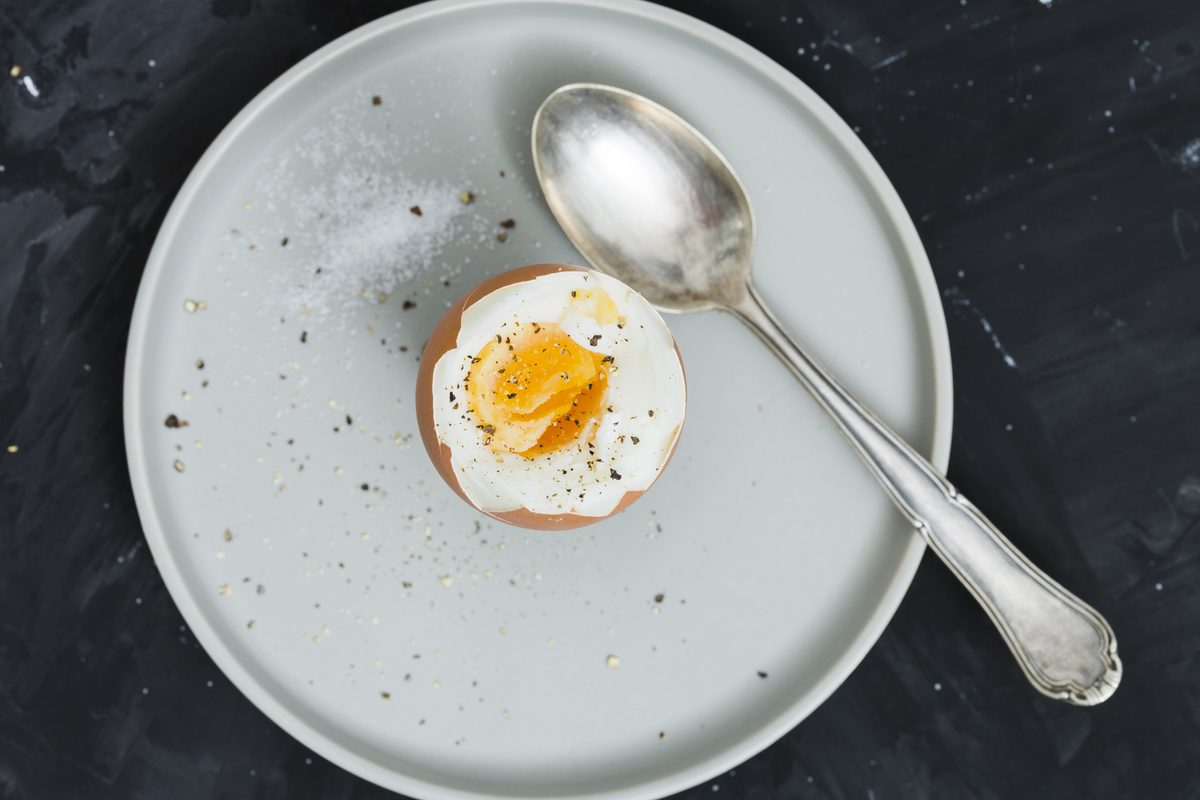
No, soft-boiled eggs are not recommended during pregnancy; well-cooked eggs, on the other hand, are allowed and even encouraged. Manger Bouger advises pregnant women against “raw or undercooked eggs (soft-boiled, medium-boiled, sunny-side up…)” and against home-made recipes using raw eggs, such as mayonnaise, chocolate mousse or tiramisu. The risk is salmonella, which is destroyed by thorough cooking. The rule is simple: firm white and firm yolk. Hard-boiled eggs, a well-set omelette, well-cooked scrambled eggs and a fried egg cooked on both sides are all perfectly fine.
These guidelines follow the official French recommendations. If in doubt, your midwife or doctor can advise you.
The real risk: salmonella
Salmonella are bacteria that can be found on the shell or inside eggs. They cause food poisoning (salmonellosis), with fever, diarrhoea, vomiting and abdominal cramps, and the dehydration that follows is best avoided during pregnancy. Salmonella are destroyed by heat: an egg with a firm yolk and white no longer carries this risk. A runny yolk, however, has not been heated enough to guarantee it.
Eggs are not linked to listeriosis or toxoplasmosis, the other two infections monitored during pregnancy.
Why a runny yolk is not enough
Salmonella is sensitive to heat, but not instantly: it all depends on the temperature reached and the time spent at that temperature. Anses gives precise figures in its reference sheet:
| Temperature reached | Time to reduce the number of salmonella by 10 times |
|---|---|
| 60°C | from 17 seconds to 16 minutes, depending on the strain and the food |
| 70°C | less than a minute |
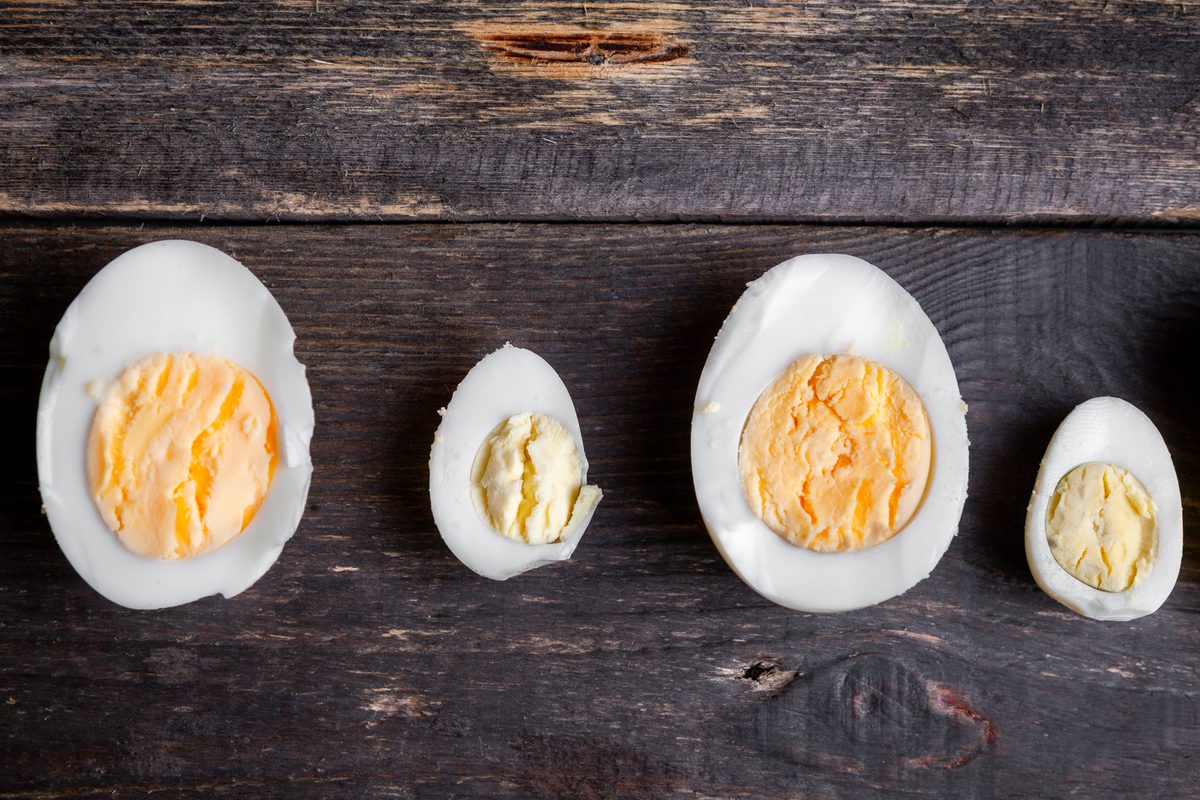
An egg yolk stays runny as long as it has not been heated enough to thicken: that is precisely the sign that it has not reached, or has not held, the temperatures that quickly destroy the bacteria. Conversely, a yolk that is completely set indicates sufficient cooking. This is why the Manger Bouger rule is based on the appearance of the egg, firm yolk and white, rather than on a cooking time.
Salmonella remain one of the leading causes of collective food poisoning outbreaks in France: according to Anses, they account for around 40% of confirmed outbreaks between 2012 and 2019, and eggs and raw-egg products accounted for around 45% of the foods implicated between 2006 and 2015.
The traffic-light guide to eggs
| Preparation | Pregnant | Why |
|---|---|---|
| Soft-boiled egg, runny yolk | 🔴 avoid | undercooked egg |
| Medium-boiled egg, runny poached egg | 🔴 avoid | undercooked yolk |
| Fried egg, runny yolk | 🔴 avoid | cited by Manger Bouger |
| Home-made mayonnaise, chocolate mousse, home-made tiramisu, béarnaise sauce | 🔴 avoid | raw eggs |
| Soft scrambled eggs, runny omelette | 🔴 avoid | undercooked egg |
| Hard-boiled egg | 🟢 allowed | firm white and yolk |
| Well-set omelette, well-cooked scrambled eggs | 🟢 allowed | egg cooked through |
| Fried egg cooked on both sides, firm yolk | 🟢 allowed | cooked through |
| Quiche, flan, cakes, crème brûlée | 🟢 allowed | eggs cooked within the dish |
| Shop-bought mayonnaise | 🟢 allowed | the recommendation covers home-made recipes with raw eggs |
How long should you cook them? A hard-boiled egg takes about 9 to 10 minutes in boiling water: the yolk must be completely set. For a fried egg, flip it or cover the pan until the yolk is firm.
Eggs, a valuable food during pregnancy
| For 2 hard-boiled eggs, 100 g | Amount | Benchmark during pregnancy |
|---|---|---|
| Calories | 134 kcal | – |
| Protein | 13.5 g | high-quality protein |
| Iodine | 50 µg | a quarter of the 200 µg a day recommended by EFSA |
| Folate | 44 µg | against 600 µg a day recommended by EFSA during pregnancy |
| Vitamin B12 | 1.1 µg | against 4.5 µg a day recommended by EFSA during pregnancy |
| Vitamin D | 1.1 µg | one of the few food sources, along with oily fish |
Cooked eggs are therefore an excellent food during pregnancy: inexpensive, and rich in protein, iodine, vitamin B12 and vitamin D. There is no official limit on the number of eggs per week for a healthy pregnant woman. See our guide on how many eggs a day, and our rankings of foods high in iodine and foods high in vitamin D.
Choline, the egg’s little-known strength
People often talk about the protein and vitamin D in eggs, less about choline. This nutrient contributes to the development of the nervous system, and needs increase during pregnancy: EFSA sets an adequate intake of 480 mg a day for pregnant women, compared with 400 mg for adults, and 520 mg during breastfeeding.
| Portion | Choline | Share of the 480 mg |
|---|---|---|
| 1 large egg, 50 g | 147 mg | 31% |
| 2 large eggs, 100 g | 294 mg | 61% |
Choline is found mainly in the yolk. Cooking does not make it disappear: a hard-boiled egg, a well-set omelette or a flipped fried egg provide just as much as a soft-boiled egg. Cutting out undercooked eggs therefore deprives you of nothing, as long as you keep eating well-cooked eggs.
White or yolk: where are the nutrients?
It is the yolk that must be cooked until firm. It is also the yolk that holds almost all of the egg’s value during pregnancy:
| 100 g of | Calories | Protein | Iodine | Vitamin B12 | Vitamin D | Iron |
|---|---|---|---|---|---|---|
| Cooked egg white | 47 kcal | 10.3 g | not measured | 0.06 µg | 0 | 0.07 mg |
| Cooked egg yolk | 340 kcal | 16.0 g | 192 µg | 2.43 µg | 2.11 µg | 0.95 mg |
| Whole hard-boiled egg | 134 kcal | 13.5 g | 50 µg | 1.11 µg | 1.12 µg | 1.72 mg |
The white provides protein and almost nothing else: no vitamin D, and hardly any vitamin B12. “Egg-white” omelettes therefore make you lose most of the benefit. During pregnancy, keep the whole egg, yolk included, and simply cook it for longer. A well-set yolk keeps its iodine and vitamin B12: in Ciqual, a hard-boiled egg contains as much as a soft-boiled egg, or even more.
Quail, duck, goose: the other eggs
At the market or in Asian grocery shops, you can find eggs other than hen’s eggs. The Manger Bouger rule covers eggs in general: they are eaten well cooked, with firm yolk and white, whatever the bird. Here is what they provide, raw, per 100 g:
| 100 g, raw | Calories | Protein | Vitamin B12 | Iron | Cholesterol |
|---|---|---|---|---|---|
| Hen’s egg | 140 kcal | 12.8 g | 0.89 µg | 1.75 mg | 372 mg |
| Quail egg | 154 kcal | 13.1 g | 1.58 µg | 3.65 mg | 844 mg |
| Duck egg | 181 kcal | 12.8 g | 5.4 µg | 3.85 mg | 884 mg |
| Goose egg | 180 kcal | 13.9 g | 5.1 µg | 3.64 mg | 852 mg |
Weight for weight, duck and goose eggs provide about six times more vitamin B12 than a hen’s egg, and twice as much iron. In restaurants as at home, whether they are quail, duck or goose, ask for them hard-boiled, with the yolk completely set.
Eggs from your own hens
Keeping hens in the garden changes nothing about cooking: a fresh egg from the henhouse is eaten well cooked, like a shop-bought egg. But Santé publique France points out another issue in its pregnancy guide: eggs from some domestic henhouses can concentrate pollutants linked to current or past human activities.
The reason has been known since a note from Afssa, now Anses, on dioxins in eggs from private owners: most of the hens’ exposure would come from the soil they peck at. Dioxins persist for a long time in soil, with a half-life of around 10 years in the top few centimetres. If your henhouse is close to a former industrial area or an incinerator, talk to your doctor or midwife, and vary your sources of eggs during pregnancy.
The codes on the shell
Every egg sold in France carries a printed code. The first digit shows how the hens were reared:
| First digit | Rearing method |
|---|---|
| 0 | organic farming |
| 1 | free range |
| 2 | barn, indoors on the floor |
| 3 | caged |
The letters that follow show the country of laying, FR for France. This code tells you about the farming method, not about the risk of salmonella: an organic or free-range egg must be cooked through during pregnancy, exactly like any other. Salmonella control programmes are required on laying-hen farms under European regulations, but they do not remove the risk entirely: the RappelConso database lists 13 egg recalls for salmonella between 2021 and September 2026.
Good egg-handling habits
- Respect the use-by date and keep eggs away from temperature swings.
- Do not wash eggs before storing them, and throw away any with a cracked or dirty shell.
- Wash your hands after handling raw eggs, as Manger Bouger recommends after handling raw foods.
- Eat egg-based dishes quickly, and keep leftovers for 3 days at most in the fridge.
In restaurants: dishes where the egg stays undercooked
| Dish | Pregnant | Alternative |
|---|---|---|
| Eggs Benedict, runny poached egg | 🔴 avoid | ask for a well-cooked poached egg, with a set yolk |
| Italian-style carbonara, egg yolk stirred in off the heat | 🔴 avoid | sauce heated until the egg is set, or a cream carbonara |
| Beef tartare with raw egg yolk | 🔴 avoid twice over | raw beef and raw egg: choose meat cooked through |
| Ramen or bibimbap with a medium-boiled or raw egg | 🔴 avoid the egg | ask for it hard-boiled, or without egg |
| Caesar salad, house dressing | 🔴 avoid | dressing without raw egg, or a shop-bought dressing |
| Croque-madame, burger with a fried egg | 🟠 with conditions | egg flipped, firm yolk |
| Well-set omelette, tortilla, frittata | 🟢 allowed | ask for it cooked through |
Egg desserts: which ones are cooked?
Eggs hide in many desserts, cooked or not. The rule stays the same: an egg cooked within the preparation is safe, a raw egg is not.
| Dessert | Pregnant | Why |
|---|---|---|
| Cakes, clafoutis, baked flans | 🟢 allowed | eggs cooked in the batter |
| Crème brûlée, crème caramel, custard cooked until it coats the spoon | 🟢 allowed | cooked yolks |
| Floating island with poached whites, baked meringue, macarons | 🟢 allowed | cooked whites |
| Cake or cookie dough tasted raw | 🔴 avoid | raw eggs, a common baking habit |
| Chocolate mousse, tiramisu, charlotte made with raw eggs | 🔴 avoid | raw eggs; see tiramisu in pregnancy |
| Home-made ice cream or iced parfait with raw eggs | 🔴 avoid | freezing does not destroy salmonella |
| Home-made ice cream on a cooked custard base | 🟢 allowed | eggs cooked before freezing |
| Shop-bought desserts made with egg products | 🟢 generally | read the label: pasteurised eggs and no alcohol |
For special-occasion desserts, see also our page on cheesecake in pregnancy: baked, it is one of the safe desserts.
Safe recipe ideas
- Mimosa eggs (French-style devilled eggs), made with hard-boiled eggs and shop-bought mayonnaise.
- Omelette, well set.
- Vegetable frittata, cooked through in the oven.
- Tortilla, well cooked in the centre.
- Custard tart (flan pâtissier) for dessert.
And a soft-boiled egg with soldiers? Replace it with a hard-boiled egg mashed on toast, or with well-cooked scrambled eggs. See also our guides on tiramisu in pregnancy and eating during pregnancy.
And while breastfeeding?
While breastfeeding, soft-boiled eggs become possible again, with the usual hygiene precautions. See our guide on eating while breastfeeding.
Frequently asked questions
Can you eat a soft-boiled egg when pregnant?
No: Manger Bouger advises against undercooked eggs during pregnancy, including soft-boiled eggs, because of salmonella.
Which eggs can you eat when pregnant?
All eggs with a firm white and yolk: hard-boiled egg, well-set omelette, well-cooked scrambled eggs, fried egg cooked on both sides, and eggs cooked within a dish.
Is mayonnaise allowed in pregnancy?
Home-made mayonnaise with raw eggs is not recommended. The recommendation targets home-made recipes, not shop-bought mayonnaise.
How many eggs a week during pregnancy?
There is no official limit for a healthy pregnant woman. Two eggs provide 13.5 g of protein and 50 µg of iodine.
I ate a soft-boiled egg while pregnant, what should I do?
The risk is low for a single egg. If you develop a fever, diarrhoea or vomiting in the following days, consult your doctor or midwife.
Why is a medium-boiled egg not recommended if the white is cooked?
Because the yolk stays runny: it has not been heated enough. According to Anses, you need to reach 70°C for salmonella to be destroyed in less than a minute.
Are organic eggs salmonella-free?
No: code 0 indicates organic farming, not the absence of salmonella. An organic egg is cooked through during pregnancy, like any other.
How much choline is in an egg?
About 147 mg in a large 50 g egg, or nearly a third of the 480 mg a day recommended by EFSA during pregnancy. Cooking does not make it disappear.
Is carbonara allowed in pregnancy?
Only if the egg is well cooked in the sauce. Traditional carbonara, bound with egg yolk off the heat, is best avoided.
Are quail eggs allowed in pregnancy?
Yes, well cooked and hard-boiled. The rule is the same as for hen’s eggs: no medium-boiled or runny eggs.
Can you eat eggs from your own hens when pregnant?
Yes, well cooked. Santé publique France does point out, however, that eggs from some domestic henhouses can concentrate soil pollutants: vary your sources if your land is exposed.
Is a deli egg in aspic allowed in pregnancy?
Best avoided: even if the egg is cooked, it is often set in the aspic with ham, and Santé publique France lists chilled products in aspic among the cold cuts to avoid during pregnancy.
Is eating only the egg white safer?
No: a cooked white is no safer than a whole, well-cooked egg, and it provides neither vitamin D nor iodine in meaningful amounts. Cook the whole egg until the yolk is firm instead.
Can you eat it in pregnancy? The series
Food by food, what is allowed, allowed with conditions or best avoided during pregnancy: cheesecake in pregnancy, foie gras in pregnancy, feta in pregnancy, mozzarella in pregnancy, raclette in pregnancy, surimi in pregnancy, cured meats in pregnancy, smoked salmon in pregnancy, tiramisu in pregnancy, chorizo in pregnancy, taramasalata in pregnancy, honey in pregnancy, camembert and brie in pregnancy, prawns in pregnancy, sushi in pregnancy, cured ham in pregnancy, hummus in pregnancy, tinned tuna in pregnancy.
Our sources
- Manger Bouger (Santé publique France), « Quels aliments éviter et quelles précautions prendre quand on est enceinte ? », updated 2026.
- Santé publique France, 1000 premiers jours website: « Les précautions alimentaires pendant la grossesse » (eggs: “Yes, as long as they are well cooked”).
- EFSA, reference values for iodine, folate and vitamin B12 during pregnancy.
- Ciqual 2025 table (Anses): hard-boiled egg, soft-boiled egg.
- Anses, biological hazard description sheet: Salmonella spp., updated June 2021.
- EFSA. Dietary Reference Values for choline. EFSA Journal, 2016: 480 mg a day during pregnancy.
- USDA, FoodData Central, SR Legacy: whole egg, choline content and weight.
- RappelConso, public product recall dataset (data.economie.gouv.fr), eggs, 2021 to September 2026.
- Santé publique France, guide « De la grossesse à l’arrivée de bébé » (Manger Bouger, ref. DT05-535-26B): eggs to be eaten well cooked; eggs from some domestic henhouses may concentrate pollutants; products in aspic not recommended.
- Afssa, « Analyse des déterminants de la contamination en dioxines et furanes des œufs issus d’élevages de volailles en plein air de particuliers », technical note AQR/ATH/2005-203, September 2005.
- Ciqual 2025 table (Anses): cooked egg white and yolk, hard-boiled egg, raw hen, quail, duck and goose eggs.