What is nutrition?
Nutrition is the process by which living organisms take in and transform substances from their environment to ensure their growth, repair and the maintenance of their vital functions. It covers all the processes by which an organism takes in the food and fluids it needs to function. Nutrition therefore includes the ingestion, digestion, absorption, transport, use and excretion of nutrients.
Here is how the MSD Manual defines nutrition: « Nutrition is the process by which nutrients are consumed, absorbed and used by the body for growth, development and the maintenance of life. »
The fundamental components of the diet
Macronutrients
Macronutrients are the nutrients the body needs in large amounts. They include protein, carbohydrate and fat, each with a specific role. Protein is essential for building and repairing tissues, carbohydrate is the main source of energy, and fat is important for cell health and hormone production.
It is vital to eat these macronutrients in the right proportions so that the body works properly. An imbalance can lead to health problems, such as a deficiency or excess weight. The quality of macronutrients matters too: choosing complex carbohydrates, lean protein and good fats is recommended.
Micronutrients
Micronutrients, unlike macronutrients, are needed in smaller amounts. They include vitamins and minerals, which play crucial roles in many biological processes. For example, iron contributes to the formation of red blood cells, while calcium is vital for bone health. Micronutrients do not provide energy but are essential for the body to work properly.
A micronutrient deficiency can lead to specific diseases, such as scurvy for vitamin C or rickets for vitamin D. A varied diet that includes fruit, vegetables, wholegrains and dairy products is therefore needed to cover your micronutrient requirements.
The importance of hydration
Hydration is another fundamental pillar of nutrition. Water is the most abundant component of the human body and is essential for many functions, such as regulating body temperature, transporting nutrients and removing waste. Adequate hydration is crucial for wellbeing and for physical and mental performance.
The amount of water you need varies with many factors, including age, sex, weight, physical activity and climate. In general, it is advisable to drink around 2 litres of water a day, but this recommendation can rise with exercise and high temperatures. Hydration can also come from other drinks and from water-rich foods.
What is nutrition for?
The purpose of nutrition is to give the body the nutrients and energy it needs to carry out its vital functions, so as to maintain health, support growth and development, prevent disease and repair damaged tissue. More precisely, nutrition aims to:
- Provide energy: Macronutrients such as carbohydrate, protein and fat are broken down into usable energy to support daily activities and maintain basic metabolic functions, known as the basal metabolic rate.
- Support growth and development: Nutrients play a crucial role in cell and tissue development. Protein, for example, is needed for growth and tissue repair, while calcium and vitamin D are important for developing and maintaining healthy bones.
- Maintain and repair body tissues: Every organ and tissue in the body needs nutrients to maintain its functions and repair itself. Adequate nutrition helps speed up wound healing and reduces the risk of certain conditions.
- Support bodily functions: Nutrients, minerals and other substances support a wide range of physiological functions, including vision, blood clotting, immune system function and hormonal regulation.
- Prevent nutritional and non-communicable diseases: A balanced diet and adequate nutrition can reduce the risk of chronic diseases such as heart disease, type 2 diabetes, obesity and some types of cancer. Nutrition also plays a key role in preventing nutrient deficiencies and related disorders.
- Improve mental wellbeing: Nutrition also influences mental health. Some nutrients affect the production of neurotransmitters, which regulate mood and cognitive function.
In short, the purpose of nutrition is to optimise physical and mental wellbeing by providing the materials the body needs to work efficiently and by reducing the risk of disease. Adequate nutrition allows people to lead an active, healthy life.
The different phases of nutrition
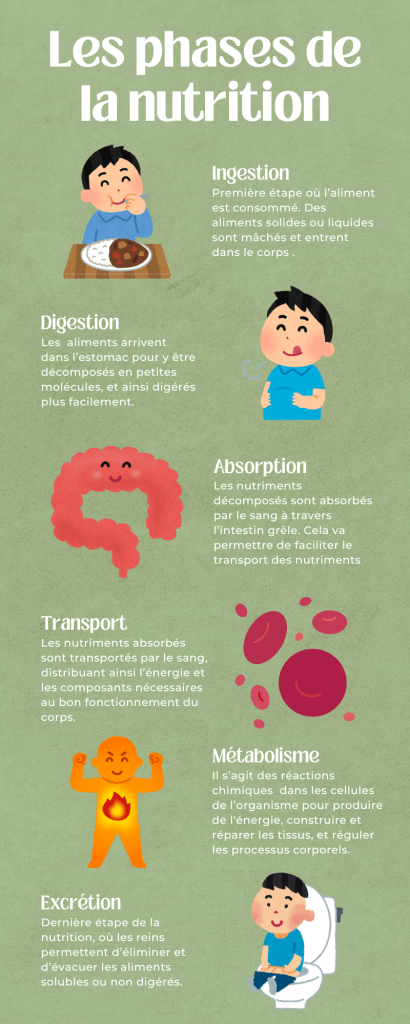
What are the phases of nutrition? Nutrition, seen as the process by which living organisms ingest, process and use nutrients, can be divided into several key phases. These steps are essential for turning food into usable components that support all the body’s vital functions. Here are the main phases of nutrition:
- Ingestion: This is the first stage of nutrition, where food is taken in through the mouth. It involves selecting solid and liquid foods and bringing them into the body.
- Digestion : Digestion is the mechanical and chemical breakdown of food into smaller molecules. Mechanical digestion starts in the mouth with chewing, then continues in the stomach. Chemical digestion, helped by digestive enzymes, breaks complex macromolecules (such as protein, fat and carbohydrate) down into their simpler components (amino acids, fatty acids and glucose, respectively).
- Absorption : After digestion, the broken-down nutrients are absorbed into the bloodstream or lymphatic system through the walls of the small intestine. This stage allows nutrients to reach the body’s cells, where they will be used.
- Transport : Absorbed nutrients are carried by the blood and lymph to every cell in the body. This transport is crucial for distributing the energy and building materials needed for cell functions.
- Metabolism: Metabolism covers the chemical reactions that take place in the body’s cells, using nutrients to produce energy, to build and repair tissues, and to regulate bodily processes. It is divided into two sub-categories: anabolism (building complex molecules from simpler ones) and catabolism (breaking complex molecules down into simpler ones, releasing energy).
- Excretion: The last stage of nutrition involves excreting the waste produced by metabolism. The kidneys play a key role in excreting water-soluble waste, while bulkier, undigested waste is eliminated in the stools.
These phases allow organisms to make the most of the food they eat, providing the energy needed to survive and supporting every bodily function, from cell growth to tissue repair and the maintenance of homeostasis.
THE PHASES OF NUTRITION IN SUMMARY:
What is the difference between nutrition and diet?
The difference between eating habits (diet) and nutrition lies in their scope and in how they interact with the body. Although they are closely linked and often used interchangeably in everyday language, they are two complementary aspects of how living organisms use food to sustain life.
- Diet refers to all the practices around consuming food and drink. This includes food choices, habits and preferences, how food is prepared and eaten, and the cultural and social aspects of eating. Diet is therefore a voluntary, conscious act, influenced by various environmental, economic, cultural and social factors.
- Nutrition, on the other hand, concerns the physiological and biochemical processes that take place inside the body after food and drink have been consumed. It covers the digestion, absorption, metabolism and excretion of nutrients and other substances obtained from food. Nutrition is therefore the scientific process by which organisms use food to obtain energy, grow, repair themselves and maintain all their vital functions.
In short, diet focuses on what we choose to eat and how we eat it, while nutrition is concerned with what happens inside our bodies once we have consumed that food and drink. A healthy diet is crucial because it provides the foundation for good nutrition, which is fundamental to staying healthy and preventing disease.
Assessing nutritional status
Body composition
Body composition is a key indicator of a person’s nutritional status. It refers to the split between fat mass, muscle mass, bone and fluids in the body. A proper balance between these components is associated with better health. An unbalanced body composition can be a sign of malnutrition, whether caused by a nutritional excess or a deficit.
To assess body composition, health professionals use various methods, such as body mass index (BMI), skinfold measurements, bioelectrical impedance analysis or bone densitometry. These measurements help determine whether someone is at risk of nutrition-related conditions and guide dietary recommendations.
The importance of a balanced diet
A balanced diet is fundamental to protecting your health and promoting wellbeing. It relies on the variety and quality of the nutrients you eat. A healthy diet should provide an adequate amount of vitamins, minerals, fibre, amino acids and essential fatty acids without exceeding a person’s energy needs.
The Dietary Guidelines for Americans 2020-2025 from the USDA stress the importance of eating a wide variety of foods to cover all nutritional needs. Including fruit, vegetables, wholegrains, low-fat dairy products and a range of protein sources supports a healthy weight and lowers the risk of chronic disease.
Incentives for healthy eating
There are many incentives for adopting a healthy diet, and they vary with cultural, economic and individual circumstances. Public policies, such as nutritional recommendations, taxes on unhealthy foods and subsidies for healthy products, play an important role. Likewise, nutrition education from childhood helps build good eating habits.
At an individual level, understanding food labels, planning meals and being aware of portion sizes are useful tools for leading a healthier life. Access to fresh food and the ability to cook are also decisive factors for a balanced diet.
Malnutrition and its effects
Malnutrition can result from an insufficient or unbalanced intake of essential nutrients. It includes obesity, undernutrition and specific nutrient deficiencies. The effects of malnutrition on health are serious: stunted growth in children, weakened immunity, chronic conditions such as heart disease, diabetes and osteoporosis, and even death in extreme cases.
Malnutrition affects not only individual health but also economic and social development. It leads to higher healthcare costs and lower productivity, and it can hold back a society’s progress. Tackling malnutrition in all its forms is therefore a global public health priority.
Tips for healthy eating
Tips for eating well
Good eating habits are essential for a healthy diet. Here are a few tips: vary your diet to get all the nutrients you need, control portions to avoid eating too many calories, favour minimally processed foods, cook for yourself so you control the ingredients and their quantities, and pay attention to the quality of the fats you eat.
It is also advisable to limit added sugar, salt and saturated fat, which are often found in large amounts in processed foods. Meals should be eaten at regular times to support better digestion and avoid snacking. Finally, listening to your hunger and fullness signals helps regulate your food intake naturally.
Diet and metabolic health
Diet has a direct impact on metabolic health, that is, on the body’s ability to handle the energy supplied by food. A balanced diet helps maintain an efficient metabolism, which is vital for weight regulation and for preventing metabolic conditions such as type 2 diabetes.
Foods rich in fibre, such as vegetables, fruit and wholegrains, help regulate blood sugar and support digestive health. Low glycaemic index foods are also good for metabolic health. In addition, regular physical activity complements the positive effects of a healthy diet on metabolism.
Eating a balanced diet: balance and enjoyment
Eating a balanced diet does not mean giving up pleasure. On the contrary, you can have both by choosing foods that are healthy and tasty. The key is variety and moderation. Including a wide range of flavours, textures and colours makes meals more appealing and more satisfying.
Don’t hesitate to experiment with herbs, spices and seasonings to bring out the taste of food without adding excess calories. Cooking dishes from fresh, seasonal produce can also improve their flavour. When you enjoy eating healthily, your food choices become more sustainable in the long term.
Foods and nutrients to favour
Fruit and vegetables in the diet
Fruit and vegetables are necessary components of a healthy diet. They provide an abundance of vitamins, minerals, fibre and phytochemicals that benefit health. Eating a variety of fruit and vegetables of every colour ensures a diverse intake of essential nutrients and antioxidants.
It is recommended to include at least five portions of fruit and vegetables a day in your diet. They can be eaten fresh, frozen, tinned or as juice, although whole forms are preferable for their fibre content. Fruit and vegetables can be worked into meals and snacks in different ways, such as in salads, in smoothies or simply as a snack.
Minerals and trace elements
Minerals and trace elements are vital micronutrients that play a role in many bodily functions. Minerals include elements such as calcium, phosphorus and potassium, while trace elements include iron, zinc and selenium. These nutrients are vital for bone health, nerve function, hormone production and the immune response.
A varied, balanced diet is generally enough to cover your needs for minerals and trace elements. Food sources include dairy products for calcium, meat and pulses for iron, nuts and seafood for zinc, and nuts for selenium. It is better to meet your needs through food rather than supplements, unless a deficiency has been confirmed.
Antioxidants and prevention
Antioxidants are molecules that protect cells against the damage caused by free radicals, compounds that can contribute to the development of chronic problems. Antioxidants are found in a variety of foods, including fruit, vegetables, nuts and wholegrains.
Vitamins C and E, beta-carotene and selenium are a few examples of antioxidants. These substances may play a role in preventing conditions such as heart disease, certain cancers and macular degeneration. Regularly including sources of antioxidants in your diet is therefore a beneficial strategy for long-term health.
Managing your weight in a healthy way
Tips for weight loss
Managing your weight in a healthy way is fundamental to preventing obesity and its complications. To lose weight, it is advisable to create a calorie deficit by eating fewer calories than you burn, while keeping your diet nutritious and balanced. This means choosing foods with a high nutrient density and low energy density, such as vegetables, fruit and wholegrains.
Regular physical activity is also a key part of healthy weight loss. It not only helps burn calories but also improves body composition by increasing muscle mass. Adopting healthy eating behaviours, such as eating slowly and without distractions, can also help control appetite and reduce overeating.
Obesity and weight management
Obesity is a medical condition characterised by an excess of body fat that can harm health. It is associated with an increased risk of several chronic conditions, including type 2 diabetes, heart disease and certain types of cancer. Weight management is therefore a crucial part of preventing and treating obesity.
A multidisciplinary approach is often needed to treat obesity, involving health professionals, nutritionists and psychologists. Interventions can include changes to diet, more physical activity, medication and, in some cases, bariatric surgery. Ongoing support is essential to ensure long-term success in weight management.
Popular diets and how to assess them
Many popular diets promise rapid weight loss and health benefits. They include the ketogenic diet, intermittent fasting and the paleo diet, among others. Each diet has its followers and its critics, and it is essential to assess their effectiveness and safety on the basis of scientific evidence.
Some diets can be beneficial in the short term but hard to keep up over time. They may also not suit everyone because of individual nutritional needs or health conditions. It is therefore advisable to consult a health professional or a nutritionist before starting a new diet, to make sure it meets your personal needs and goals.
Specific diets and special dietary regimes
Special diets (vegetarian, gluten-free, etc.)
Specific diets and special dietary regimes are designed to meet particular needs, preferences or health goals. They can be adopted for various reasons, such as ethical beliefs, medical restrictions, unique nutritional needs, a wish to lose weight, or other personal preferences. Here is an overview of some common special diets:
- Vegetarian diet: Vegetarians exclude meat and fish from their diet. The motivations for following a vegetarian diet are often health, animal ethics, the environment or religion. There are several types of vegetarian diet, including:
- Ovo-lacto-vegetarian: Includes eggs and dairy products.
- Lacto-vegetarian: Includes dairy products but not eggs.
- Ovo-vegetarian: Includes eggs but not dairy products.
- Vegan diet: Vegans avoid all animal products, including eggs, dairy products and honey, in addition to meat and fish. Vegans need to make sure they get enough protein, iron, calcium and omega-3 from good-quality plant sources.
- Gluten-free diet: Designed for people with coeliac disease or gluten sensitivity, this diet excludes gluten, a protein found in wheat, barley and rye. Gluten-free alternatives include rice, quinoa and nut flours.
- Mediterranean diet: Inspired by the traditional eating habits of the countries bordering the Mediterranean Sea. Rich in vegetables, fruit, wholegrains, fish, olive oil and nuts, this diet is known for its cardiovascular benefits.
- Paleo diet: Based on foods presumed to have been available to humans during the Stone Age. It includes meat, fish, fruit, vegetables, nuts and seeds, and excludes dairy products, grains and pulses.
- Ketogenic (keto) diet: Very low in carbohydrate and high in fat, this diet aims to induce a state of ketosis, in which the body burns fat as its main source of energy. It is used for weight loss and as a therapy for certain neurological conditions.
- Lactose-free diet: Eliminates dairy products containing lactose to avoid symptoms in people who are lactose intolerant. Alternatives include plant-based milks and lactose-free dairy products.
- DASH diet: Designed to prevent and treat high blood pressure. Rich in fruit, vegetables and wholegrains, and low in salt, sugar and saturated fat.
- FODMAP diet: Intended to relieve the symptoms of irritable bowel syndrome (IBS). It reduces intake of « FODMAPs », a group of fermentable carbohydrates that can cause digestive problems in some people
What are the 10 best foods for your health?
Identifying the 10 best foods for health can vary depending on the criteria chosen, such as nutrient density, health benefits or disease prevention. However, some foods are almost universally recognised for their rich nutritional profiles and their health benefits. Here is a list of foods often considered among the best for health:
- Leafy green vegetables (spinach, kale, spring greens): Rich in vitamins, minerals (iron, calcium, potassium) and fibre, they help prevent chronic disease.
- Berries (blueberries, strawberries, raspberries): Excellent sources of antioxidants, vitamins and fibre, they may help reduce the risk of heart problems, cancer and other inflammatory conditions.
- Nuts and seeds (almonds, walnuts, chia seeds, flaxseeds): Rich in essential omega-3 fatty acids, protein, fibre and antioxidants, they are good for the heart and the brain.
- Oily fish (salmon, sardines, mackerel): Excellent sources of omega-3 fatty acids, which benefit heart and cognitive health.
- Pulses (lentils, chickpeas, beans): Rich in plant protein, fibre, iron and several micronutrients, they can improve digestive health and reduce the risk of chronic disease.
- Oats: A source of soluble fibre, particularly beta-glucan, which can lower cholesterol and improve heart health.
- Sweet potatoes: Rich in vitamin A (as beta-carotene), vitamins C and B, fibre and antioxidants, they offer a range of health benefits.
- Garlic: Known for its beneficial effects on blood pressure and cholesterol, garlic also has anti-inflammatory and antimicrobial properties.
- Green tea: A source of antioxidants, particularly catechins, green tea may help reduce the risk of heart disease and cancer and support weight loss.
- Turmeric: Contains curcumin, a compound with powerful anti-inflammatory and antioxidant properties, potentially beneficial in preventing and treating several conditions.
Including these foods in a varied, balanced diet can contribute to good health and reduce the risk of many conditions. However, it is important to remember that no single food can provide all the nutrients the body needs, which is why dietary diversity matters.
Nutrition FAQ
What are the different types of nutrition?
1. Autotrophy
- Autotrophic organisms are able to produce their own organic nutrients from inorganic substances. They do not depend on other organisms for food. Autotrophy can be subdivided into:
- Photosynthesis: Photosynthetic organisms, such as most plants and some bacteria and algae, use light energy from the sun to convert carbon dioxide and water into glucose and oxygen.
- Chemosynthesis: Chemosynthetic organisms, such as some bacteria, produce organic nutrients using the energy released by chemical reactions involving inorganic substances, such as hydrogen sulphide or ammonia.
2. Heterotrophy
- Heterotrophic organisms cannot synthesise their own organic nutrients and must consume other organisms or organic substances. Heterotrophy can be classified into:
- Herbivory: Herbivores feed mainly on plants and algae.
- Carnivory: Carnivores mainly eat other animals.
- Omnivory: Omnivores can eat both plants and animals.
- Detritivory: Detritivores feed on organic debris and decaying matter, playing a crucial role in nutrient recycling.
- Parasitism: Parasites obtain their food at the expense of other living things, often harming them.
- Saprotrophy: Saprotrophs, such as fungi and some bacteria, feed on dead or decaying organic matter by breaking it down with enzymes and absorbing the nutrients released.
3. Mixotrophy
- Mixotrophic organisms can switch between autotrophy and heterotrophy depending on environmental conditions. For example, some algae and some species of protozoa can photosynthesise and also consume organic matter.
Each type of nutrition plays a fundamental role in ecosystems, contributing to the food chain and the nutrient cycle. The ability to obtain and use nutrients in different ways allows for a great diversity of life on Earth.
What nutrients are essential for good health?
- Macronutrients, such as carbohydrate, protein and fat, which provide energy and are needed in large amounts.
- Micronutrients, such as vitamins and minerals, which are needed in smaller amounts but are essential for many biochemical and physiological reactions in the body.
- Water, which is crucial for many bodily functions, including temperature regulation, nutrient transport and waste removal.
What are the 7 food groups?
Food groups are categories of foods classed together because of their similar nutritional properties. A balanced diet involves eating a variety of foods from each group to meet nutritional needs without eating excessive amounts of calories. Here are the seven main food groups:
- Cereals and cereal products: This group includes foods made from cereals such as wheat, oats, rice, maize, barley and so on. Products can be wholegrain or refined. Cereals are an important source of complex carbohydrates, fibre, B vitamins and minerals.
- Fruit: This group includes all types of fruit, whether fresh, frozen, dried or tinned (in natural juice). Fruit is rich in vitamins, notably vitamin C and folate, as well as fibre and antioxidants.
- Vegetables: Covering a wide range of green, red, yellow and orange vegetables, as well as pulses (beans and peas), this group is an important source of nutrients (such as vitamins A and C), minerals (such as potassium and iron), fibre and phytochemicals.
- Protein: This group is divided into animal and plant protein. It includes meat, poultry, fish, eggs, nuts, seeds and pulses. Foods in this group are fundamental for growth and tissue repair, and also provide iron, zinc and B vitamins.
- Dairy products: This group contains milk, yoghurt, cheese and other dairy products, which are important sources of calcium, protein and vitamins D and B12. Fortified non-dairy alternatives can also be included in this group.
- Fats and oils: Although technically not a food group to be eaten in large amounts, fats and oils play a crucial role in the diet. They provide essential fatty acids, help with the absorption of fat-soluble vitamins (A, D, E, K) and contribute to the flavour of foods. This group includes vegetable oils, nuts, seeds, butter and other fats.
- Sugars and sweets: This group includes food and drink that are mainly sources of added sugars and empty calories, with little or no other nutritional value. It is recommended to limit foods from this group to maintain a healthy, balanced diet.
It is important to note that the specific recommendations on how much to eat from each food group can vary with age, sex, level of physical activity and individual nutritional needs. Variety and balance are key to a healthy diet.
What are the types of nutritional needs?
Nutritional needs refer to the categories of nutrients the body must get from food to work properly and stay healthy. These needs can be grouped into six main categories:
- Water: Water is essential for life. It plays a key role in many bodily functions, including temperature regulation, the transport of nutrients and waste, and the lubrication of joints. Water does not provide energy but is essential for almost every biochemical reaction in the body.
- Protein: Protein is the building block of the body’s cells. It is needed for growth, tissue repair and the proper functioning of the immune system. Protein is made up of amino acids, some of which are called « essential » because the body cannot make them and must therefore get them from food.
- Fat: Fat, including fats and oils, is an important source of energy and is essential for the absorption of fat-soluble vitamins (A, D, E, K). It also provides the essential fatty acids needed for brain health and cell development. It is important to favour healthy fats, such as the unsaturated fats found in fish, nuts and some vegetable oils, and to limit saturated and processed fats.
- Carbohydrate: Carbohydrate is the body’s main source of energy. It is found in abundance in fruit, vegetables, wholegrains and dairy products. Carbohydrate comes in different forms, including sugars, starches and fibre. Fibre, in particular, is important for digestive health and can help prevent chronic disease.
- Vitamins: Vitamins are organic compounds needed in small amounts to support metabolic processes, normal growth and development, and protection against certain diseases. Each vitamin has specific roles in the body, and a deficiency in any one of them can lead to health problems.
- Minerals: Minerals are inorganic elements used by the body for many functions, such as building strong bones, transmitting nerve impulses and regulating metabolic processes. Essential minerals include calcium, iron, potassium, magnesium and zinc, among others.
A balanced, varied diet is the best way to meet all of these nutritional needs, because it provides a wide range of essential nutrients to maintain good health and a good quality of life, while preventing disease.