Famille d'aliments · Bread
Les bread, complet et au levain, c'est tout l'enjeu.
Baguette, wholemeal bread, rye bread, sourdough, pitta, brioche… Bread is a pillar of French eating, and an excellent food when well chosen. A source of complex carbohydrate, fibre and B vitamins (in wholemeal versions), it goes with every meal. But between an industrial white baguette and a wholemeal sourdough loaf, the nutritional gap is huge.
Foods in the group

Bagel
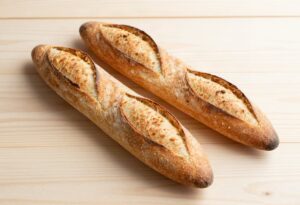
Baguette

Blinis

Bran bread
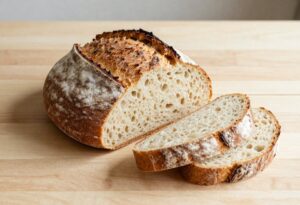
Country loaf (pain de campagne)

Ham croissant

Italian bread

Meat puff pastry (friand)

Meat turnover

Milk bread roll

Multigrain bread
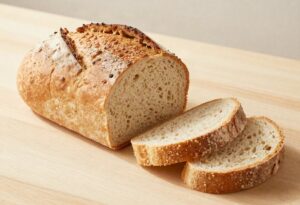
Pain bis (light wholemeal bread)
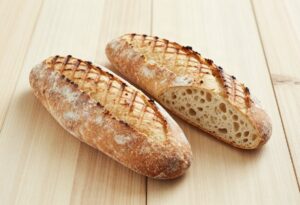
Panini bread

Pitta bread

Pumpernickel bread
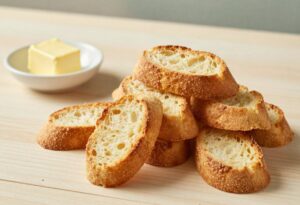
Rusks (biscotte)

Rye bread

Sourdough bread
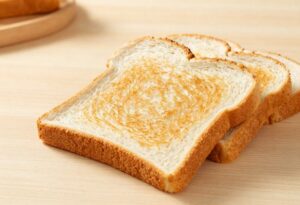
Toasted white bread

Wholemeal bread
Why bread is not the enemy it is made out to be
Bread is wrongly demonised in some slimming advice. A good bread, wholemeal, sourdough, made with quality flours, is in fact a valuable food. It provides complex carbohydrate (long-lasting energy), fibre, B vitamins, magnesium and iron. The problem is not bread itself, it is the quantity, the quality and what you put on it.
An industrial white baguette has little nutritional value and a high glycaemic index. A wholemeal sourdough loaf is a real health asset.
How to choose a good loaf
Favour natural sourdough
Sourdough is a traditional fermentation that partly transforms the carbohydrates and proteins in bread. The result: better digestibility, a lower glycaemic index, a longer shelf life and a more complex flavour. By contrast, bread made with industrial baker’s yeast is quick to produce but far less interesting.
Ask your baker whether they use real sourdough or yeast. You can see the difference (a more open, denser crumb for sourdough) and taste it (a slightly tangy note).
Prefer wholemeal or semi-wholemeal
Wholemeal bread still contains the bran and germ of the grain, so much more fibre, vitamins and minerals. 3 times more fibre than white bread, weight for weight. It is also the bread that keeps you full the longest.
Vary the grains
Wheat is not the only option. Rye, spelt, oat, buckwheat or multigrain breads provide different nutritional profiles and more diversity for the microbiome.
What about gluten intolerance?
Bread contains gluten, apart from special cases (pure buckwheat bread, cornbread, rice bread). For people who are gluten intolerant or hypersensitive, alternatives exist, often based on rice flour, buckwheat or gluten-free blends. Read the labels: some « gluten-free » industrial versions are actually ultra-processed.
Worth noting: many people who think they tolerate gluten badly actually cope very well with wholemeal sourdough bread made from ancient wheats (spelt, einkorn). Long fermentation breaks down some of the gluten.
The pitfalls to avoid
- Industrial sliced bread: ultra-processed, full of added sugar, refined oils and preservatives. To be eaten rarely.
- Shop-bought pastries: croissants, pains au chocolat, industrial brioches. Closer to sugary foods than to bread.
- Supermarket « organic » breads: often disappointing compared with real artisan bread. Organic is not everything: sourdough and flour count just as much.
How much per day?
For an adult, 2 to 3 portions a day (roughly 100 to 150 g of bread) is a good starting point, to adjust to your physical activity. One at breakfast with your fromage blanc, another with lunch. Eat bread with meals rather than between them.
Which ones to choose
- Every day: wholemeal or semi-wholemeal sourdough
- For variety: rye bread, multigrain bread, pumpernickel, wholemeal pitta
- For occasions: traditional white baguette, country loaf
- For athletes: wholemeal bread before exercise, white bread afterwards (fast sugars)
Going further
Bread is one of the foods that best suits the principle of « quality over quantity ». A little very good artisan bread, made with love, is worth far more than half an insipid industrial baguette. If you can make it yourself (bread machine or oven), even better, and it is one of the keys to a lasting balanced diet.