Famille d'aliments · Cereals & grains
Les cereals & grains, fibres et bonnes calories.
Oats, wheat, maize, barley, rye, spelt, rice, buckwheat… Cereals have been the dietary foundation of humanity for 10,000 years. Rich in complex carbohydrate, fibre, B vitamins and minerals, they are also extremely varied in how they are used: whole grains, flakes, flours, semolinas… Choosing wholegrain rather than refined versions makes all the difference nutritionally.
Foods in the group
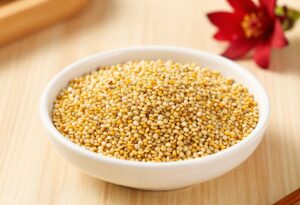
Amaranth
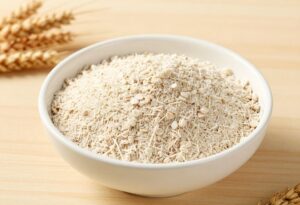
Barley flour
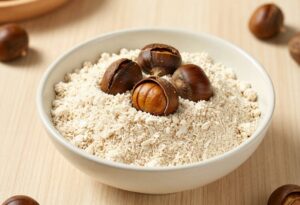
Chestnut flour
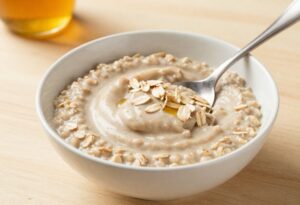
Cooked oat bran
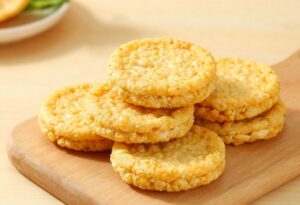
Corn cakes
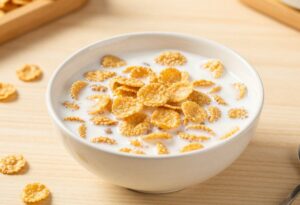
Corn Flakes
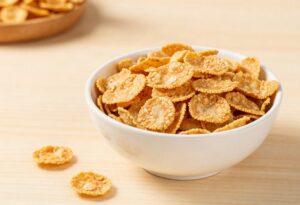
Corn flakes
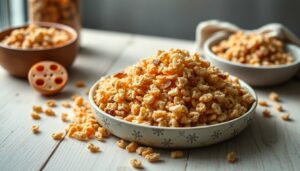
Crispy rice
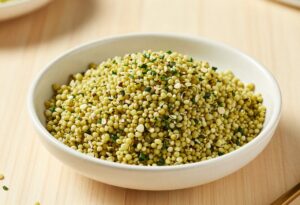
Freekeh
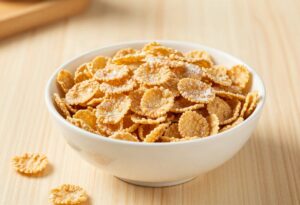
Frosted corn flakes
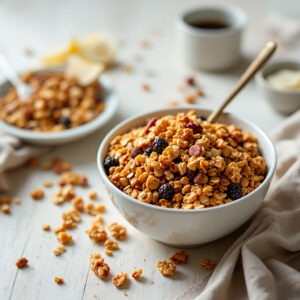
Granola
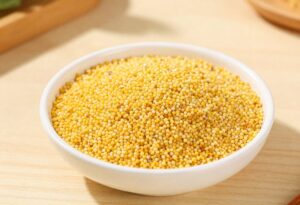
Millet
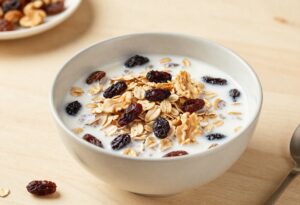
Muesli (Weetabix)
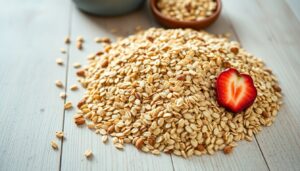
Oats
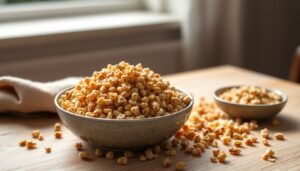
Puffed wheat
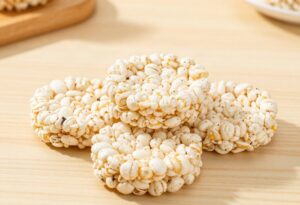
Rice cake
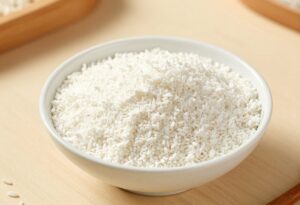
Rice flour
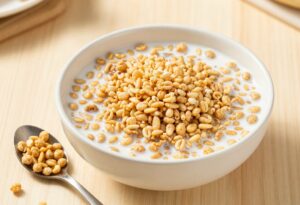
Rice Krispies
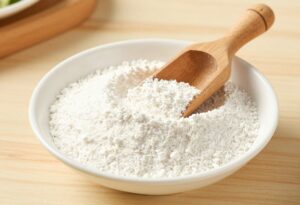
Rice starch
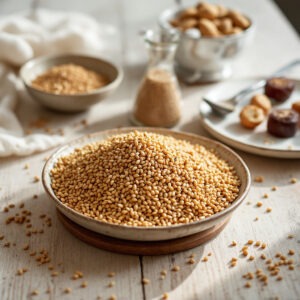
Spelt
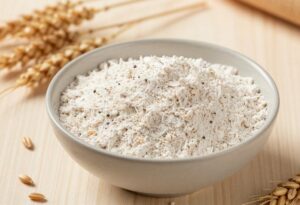
Spelt flour
Cereals and starchy foods: what is the difference?
Cereals are a sub-group of starchy foods. Strictly speaking, they are the seeds of plants in the grass family (Poaceae): wheat, rice, maize, barley, oats, rye, millet. Buckwheat and quinoa, often grouped with them, are in fact « pseudo-cereals » (a different botanical family) but are used in the same way.
The most important point for you: almost all cereals should be eaten in wholegrain form to keep their nutritional value.
What cereals give you
Wholegrain cereals are a remarkable source of fibre (which is sorely lacking in the average French diet), B vitamins (B1, B3, B6, folate), magnesium, iron and zinc. They supply the carbohydrate energy the brain and muscles need, in slow-release form, which is ideal for concentration and fullness.
Refined cereals (white flour, white rice, white pasta), on the other hand, have lost most of their fibre, vitamins and minerals. They provide little more than calories.
With or without gluten?
Gluten is a protein found in wheat, barley, rye, spelt, kamut and oats (through contamination). For most people gluten is not a problem, and it can even be an excellent food when eaten in wholegrain form and from heritage wheats.
For people who are gluten intolerant (coeliac) or hypersensitive, several cereals and pseudo-cereals are naturally gluten-free:
- Rice (in all its forms)
- Maize and polenta
- Buckwheat (despite its name, it has nothing to do with wheat)
- Quinoa
- Millet, teff, amaranth
Breakfast cereals: be careful
Shop-bought breakfast cereals are among the worst foods hiding behind a « healthy » label. Corn flakes, chocolate pillows, sweetened mueslis: these products are often full of empty calories, with a high glycaemic index and plenty of added sugar. Read the labels: if the ingredients list starts with « puffed cereals, sugar, glucose syrup… », put the packet back.
Healthy alternatives: plain porridge oats, « organic » muesli with no added sugar, homemade granola, wholemeal or rye bread.
What to choose day to day
- Oats: the nutritional champion. Beta-glucans for cholesterol, fibre, decent protein. Perfect at breakfast as porridge.
- Barley: little known, with an excellent glycaemic index, perfect in a risotto or a salad
- Quinoa: a pseudo-cereal with a complete protein profile, gluten-free
- Buckwheat: Breton galettes, kasha, versatile and gluten-free
- Spelt and einkorn: heritage wheats, better tolerated than modern wheat
- Brown and semi-brown rice: alternatives to white rice
How to cook them well
- Soaking: for some cereals (spelt, barley), soaking for a few hours improves digestibility and shortens cooking time
- Cook in 1.5 to 2 times their volume of water, with a little salt and, if you like, a drizzle of olive oil
- Reuse leftovers in salads, gratins and soups: see our article on batch cooking
- Pair with pulses for a complete protein profile: rice and lentils, semolina and chickpeas, polenta and beans
Going further
Vary your cereals over the week rather than always eating rice and pasta: your gut microbiome, your taste buds and your micronutrient intake will all benefit. Cereals fit perfectly into a Cretan-style diet, the basis of a balanced diet.
Guides to read
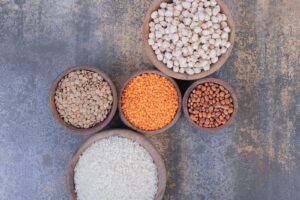
Gluten-free eating: a guide to flours and alternatives

Low FODMAP Diet: Easing Irritable Bowel Syndrome

The Cretan Diet: Good for Your Heart

Acid reflux and heartburn: what to eat
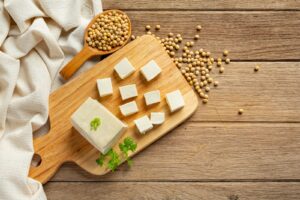
Plant protein: sources, benefits and good food combinations
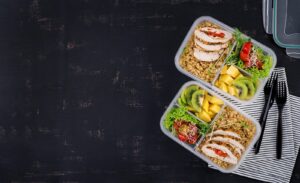
Nutrition for muscle gain: the guide to building muscle
Eating lactose-free every day: guide and tips