Famille d'aliments · Meat
Les meat, protéines et fer en quantité.
Poultry, beef, lamb, pork, game… Meat provides very high-quality protein, haem iron (the best absorbed), vitamin B12 and zinc. But not all meats are equal, and public health recommendations have evolved: the PNNS advises limiting red meat to 500 g a week and processed meat to 150 g, while favouring poultry. Here is how to fit meat sensibly into a balanced diet.
Foods in the group
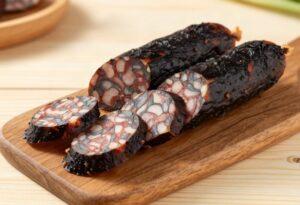
Andouille

Andouille de Guéméné

Andouille de Vire

Andouillette

Andouillette de Troyes
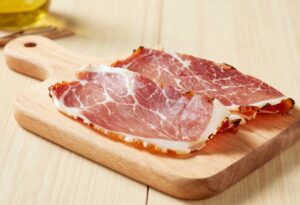
Bayonne ham

Beef (lean steak, cooked)

Beef beer sausage

Beef bologna sausage
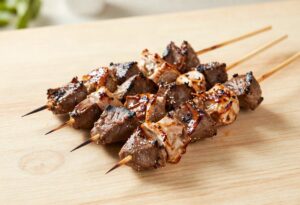
Beef heart
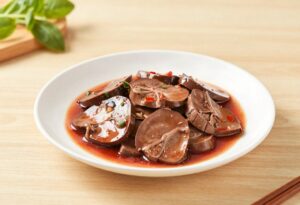
Beef kidney
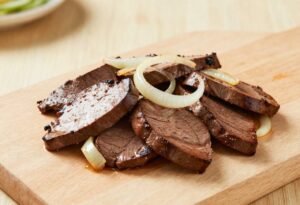
Beef liver
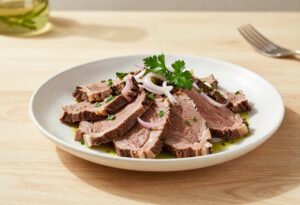
Beef muzzle

Beef salami

Beef steak

Bison
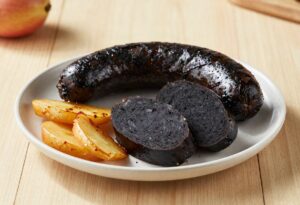
Black pudding

Black pudding (boudin)

Braised chicken

Braised pork loin
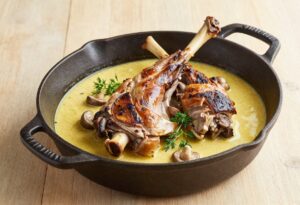
Braised rabbit
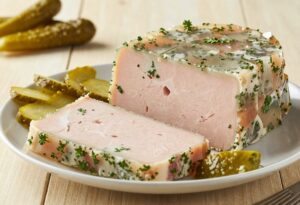
Brawn (head cheese)

Breaded turkey nuggets
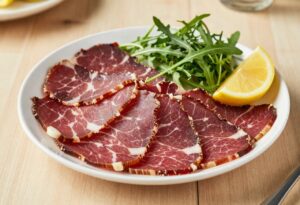
Bresaola
The nutritional contribution of meat
Meat is a source of complete protein: it contains all the essential amino acids in the right proportions. That is its main strength, especially for athletes, older people and anyone recovering. It also provides haem iron (better absorbed than plant iron), vitamin B12 (not found in plants) and zinc.
But depending on the meat you choose, the profile changes radically: a chicken escalope has nothing in common nutritionally with a sausage, or with a burger patty that is 20% fat.
Red meat, white meat: the differences
Red meat
Beef, lamb, mutton, veal, pork, game: rich in haem iron and protein, but also higher in saturated fat. The IARC classifies it as probably carcinogenic (group 2A) when consumption is high. The PNNS recommends 500 g a week at most, roughly 2 to 3 portions.
White meat
Chicken, turkey, rabbit: leaner and easier to digest, with no particular limit on consumption. To be favoured in a balanced diet, especially when cutting or recovering from exercise, thanks to their very favourable protein/fat ratio.
Processed meats
Saucisson, cured ham, lardons, rillettes: classified as definitely carcinogenic (IARC group 1) because of the nitrites, salt and the processing involved. The PNNS recommends 150 g a week at most. They are also foods rich in empty calories, to be eaten occasionally.
How to cook it well
Avoid aggressive cooking methods (barbecue, deep-frying, very hard searing) that generate potentially carcinogenic compounds (heterocyclic amines, polycyclic aromatic hydrocarbons). Favour gentle cooking: braised, casseroled, slow-cooked, steamed, or pan-cooked until just pink.
A few extra tips:
- Choose lean cuts: escalope, fillet, duck breast, rump, shoulder
- Trust your butcher for provenance and quality, rather than anonymous supermarket trays
- Adjust your portions: 100 to 150 g per meal is plenty for an adult
- Think of bone broth, an underrated classic: see our guide to the benefits of bone broth
Which ones to choose
- For every day: lean poultry (chicken, turkey, guinea fowl), eggs (technically classed separately)
- For 1 to 2 times a week: lean red meat (rump, beef fillet, leg of lamb)
- For occasions: fattier meats (rib steak, fatty lamb), processed meats
- To limit: processed meats and meat-based ready meals, low in nutrients and rich in empty calories
Cutting down on meat: why and how
More and more nutritionists recommend reducing the animal share in favour of plant foods, for both health and environmental reasons. Good news: pulses (lentils, chickpeas, beans) combined with cereals offer an amino acid profile equivalent to that of meat, for far less money and with a negligible environmental impact. One or two vegetarian days a week are an excellent starting point.
Going further
Balance does not mean elimination. It is the right place for each food. Meat, carefully chosen and eaten in moderation, remains an excellent food. Combined with vegetables and wholegrain starchy foods, it makes nutritious, satisfying meals, which is the very spirit of a balanced diet.