Famille d'aliments · Condiments & sauces
Les condiments & sauces, fait-maison plutôt qu'industriel.
Mustard, ketchup, mayonnaise, vinaigrette, soy sauce, Tabasco, gherkins… Condiments and sauces lift a dish and add enjoyment. But they can also be real nutritional traps when they are shop-bought: hidden sugars, too much salt, additives, poor-quality oils. Here is how to navigate this strategic aisle.
Foods in the group
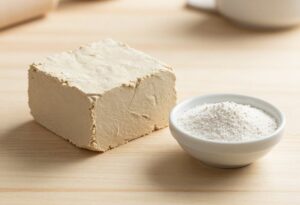
Baker’s yeast (dried)

Baking powder

Barbecue sauce

Béchamel sauce
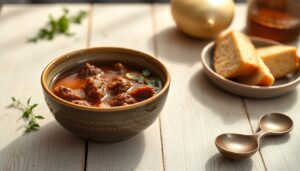
Beef broth
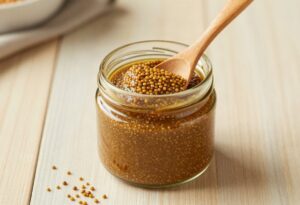
Brown mustard
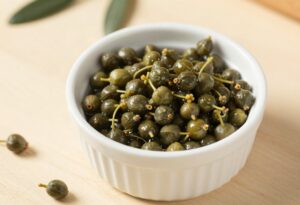
Capers

Chicken broth

Chilli sauce

Court-bouillon
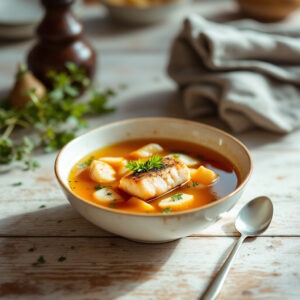
Fish stock
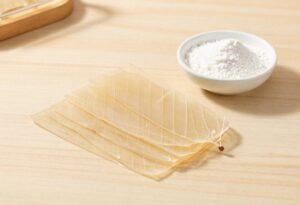
Gelatine

Gherkins

Homemade vinaigrette

Horseradish

Ketchup
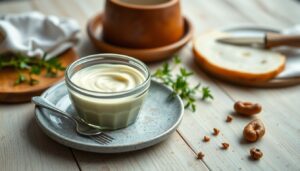
Light mayonnaise
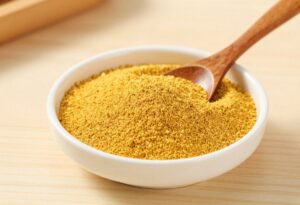
Malted yeast (nutritional yeast)

Mayonnaise

Miso (fermented soya bean paste)

Mushroom sauce
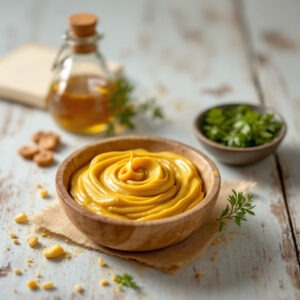
Mustard
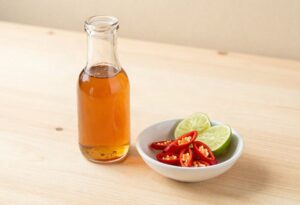
Nuoc-mam sauce
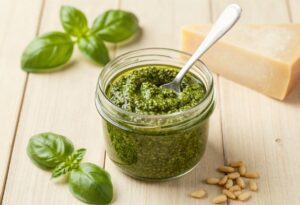
Pesto
The role of condiments in a balanced diet
Condiments turn simple dishes into delightful meals. A green salad with no dressing is bland; with a good homemade vinaigrette, it becomes a tasty dish. So the problem is not condiments in themselves, but what is in them and how much you use.
Shop-bought condiments are often loaded with added sugar (ketchup contains ~25% sugar!), salt, poor-quality refined oils and additives. It is one of the big topics for anyone wanting a lasting balanced diet.
The real good news
Several classic condiments are actually excellent for your health when eaten in moderation:
- Mustard: low in calories, low in sugar, rich in sulphur compounds. A real alternative to salt for adding flavour.
- Good-quality balsamic vinegar, cider vinegar: few calories, little sugar, polyphenols.
- Soy sauce, tamari: go easy because of the salt, but low in calories and full of flavour.
- Gherkins, capers: very low in calories, rich in antioxidants. Watch the salt content.
- Tabasco and plain hot sauces: made from chilli, vinegar and salt, with no sugar.
- Homemade pesto: olive oil, basil, pine nuts, Parmesan, a concentrate of good fats and antioxidants.
The shop-bought traps
On the other hand, some shop-bought condiments should be used sparingly:
- Shop-bought ketchup: 25% sugar on average. The equivalent of a sugar lump per tablespoon.
- Shop-bought mayonnaise: very high in calories, often made with refined oils of dubious quality.
- Shop-bought salad dressings: added sugar, preservatives, flavour enhancers.
- Barbecue and « American » sauces: too much sugar, salt and additives.
- Stock cubes: 50% salt on average. Handy in an emergency but best used in moderation.
The alternative: make it yourself
Homemade vinaigrette is probably the simplest and most effective thing you can do to improve your diet. It takes 30 seconds: 1 tablespoon of mustard, 2 tablespoons of vinegar, 4 to 6 tablespoons of olive oil, salt and pepper. Over a year, it replaces litres of shop-bought dressing.
The same goes for:
- Homemade tomato sauce: tomatoes, onion, garlic, basil, olive oil. No added sugar.
- Homemade mayonnaise: oil, egg yolk, mustard, vinegar. The taste is nothing like the shop-bought kind.
- Homemade béchamel sauce: butter, flour, milk, with no need for the carton version full of additives.
- Homemade hummus: chickpeas, tahini, lemon, garlic, olive oil. Ideal with drinks.
How to read labels properly
A few rules to tell a good condiment from a trap:
- Short ingredients list: fewer than 5 or 6 recognisable ingredients
- Sugar in the first 3 ingredients: avoid (except for compotes and jams, obviously)
- Salt below 1.5 g per 100 g: reasonable
- No unspecified refined oil: prefer « high-oleic sunflower oil » or « olive oil » to « vegetable oil »
- No flavourings, flavour enhancers or glucose-fructose syrups
How much?
Condiments should accompany a dish, not dominate it. A tablespoon of dressing per person, half a teaspoon of mustard, a tablespoon of ketchup now and then: that is the right range. If your dishes are swimming in sauce, something is out of balance.
Going further
To cut down on shop-bought sauces, rely on herbs and spices, which bring flavour and complexity without empty calories. Combined with a good olive oil and a little vinegar, they are the basis of Mediterranean cooking, the cooking of the Cretan diet.