Group · Vegetables
Kale
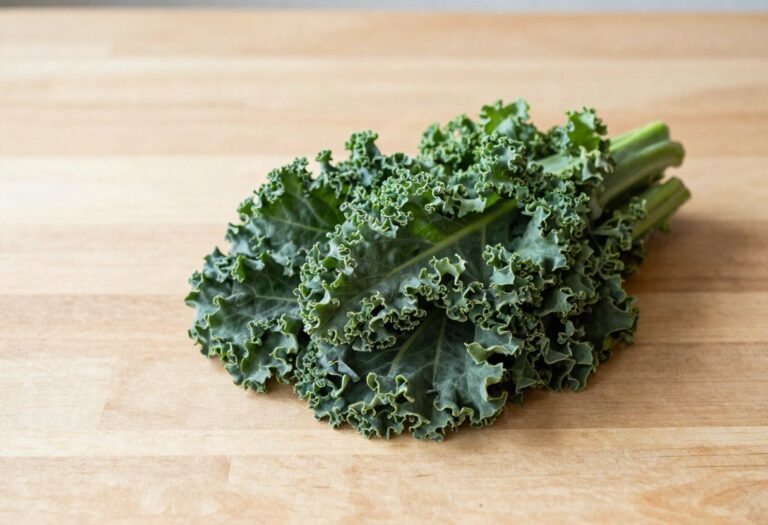
Kale, a curly, non-heading cabbage, is one of the oldest cabbages grown in Europe. It was long a peasant winter vegetable before coming back by way of California. Its curly leaves are eaten raw, sautéed or roasted as crisps.
In terms of nutrition facts, raw it provides 34.6 kcal per 100 g, with 2.92 g of protein and 4.1 g of fibre. Its exceptional figures: 390 µg of vitamin K1, five times the reference intake, 93.4 mg of vitamin C, 254 mg of calcium and 2,870 µg of beta-carotene per 100 g.
Macronutrient breakdown
Nutrition table per 100 g
| Calories | 35 kcal |
| Kilojoules | 143 kJ |
| Protein | 3 g |
| Carbohydrate | 0,4 g |
| Fat | 1,5 g |
| Fibre | 4,1 g |
Micronutrients per 100 g
All measured nutrients, ranked by share of the daily reference intake.
- Vitamin K1390 µg520 %
- Vitamin C93,4 mg117 %
- Manganese0,92 mg46 %
- Calcium254 mg32 %
- Vitamin A239 µg30 %
- Vitamin B20,35 mg25 %
- Potassium348 mg17 %
- Iron1,6 mg11 %
- Vitamin B9dietary folate equivalents62 µg
See the other 9 nutrients
- Vitamin B60,15 mg11 %
- Vitamin B10,11 mg10 %
- Magnesium33 mg9 %
- Phosphorus55 mg8 %
- Vitamin B31,18 mg7 %
- Vitamin B50,37 mg6 %
- Vitamin E0,66 mg6 %
- Copper0,05 mg5 %
- Zinc0,39 mg4 %
Anses Ciqual 2025. Source: Anses, 2025, Ciqual food composition table
Tips
254 mg of calcium for 34.6 kcal: the best vegetable in our database. And the calcium in cruciferous vegetables is well absorbed, unlike that in spinach, which oxalates block. A real argument if you limit dairy products.
93.4 mg of vitamin C: more than an orange. A 100 g portion comfortably covers the reference intake. Long cooking destroys a large part of it: eat it raw, steamed or quickly sautéed.
390 µg of vitamin K1: take care on anticoagulants. People on vitamin K antagonists do not need to cut it out, but to keep their intake steady: it is sudden changes that throw the INR off. Talk to the doctor who monitors the treatment.
Massage it before eating it raw. Its leaves are tough: two minutes of massaging by hand with a little olive oil and lemon break down the fibres and make it tender. This is the step that changes everything.
Remove the central rib. It stays hard however you cook it. One step, and the kale becomes pleasant to eat.