Group · Dairy
Fourme de Montbrison
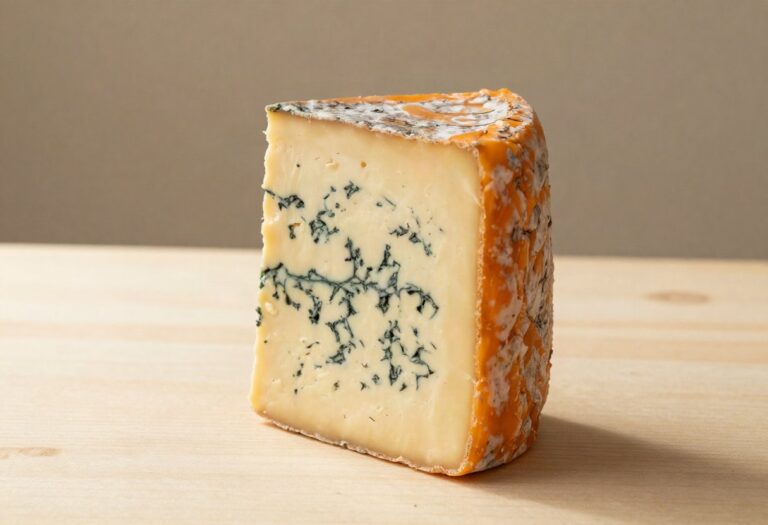
Fourme de Montbrison is a blue cheese from the Forez, PDO since 2002, long confused with Fourme d’Ambert, from which it was administratively inseparable until 2002. It is set apart by a maturing process on softwood draining racks, which gives it a woody note.
In terms of nutrition facts: 365 kcal per 100 g, with 30.8 g of fat of which 20.5 g is saturated, and 22.1 g of protein. It carries 1.63 g of salt per 100 g.
Macronutrient breakdown
Nutrition table per 100 g
| Calories | 365 kcal |
| Kilojoules | 1510 kJ |
| Protein | 22,1 g |
| Fat | 30,8 g |
Micronutrients per 100 g
All measured nutrients, ranked by share of the daily reference intake.
- Omega-3 ALA0,16 g8 %
- EPA0,02 g8 %
- Total omega-30,18 g7 %
- Omega-6 LA0,39 g4 %
Anses Ciqual 2025. Source: Anses, 2025, Ciqual food composition table
Tips
Richer and denser than Fourme d’Ambert. 365 kcal against 339, with 30.8 g of fat. Draining on racks removes more whey, which concentrates the paste.
A 30 g portion comes to 110 kcal, and provides 6.6 g of protein for 0.49 g of salt. This is a sensible cheeseboard portion.
Its taste is drier and less creamy. A direct result of the draining: it crumbles more than it spreads. On a salad or in an omelette, that is an advantage.
It is rare. There are only about thirty producers: it is found mainly in Auvergne and Rhône-Alpes, or at a cheesemonger. That is all the more reason to try it when the chance arises.
Raw milk most often. The PDO allows both: the label settles it, and it is what pregnant women should check.