Group · Fats & oils
Cottonseed oil
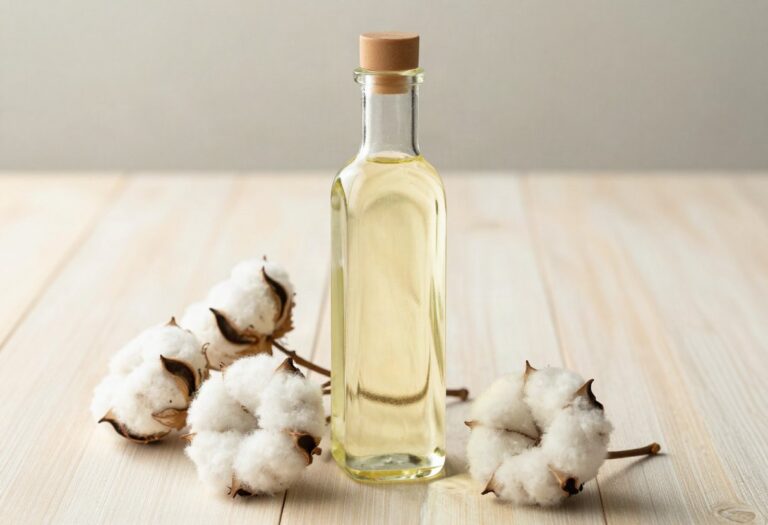
Cottonseed oil is extracted from the seeds of the cotton plant, a by-product of the textile industry. Widely used by the American food industry, it is rare to find on sale directly in Europe.
In terms of nutrition facts: 900 kcal per 100 g and 100 g of fat, including 51.9 g of polyunsaturated, 17.8 g of monounsaturated and 25.9 g of saturated fat, a high level for a vegetable oil. It provides 35.3 mg of vitamin E per 100 g.
Macronutrient breakdown
Nutrition table per 100 g
| Calories | 900 kcal |
| Kilojoules | 3700 kJ |
| Fat | 100 g |
Micronutrients per 100 g
All measured nutrients, ranked by share of the daily reference intake.
- Omega-6 LA51,5 g515 %
- Vitamin E35,3 mg294 %
- Vitamin K124,7 µg33 %
- Omega-3 ALA0,2 g10 %
Anses Ciqual 2025. Source: Anses, 2025, Ciqual food composition table
Tips
25.9 g of saturated fatty acids: the highest in this batch. Three times more than almond oil. It is a vegetable oil with an unfavourable profile.
Gossypol has to be removed during refining. This natural compound in cottonseed is toxic and reduces fertility. Edible oils on sale are refined to remove it, which rules out any “virgin” or artisan version.
35.3 mg of vitamin E is its only strength. A good score, but it does not make up for its fatty acid profile.
You mostly meet it without knowing. In crisps, biscuits and American industrial frying. In Europe, it is rare in shops.
You are better off with olive or rapeseed. For everyday use, olive oil has a much better profile and far more scientific evidence behind it.