Group · Fats & oils
Salmon oil
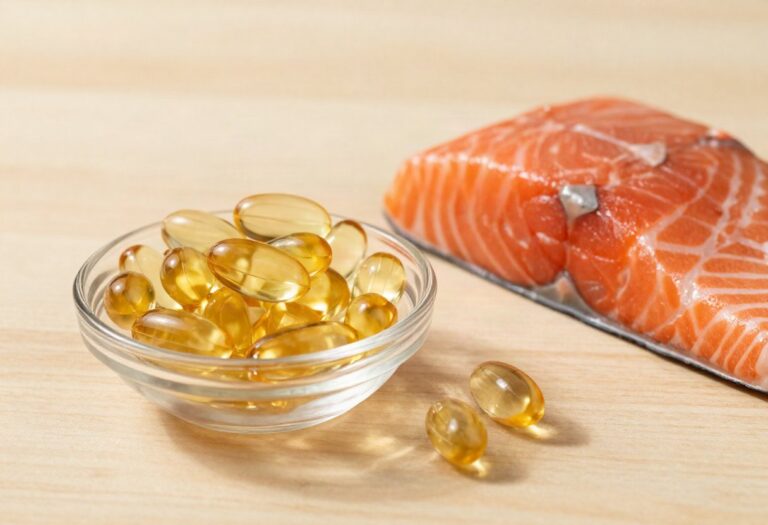
Salmon oil is extracted from the flesh and by-products of salmon. Sold mainly as a supplement in capsules, it is sought after for its long-chain omega-3 fatty acids, EPA and DHA.
In terms of nutrition facts: 900 kcal per 100 g and 100 g of fat, like any oil. What sets it apart is its cholesterol content: 485 mg per 100 g. It is an animal fat, unlike all the other oils in this group.
Macronutrient breakdown
Nutrition table per 100 g
| Calories | 900 kcal |
| Kilojoules | 3700 kJ |
| Fat | 100 g |
Micronutrients per 100 g
All measured nutrients, ranked by share of the daily reference intake.
- DHA18,2 g7280 %
- EPA13 g5200 %
- Total omega-331,2 g1248 %
Anses Ciqual 2025. Source: Anses, 2025, Ciqual food composition table
Tips
It is an animal fat, not a vegetable oil. Its 485 mg of cholesterol is a reminder. Its influence on blood cholesterol remains small, but the distinction is real.
Its appeal is EPA and DHA. These are the long-chain omega-3s that the body makes very poorly from plant omega-3s. No vegetable oil provides them directly.
But eating fish is still better. A sardine or a pilchard provides the same fatty acids along with protein, calcium, iodine and vitamin D. EFSA has not approved any claim that justifies replacing fish with capsules.
Oxidation is the real problem with supplements. Omega-3s go rancid quickly, and several analyses have found oxidised capsules on shop shelves. A capsule that smells strongly of fish should be thrown away.
Anticoagulants: mention them. At high doses, omega-3s lengthen bleeding time. People on treatment should talk to their doctor before taking a supplement.