Group · Nuts & seeds
Alfalfa seeds
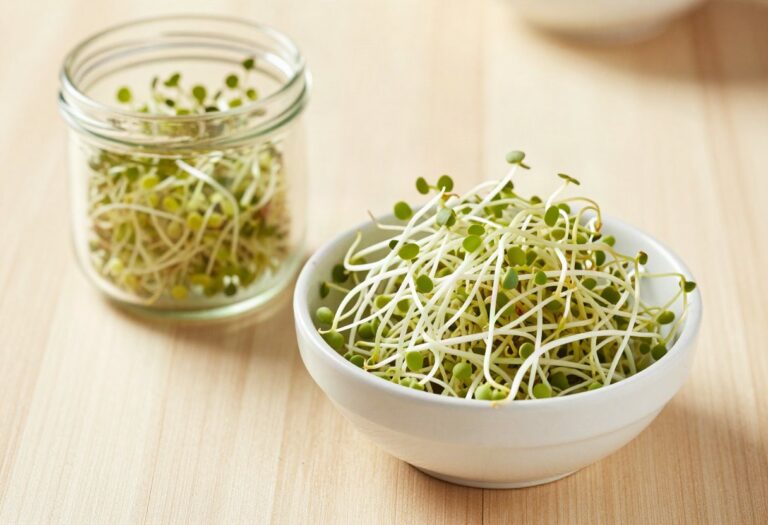
Alfalfa seeds, also called lucerne, are mainly eaten sprouted, as fine, crunchy shoots. The plant is also one of the world’s main forage crops.
In terms of nutrition facts, dry seed: 426 kcal per 100 g, with 35 g of protein, 39.3 g of carbohydrate, 12.6 g of fat and 7.9 g of fibre. They provide 90 µg of selenium, 12.9 mg of iron, 136 mg of calcium and 6.9 mg of zinc per 100 g.
Macronutrient breakdown
Nutrition table per 100 g
| Calories | 426 kcal |
| Kilojoules | 1790 kJ |
| Protein | 35 g |
| Carbohydrate | 39,3 g |
| Fat | 12,6 g |
| Fibre | 7,9 g |
Micronutrients per 100 g
All measured nutrients, ranked by share of the daily reference intake.
- Selenium90 µg164 %
- Vitamin B11,08 mg98 %
- Iron12,9 mg92 %
- Zinc6,9 mg69 %
- Vitamin B20,58 mg41 %
- Vitamin C26 mg33 %
- Calcium136 mg17 %
- Vitamin B31,8 mg11 %
Anses Ciqual 2025. Source: Anses, 2025, Ciqual food composition table
Tips
These figures are for the dry seed, not the sprouts. This is the essential point: once sprouted, the seeds soak up water and their composition per 100 g falls considerably. You eat sprouts, not seeds.
Raw sprouted seeds pose a real food safety problem. The conditions for sprouting, warmth and humidity, favour salmonella and E. coli. Several European outbreaks have been attributed to them. Health authorities advise against them for pregnant women, young children, older people and those with weakened immune systems.
L-canavanine is a second caveat. This amino acid in alfalfa has been linked to lupus flare-ups in reported cases. People with an autoimmune disease should avoid it.
12.9 mg of iron and 90 µg of selenium. Spectacular figures for the dry seed, but of no practical significance: nobody eats 100 g of alfalfa seeds.
Sprout them yourself, and rinse twice a day. It is the only way to control hygiene, and sprouting in a clean jar clearly reduces the risk.