The short answer
Among 49 almond butters sold in France, sugars range from 1 to 4.2 g per 100 g, all naturally present in the almond, because no product in the ranking adds sugar. The real question is therefore not the brand, it is blanched or wholegrain: the wholegrain version provides up to 13 g of fibre against 7.6 g for a blanched one.
Blanched or wholegrain: the only choice that matters
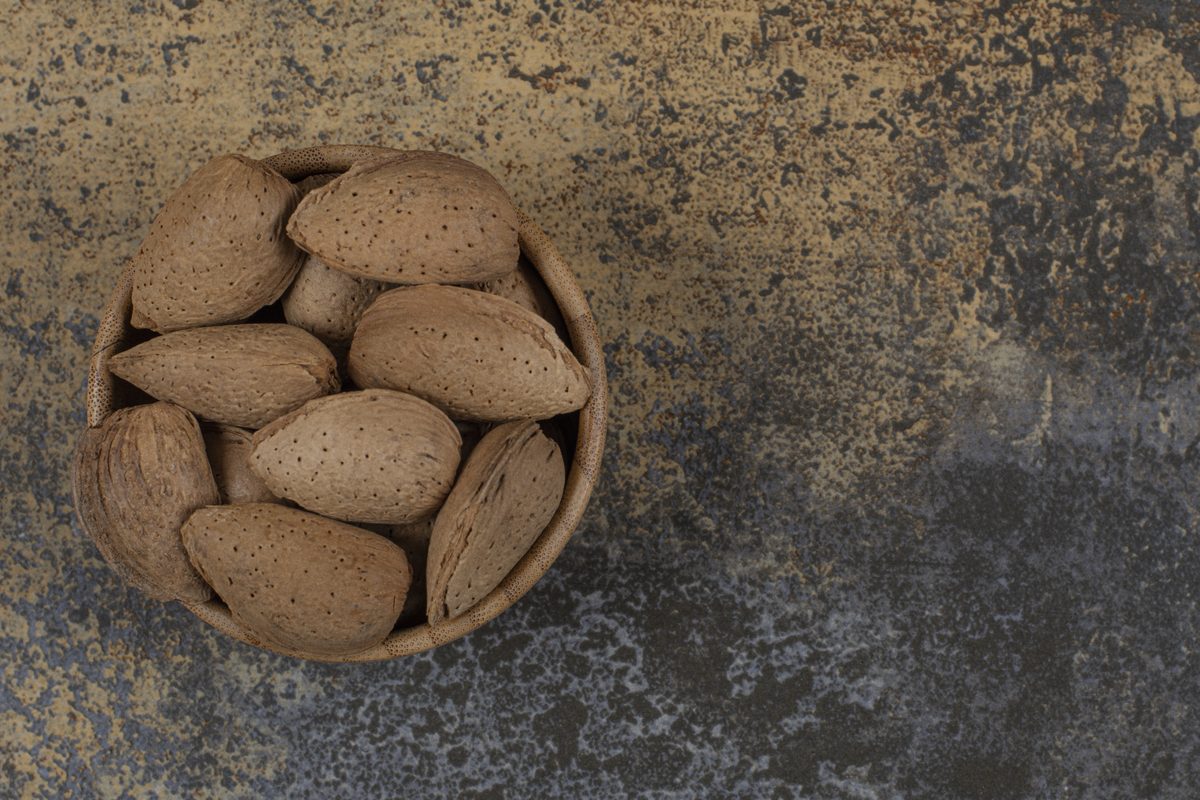
Blanched almond butter is made from skinless almonds. The wholegrain version keeps the skin, and with it the fibre and the polyphenols. The taste differs too: blanched is mild and neutral, wholegrain is stronger, almost roasted.
| Brand and product | Type | Fibre | Protein | Sugars | Energy |
|---|---|---|---|---|---|
| L’Amandaie, wholegrain almond butter | wholegrain | 13 g | 23 g | 4.2 g | 615 kcal |
| Senfas, wholegrain almond cream | wholegrain | 12.6 g | 25.4 g | 1.0 g | 634 kcal |
| Direct Producteurs, wholegrain from Spain | wholegrain | 12.5 g | 22.6 g | 4.2 g | 615 kcal |
| Maribel, organic wholegrain almond butter | wholegrain | 11 g | 23 g | 3.5 g | 653 kcal |
| Damiano, Amandino roasted butter | wholegrain | 8.9 g | 26.5 g | 3.0 g | 643 kcal |
| Bio par nature, wholegrain almond butter | wholegrain | 8.8 g | 20 g | 3.5 g | 651 kcal |
| U, wholegrain almond butter | wholegrain | 8.7 g | 23 g | 3.8 g | 656 kcal |
| Damiano, Amandino | wholegrain | 8.6 g | 24.5 g | 2.0 g | 633 kcal |
| Maribel, blanched almond butter | blanched | 8.4 g | 25 g | 3.3 g | 656 kcal |
| Rigoni di Asiago, almond butter | wholegrain | 7.9 g | 24 g | 3.6 g | 668 kcal |
| Elibio, blanched almond butter | blanched | 7.8 g | 28.6 g | 4.1 g | 644 kcal |
| Go Nuts, toasted wholegrain | wholegrain | 7.7 g | 17.5 g | 4.0 g | 594 kcal |
| L’Amandaie, blanched almond butter | blanched | 7.6 g | 24 g | 4.0 g | 679 kcal |
The first eight places are all wholegrain almond butters. The fibre gap between the best wholegrain and the best blanched is 4.6 g per 100 g, or 1.4 g per 30 g spoonful. On this criterion alone, wholegrain wins.
What is remarkable about this aisle
No product adds sugar
This is the opposite of peanut butter, where sixteen products out of sixty-three list sugar first. Here, the 1 to 4.2 g of sugars are those of the almond. The ingredient lists come down to one word: “almonds”. A few products add salt, none adds oil, none contains an additive.
The practical consequence: with this product, you can buy with your eyes closed, which is not true of any other aisle we have compared.
The protein gap is real
From 17.5 g for Go Nuts to 28.6 g for Elibio, which is 63% more. It is the only significant gap in the table, and it probably comes from the variety and the degree of roasting. If you are after protein, look at this column rather than the fibre.
All of them are above 590 kcal per 100 g
From 594 to 679 kcal: it is a dense food, like all nuts. A 15 g spoonful provides about 95 kcal. That is not a flaw, it is the nature of the product, but it needs counting. Our almond page gives the detail for the whole food, and our ranking of foods high in magnesium shows where it stands among nuts.
Almond butter or peanut butter
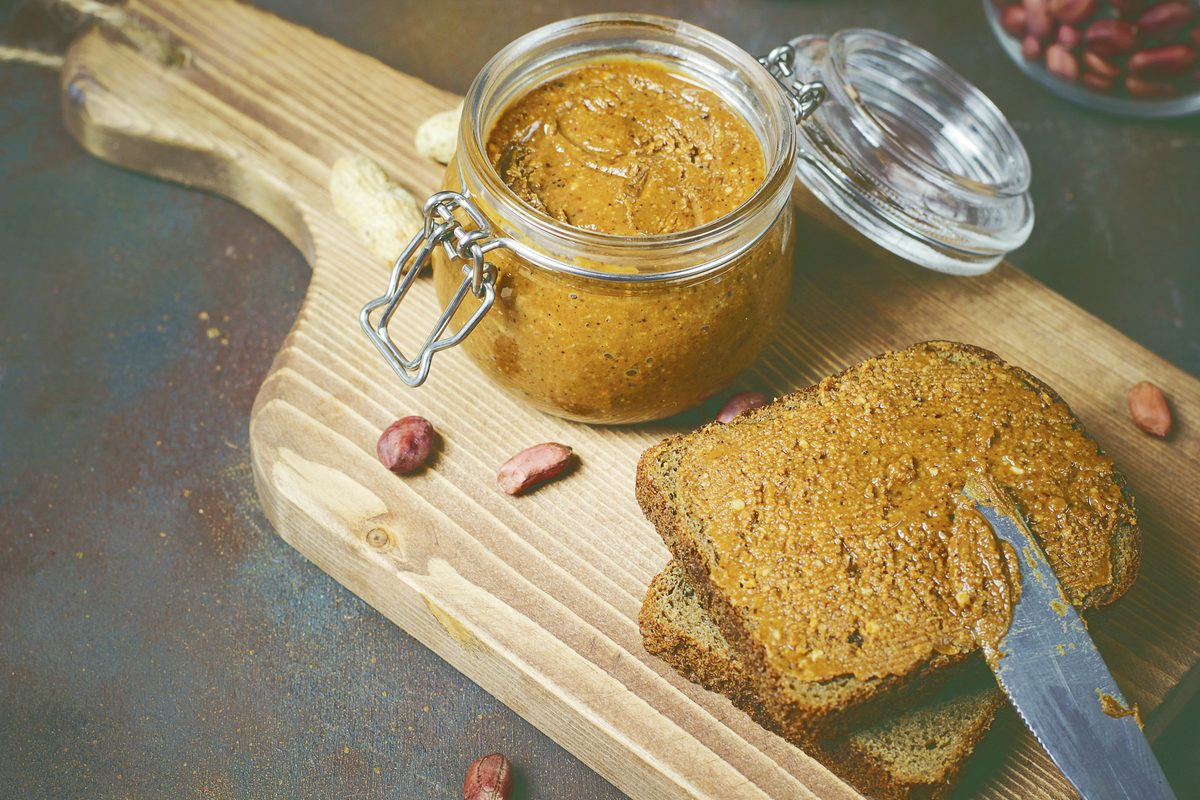
Both spread well, but the profiles differ. Almond butter provides more fibre, up to 13 g against about 8 g, and more magnesium. Peanut butter provides more protein, up to 30.4 g against 28.6 g, and costs noticeably less. See our peanut butter comparison, where the state of the aisle is much worse.
Our sources
- Open Food Facts, viewed on 24/09/2026: 49 almond butter products sold in France, with ingredient lists and nutrition values.
- Ciqual 2025 table (Anses) for the whole almond page.
- As the database is collaborative, an entry may be out of date. The values were checked by hand and off-topic products were removed: sesame purées, chocolate blends, plant-based drinks.