Group · Sweet foods
Crème brûlée
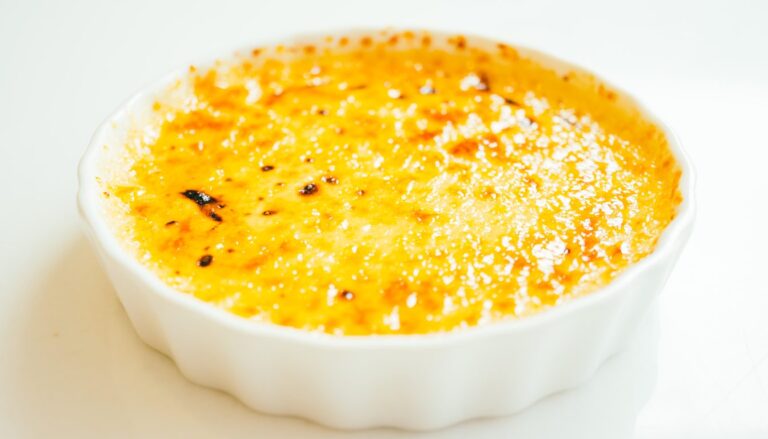
Crème brûlée is a custard made with egg yolks, cooked in a bain-marie and topped with a layer of sugar caramelised with a blowtorch. Its base is double cream, not milk, which sets it apart from every other dessert in the aisle.
In terms of nutrition facts: 269 kcal per 100 g, with 20.1 g of fat of which 13.1 g saturated fatty acids, 17.5 g of carbohydrate of which 16.3 g sugars, and 4.35 g of protein. It contains 193 mg of cholesterol per 100 g, from the yolks.
Macronutrient breakdown
Nutrition table per 100 g
| Calories | 269 kcal |
| Kilojoules | 1120 kJ |
| Protein | 4,4 g |
| Carbohydrate | 17,5 g |
| Fat | 20,1 g |
| Fibre | 0,4 g |
Micronutrients per 100 g
All measured nutrients, ranked by share of the daily reference intake.
- Vitamin A179 µg22 %
- Vitamin B120,35 µg14 %
- Phosphorus97 mg14 %
- Vitamin B20,19 mg14 %
- Vitamin B926,2 µg13 %
- Iodine17,5 µg12 %
- Vitamin B50,59 mg10 %
- Calcium64,3 mg8 %
See the other 8 nutrients
- Omega-6 LA0,8 g8 %
- Zinc0,6 mg6 %
- Iron0,8 mg6 %
- Omega-3 ALA0,1 g5 %
- Potassium94 mg5 %
- Vitamin B10,04 mg4 %
- Vitamin B60,04 mg3 %
- Magnesium7,6 mg2 %
Anses Ciqual 2025. Source: Anses, 2025, Ciqual food composition table
Tips
269 kcal: the densest dessert in the aisle. Twice an île flottante. The double cream and the yolks explain everything.
13.1 g of saturated fatty acids per 100 g. A 100 g ramekin covers half of what can reasonably be eaten in a day. It is a dessert for special occasions.
The caramelised sugar is not the problem. The crunchy layer weighs a few grams: of the 16.3 g of sugars, most is in the custard itself.
Homemade, half milk and half cream works. The set comes from the yolks, not the fat: the result is slightly less rich but still a real crème brûlée, with a third less fat. See our crème brûlée recipe.
193 mg of cholesterol: put it in perspective. Dietary cholesterol has little influence on blood cholesterol in most people. It is the saturated fatty acids that matter more here.