Group · Fats & oils
Rapeseed oil
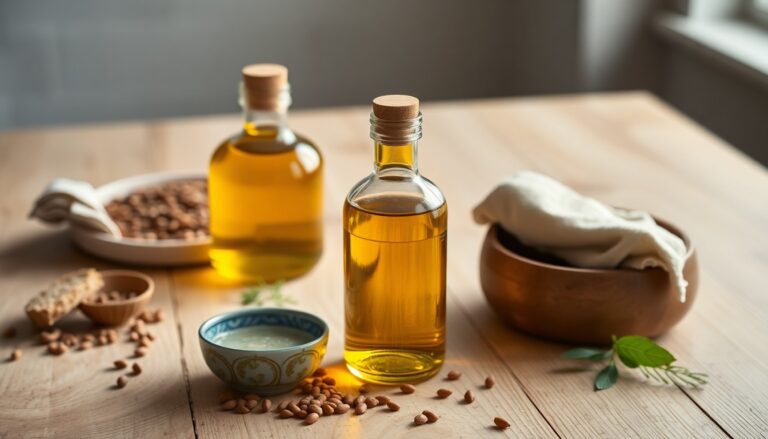
Rapeseed oil is a vegetable fat extracted from rapeseed, a yellow-flowered plant widely grown in France. Fluid and golden in colour, it comes in virgin (cold-pressed) or refined versions, with a more or less neutral taste. Much loved in everyday cooking, it stands out for its interesting fat profile, notably its content of omega-3 fatty acids and oleic acid. With about 885 kcal and 100 g of fat per 100 g, it remains an energy-dense oil, like all oils. Affordable and versatile, rapeseed oil naturally has a place in a balanced diet, as long as you use it in moderation and vary your oils from meal to meal.
Macronutrient breakdown
Nutrition table per 100 g
| Calories | 900 kcal |
| Kilojoules | 3700 kJ |
| Fat | 100 g |
Micronutrients per 100 g
All measured nutrients, ranked by share of the daily reference intake.
- Omega-3 ALA7,83 g392 %
- Vitamin E27,7 mg231 %
- Omega-6 LA18,6 g186 %
- Vitamin K171,3 µg95 %
- Iodine0,8 µg1 %
- Copper0,01 mg1 %
- Zinc0,03 mg0 %
- Iron0,02 mg0 %
Anses Ciqual 2025. Source: Anses, 2025, Ciqual food composition table
Tips
To make the most of its qualities, rapeseed oil is mainly used cold, to dress salads, raw vegetables or steamed vegetables. Its virgin version, rich in heat-sensitive omega-3, should be kept in the fridge after opening and used quickly to avoid rancidity. The refined version copes better with gentle, moderate cooking, but avoid deep-frying at very high temperatures. A good habit is to alternate oils: for example olive oil for cooking and rapeseed for dressing, to vary your fatty acid intake.
In terms of nutrition facts, rapeseed oil is made up exclusively of fat: no protein, no carbohydrate, no fibre, and so a zero glycaemic index. Its benefits rest on its balance between alpha-linolenic acid (omega-3) and linoleic acid (omega-6), as well as its richness in oleic acid (omega-9) and vitamin E, a natural antioxidant. To compare its profile, you can explore other oils in the fats and oils family, such as linseed oil, which is even richer in omega-3, or sunflower oil.
Tips for active people: as a concentrated source of energy, rapeseed oil easily tops up the meals of an athlete with high calorie needs, particularly when bulking. A tablespoon over post-workout starchy foods or on a plate of vegetables provides good-quality fat without weighing down digestion. It fits well into an overall fitness nutrition approach, alongside the protein and carbohydrate needed for recovery.
Weight control: at 900 kcal per 100 g, rapeseed oil remains very high in calories. Like all oils, it should be measured with a spoon, never poured generously and uncontrolled. One tablespoon (about 10 g) is more than enough to flavour a dish. To manage your diet better, weigh your fats and rely on a sensible balanced diet.
- Cold if possible, to preserve the omega-3
- Store somewhere cool, away from light
- 1 tablespoon per portion to stay sensible
- Alternate with other oils to vary your fatty acids