Group · Fish
Tuna in oil
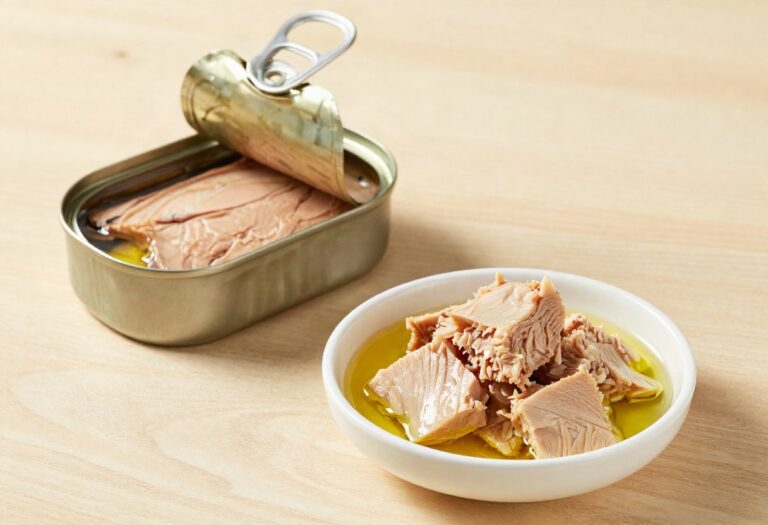
Tuna in oil is tinned tuna that has been cooked and then canned in a vegetable oil, most often sunflower. The values on this page are for drained flakes: a good part of the oil in the tin is left behind.
In terms of nutritional values, it provides 227 kcal per 100 g with 23.4 g of protein and 14.8 g of fat. It also supplies 100 µg of selenium per 100 g (nearly double the reference intake), 12.2 mg of vitamin B3 and 0.85 g of salt per 100 g.
Macronutrient breakdown
Nutrition table per 100 g
| Calories | 227 kcal |
| Kilojoules | 946 kJ |
| Protein | 23,4 g |
| Fat | 14,8 g |
Micronutrients per 100 g
All measured nutrients, ranked by share of the daily reference intake.
- Selenium100 µg182 %
- Vitamin B124,46 µg178 %
- Omega-6 LA7,76 g78 %
- Vitamin B312,2 mg76 %
- Vitamin E8,68 mg72 %
- DHA0,12 g48 %
- Vitamin D1,21 µg24 %
- Phosphorus160 mg23 %
See the other 13 nutrients
- Potassium210 mg11 %
- EPA0,02 g8 %
- Vitamin B60,11 mg8 %
- Magnesium27 mg7 %
- Iron1 mg7 %
- Zinc0,71 mg7 %
- Copper0,06 mg6 %
- Total omega-30,15 g6 %
- Vitamin B96,71 µg3 %
- Vitamin B50,19 mg3 %
- Vitamin B20,03 mg2 %
- Calcium11 mg1 %
- Omega-3 ALA0,01 g1 %
Anses Ciqual 2025. Source: Anses, 2025, Ciqual food composition table
Tips
The fat comes from the added oil, not from the fish. That is the deciding point: tuna in brine or spring water sits much lower. And sunflower oil provides no long-chain omega-3: tinned tuna contains only 0.15 g per 100 g anyway. For omega-3, turn to anchovies or sardines.
Really drain it, and press. Simply tipping the tin leaves a lot of oil; pressing with a fork in the sieve removes noticeably more. It is the most worthwhile thing you can do with this product.
Choose tuna in brine or spring water rather than oil, by default. Same protein, same minerals, far less fat, and you can simply add a spoonful of olive oil yourself to get a better fatty acid profile with fewer calories.
Mercury: a limit to know about. Tuna is a predator and so accumulates it. Anses (the French food safety agency) recommends limiting consumption, even more so for pregnant women and young children. Two tins a week at most for an adult is a reasonable guide.
It is a great standby. 23.4 g of protein per 100 g, no cooking needed, and it keeps for years: it is a product to keep for the days when nothing is ready. With kidney beans, lemon and herbs, it makes a complete meal in five minutes.