Devil’s claw: benefits, side effects, dosage and who should avoid it
The short answer
Devil’s claw (Harpagophytum procumbens) is a southern African plant whose root is used for joint pain. The European Medicines Agency (EMA) recognises it as a traditional herbal medicine for the relief of minor joint pain, based on long-standing use rather than proven efficacy. The trials are encouraging but weak: in hip and knee osteoarthritis, the powdered root matched a slow-acting arthritis drug (diacerein) over 4 months, and in low back pain, extracts rich in harpagoside did slightly better than placebo in the short term, with low quality evidence. Main cautions: stomach or duodenal ulcer, gallstones, pregnancy and breastfeeding, and blood thinners.
This article is for information and does not replace medical advice. A swollen, red or hot joint, or joint pain with fever, needs to be seen by a doctor.
What is devil’s claw?
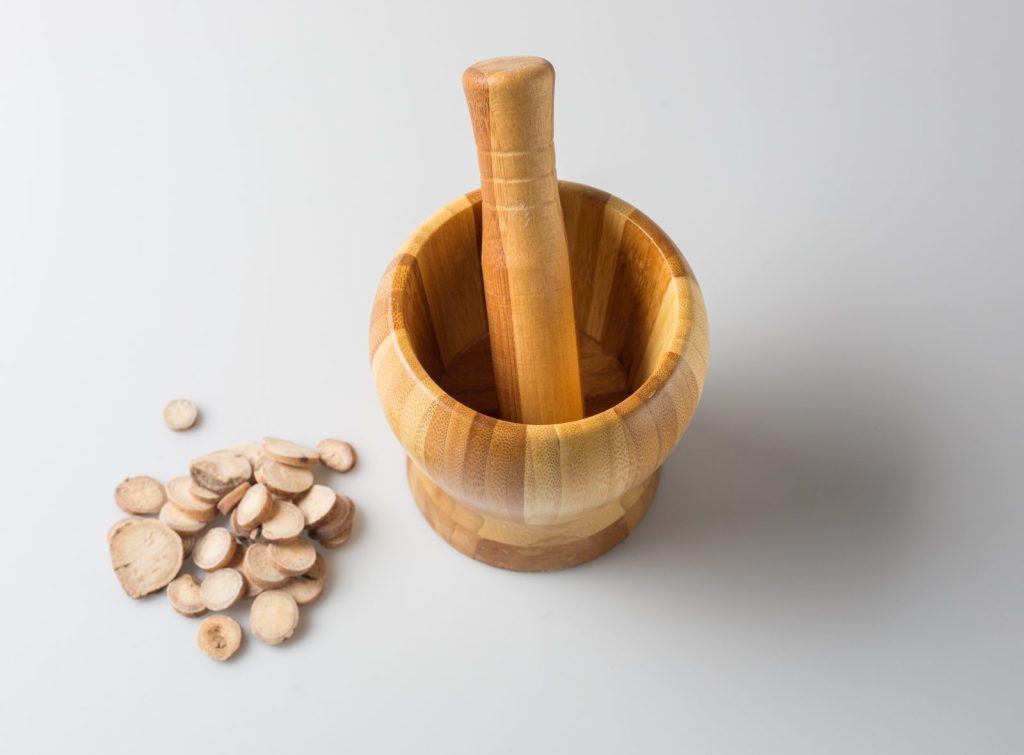
The plant grows in the dry regions of southern Africa, including Namibia. Its name comes from its hooked fruit, but the part used is the secondary root (tubers), dried then powdered or extracted. Its best-known compound is harpagoside, the marker most studies and standardised products rely on. Lab studies show effects on inflammatory pathways, which on their own do not prove a benefit in people.
It comes as root powder in capsules, dry extracts (water or alcohol based, sometimes standardised for harpagoside), tea or tincture. These forms are not interchangeable: a review of the trials (Chrubasik et al., 2003) found that evidence for one product does not transfer to another.
Why is devil’s claw “banned”? It is not banned in the EU: the EMA has a monograph for it as a traditional herbal medicine. What exists are safety warnings, mainly for ulcers and gallstones, detailed below.
Devil’s claw benefits: what the studies show
Hip and knee osteoarthritis
The best-known trial compared powdered root (six 435 mg capsules a day, 2,610 mg) with diacerein (100 mg a day) in 122 patients over 4 months, double-blind (Chantre et al., 2000; Leblan et al., 2000).
| After 4 months | Devil’s claw (powder) | Diacerein |
|---|---|---|
| Pain, function, Lequesne index | Clear improvement in both groups, no significant difference | |
| Use of painkillers and anti-inflammatories | Significantly lower | Higher |
| Diarrhoea (most common side effect) | 8.1% | 26.7% |
Limits: no placebo group, a comparator with a modest effect, and the trial was run by the company selling the product.
Low back pain
The Cochrane review of herbal medicines for low back pain (Oltean et al., 2014, 14 trials, 2,050 people) found that extracts providing 50 or 100 mg of harpagoside a day may reduce pain better than placebo in the short term and cut rescue painkiller use (2 trials, 315 people, low quality evidence). One small trial suggested similar results to the NSAID rofecoxib, with very low quality evidence.
The bottom line
Brien et al. (2006) rated the 14 osteoarthritis studies as generally poor quality, though the better ones suggest less pain. A 2026 review (Hong et al.) concludes that devil’s claw is not a replacement for NSAIDs, but may be an add-on for some people, especially those who tolerate NSAIDs poorly. The French journal Prescrire (2013) is stricter, seeing no established effect beyond placebo. Diet and movement still come first: see our anti-inflammatory diet guide and oily fish such as sardines, rich in omega-3.
Devil’s claw side effects and who should avoid it
In a review of 28 trials (Vlachojannis et al., 2008), side effects affected about 3% of patients, mostly digestive, and were no more frequent than with placebo in double-blind trials, though long-term data are lacking. The EMA lists digestive upset (diarrhoea, nausea, vomiting, abdominal pain), headache, dizziness and allergic reactions. Prescrire also reports cases of gastrointestinal bleeding.
| Situation | EMA position |
|---|---|
| Active stomach or duodenal ulcer | Do not use |
| Allergy to the plant | Do not use |
| Gallstones | See a doctor first |
| Pregnancy and breastfeeding | Not recommended (no safety data) |
| Under 18 | Not recommended (no data) |
| Joint pain with swelling, redness or fever | See a doctor |
Blood thinners: the EMA reports no interactions, but a pharmacist review (Heck et al., 2000) lists devil’s claw among products with case reports of interaction with warfarin. If you take an anticoagulant or antiplatelet drug, or regular NSAIDs, ask your doctor first. Products for dogs and horses exist, but never give a human product to an animal without asking your vet.
How to take devil’s claw
- EMA traditional dose for powdered root: 435 mg three times a day, about 1.3 g a day. Extract doses vary with the extract type.
- Trial doses: 2.6 g of powder a day in osteoarthritis; extracts providing 50 to 100 mg of harpagoside a day in back pain.
- With meals to spare your stomach.
- How long? It is not a fast painkiller. The EMA advises seeing a doctor if pain lasts more than 4 weeks.
- Stop and get advice if you have stomach pain, black stools or worsening symptoms.
Other herbs often sold for joints have their own cautions: see is turmeric dangerous and ginger side effects.
Nutrition•pro: organic devil’s claw root from Namibia
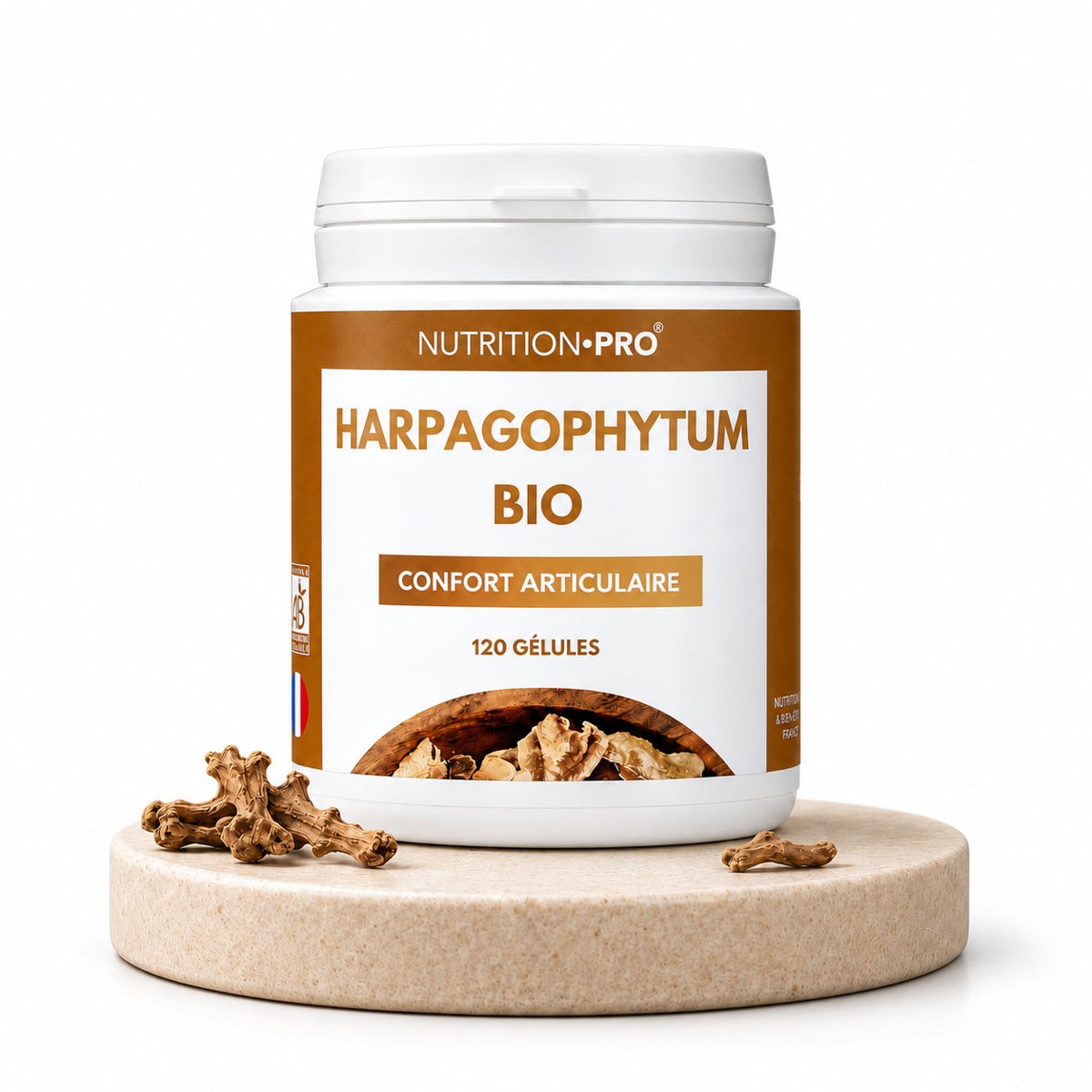
Nutrition•pro is a French brand based in Paris. Its organic Harpagophytum keeps it simple: a single ingredient, powdered Harpagophytum procumbens root, organically grown and sourced from Namibia, one of the plant’s native lands.
- 1,200 mg of organic root powder per daily serving of 4 capsules;
- single ingredient, vegetable capsule (HPMC);
- 4 capsules a day with a large glass of water, in one or several doses;
- 120 capsules, a 1-month supply; the brand suggests courses of one to three months;
- €29.99 per jar (price checked on 22/11/2026), about €1.00 a day.
How does the dose compare? 1,200 mg of powder is close to the EMA traditional dose for powdered root (about 1.3 g a day) and a little under half the 2,610 mg used in the osteoarthritis trial. The harpagoside content is not stated, so results from standardised extracts in back pain do not transfer directly. Whole root powder is the form described by traditional use. The brand advises against use with stomach or duodenal ulcers and gallstones; add pregnancy, breastfeeding and blood thinners to that list. To compare with multi-ingredient formulas, see our best joint supplement comparison.
Promo code: SEOCONSULTINGSL for 10% off your order, €26.99 per jar, about €0.90 a day (as of 22/11/2026).
See Nutrition•pro organic Harpagophytum →
Partner link: we earn a commission if you order through this link, at no extra cost to you.
Our pick: Organic devil's claw Dynveo (Dynveo) See the product → Partner link
Frequently asked questions
What is devil’s claw used for?
Mainly minor joint pain, as a traditional herbal medicine (EMA), and also mild digestive complaints. Trials suggest some effect on osteoarthritis and back pain, with weak evidence.
Does devil’s claw work for arthritis?
In one 122-patient trial, root powder matched diacerein over 4 months, with less painkiller use. There is no strong placebo-controlled trial in osteoarthritis.
What are the side effects of devil’s claw?
Mostly digestive upset, sometimes headache, dizziness or allergy. Avoid it with an ulcer, and ask your doctor if you have gallstones or take a blood thinner.
Can I take devil’s claw with blood thinners?
Not without medical advice: interactions with warfarin have been reported, and digestive bleeding has been described with the plant.
How long does devil’s claw take to work?
Do not expect a painkiller effect. The osteoarthritis trial assessed results at 4 months; see a doctor if pain persists beyond 4 weeks.
Sources
- EMA, HMPC. European Union herbal monograph on Harpagophytum procumbens DC. and/or Harpagophytum zeyheri Decne., radix. EMA/HMPC/627057/2015, 12 July 2016. ema.europa.eu
- Oltean H. et al. Herbal medicine for low-back pain. Cochrane Database Syst Rev, 2014; (12): CD004504. PubMed 25536022
- Chantre P. et al. Efficacy and tolerance of Harpagophytum procumbens versus diacerhein in treatment of osteoarthritis. Phytomedicine, 2000; 7(3): 177-83. PubMed 11185727
- Leblan D. et al. Harpagophytum procumbens in the treatment of knee and hip osteoarthritis. Joint Bone Spine, 2000; 67(5): 462-7. PubMed 11143915
- Chrubasik S. et al. The quality of clinical trials with Harpagophytum procumbens. Phytomedicine, 2003; 10(6-7): 613-23. PubMed 13678253
- Vlachojannis J. et al. Systematic review on the safety of Harpagophytum preparations for osteoarthritic and low back pain. Phytother Res, 2008; 22(2): 149-52. PubMed 18236448
- Brien S. et al. Devil’s Claw as a treatment for osteoarthritis: a review of efficacy and safety. J Altern Complement Med, 2006; 12(10): 981-93. PubMed 17212570
- Heck A.M. et al. Potential interactions between alternative therapies and warfarin. Am J Health Syst Pharm, 2000; 57(13): 1221-7. PubMed 10902065
- Devil’s claw root: ulcers and gastrointestinal bleeding? Prescrire Int, 2013; 22(144): 296. PubMed 24600731
- Hong J.Y. et al. Harpagophytum procumbens in musculoskeletal disorders: current evidence and comparison with NSAIDs. Front Pharmacol, 2026; 17: 1839470. PubMed 42394971