Group · Sweet foods
Fig biscuit
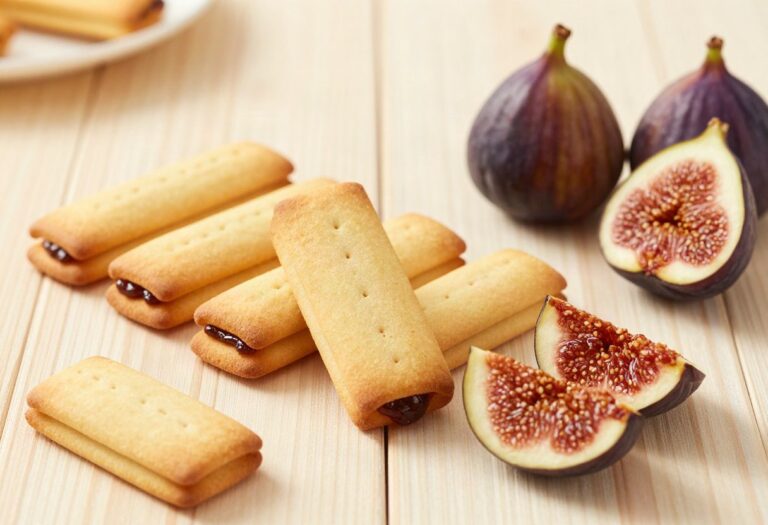
The fig biscuit is a well-known treat made of a thin shortcrust pastry wrapped around a soft filling of fig paste. Recognisable by its rectangular shape and its texture that is both tender and crisp, it now comes in classic, wholemeal or reduced-sugar versions. Often slipped into a rucksack or lunch box, it is a treat in a balanced diet. At around 421 kcal per 100 g, it mainly provides carbohydrate (71.6 g), a little fibre (2 g) thanks to the fig, as well as protein (4.93 g) and fat (12.3 g). A handy and tasty snack, to be enjoyed in moderation.
Macronutrient breakdown
Nutrition table per 100 g
| Calories | 421 kcal |
| Kilojoules | 1770 kJ |
| Protein | 5 g |
| Carbohydrate | 71,6 g |
| Fat | 12,3 g |
| Fibre | 2 g |
Micronutrients per 100 g
All measured nutrients, ranked by share of the daily reference intake.
- Magnesium294 mg78 %
- Vitamin B60,31 mg22 %
- Vitamin E2,5 mg21 %
- Manganese0,3 mg15 %
- Potassium269 mg13 %
- Vitamin B921 µg11 %
- Copper0,1 mg10 %
- Vitamin B10,09 mg8 %
See the other 13 nutrients
- Calcium64 mg8 %
- Iodine12 µg8 %
- Vitamin K15,8 µg8 %
- Omega-6 LA0,76 g8 %
- Iron1 mg7 %
- Phosphorus37 mg5 %
- Vitamin B50,28 mg5 %
- Omega-3 ALA0,08 g4 %
- Vitamin B30,63 mg4 %
- Vitamin B20,06 mg4 %
- Total omega-30,09 g4 %
- Zinc0,3 mg3 %
- Vitamin A1,58 µg0 %
Anses Ciqual 2025. Source: Anses, 2025, Ciqual food composition table
Tips
The fig biscuit is a handy snack, but its energy density calls for moderation. Count on a reasonable portion of 2 to 3 biscuits (about 30 g), ideal to take the edge off a small hunger without weighing down your daily calorie intake.
- Carbohydrate and glycaemic index: with nearly 71.6 g of carbohydrate per 100 g, this biscuit provides quickly available energy. The fig paste, rich in natural sugars, also gives it a little fibre (2 g) that helps slow absorption.
- Protein and fat: the 4.93 g of protein and 12.3 g of fat are moderate. For a more filling snack, pair it with a dairy product or a handful of nuts.
- Ideal timing: at breakfast or teatime, with an unsweetened tea or coffee.
In terms of benefits and pleasure, the fig adds a natural fruity touch that sets this biscuit apart from purely sugary options such as plain sugar biscuits. If you are looking for an alternative richer in wholegrain cereals, the oat biscuit is a good option. To compare the nutrition facts and calories of different treats, you can browse the whole sugary foods family.
Tips for active people: thanks to its high carbohydrate content, the fig biscuit can be a source of energy before moderate endurance exercise, eaten 60 to 90 minutes before the session. During recovery, pair it with a source of protein, for example a yoghurt or a protein shake, to support muscle repair. For balanced snack ideas, take a look at the protein snack recipes.
Weight control: as part of a balanced diet, bear in mind that this biscuit is still a processed, sugary product. Limit yourself to a controlled portion and focus on fibre and fullness across the day. Check the label: some recipes add glucose syrup or fats that increase the calorie density.
Storage: keep your biscuits in an airtight tin, away from moisture, to preserve their softness. You can also crumble them over fromage blanc or use them in a homemade dessert base for variety.