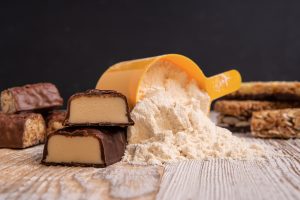
What is protein powder and how should you take it?

Protein powder is increasingly used by athletes, and especially by people who do weight training. As we know, protein is very important for building muscle and gaining muscle mass.
👉 Free tool: Protein needs: calculate yours in 30 seconds, no sign-up.
A traditional diet may not provide enough protein, particularly for weight-training enthusiasts. Very rich in amino acids and protein, this powder stands in for animal and plant proteins and gives the body what it needs. Why take protein powder, and how should you use it?
How do you take protein powder?
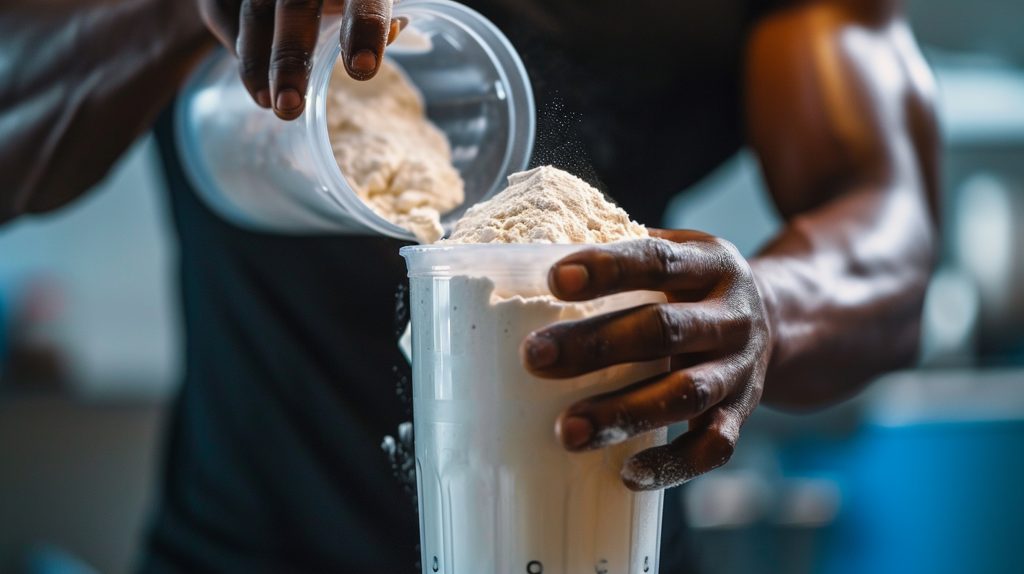
Often drunk as a shake, protein powder contains many essential nutrients. To get the most out of its benefits and advantages, there are a few very important rules to follow:
- take these powdered supplements at several points in the day;
- have a shake one hour after your workout;
- do not neglect the morning dose;
- have a dose before going to bed as well.
Why take protein powder?
Providing the protein you need along with amino acids, protein powder is widely used by many athletes and weight-training enthusiasts. For them, a normal diet may not be enough to supply nutrients such as protein and amino acids, which are essential for maintaining their physical condition.
Most of the protein is extracted from whey. Whey is very rich in protein and amino acids, so the resulting protein is very well digested by the body and is taken for many different reasons.
To build muscle mass
Many scientific studies have shown the effects of protein on muscle development and muscle mass gain. Combined with intensive, targeted training, you can reach your goals and gain muscle strength.
To gain lean muscle
If you want to build more muscle without gaining weight, protein is the solution. For better results, choose whey isolate or native whey protein, alongside targeted training.
To lose weight
By choosing casein, you can hope to lose weight. Casein is digested slowly, so it prolongs the feeling of fullness and delays hunger.
Because you are vegetarian or vegan
As we all know, animal protein intake is important for the body to work properly. Vegetarians and vegans go without many of these nutritional benefits. Protein supplements are therefore an excellent way to make up for this and to provide the nutrients essential for the body to function well.
For convenience and economy
It is sometimes difficult to fit several protein sources into a single meal. Protein powder is the best way to give your body the essential intakes it needs. It is also very practical and can be taken anywhere.
Another advantage is its price. Protein powder provides all the plant and animal protein of solid food at a much lower price.
How protein is used in the human body
Once ingested, protein is broken down by the digestive system into amino acids, which are then absorbed and used by the body to make the new proteins needed for various bodily functions. This process is essential for growth, tissue repair, maintaining nitrogen balance and producing energy when needed.
Protein also plays a key role in regulating physiological processes through hormones and enzymes. It is essential for the body to work at its best and contributes to the health of bones, muscles, skin, hair and nails. A balanced protein intake is therefore essential to support these vital functions.
How protein is absorbed and digested
Protein digestion begins in the stomach, where the enzyme pepsin starts to break down the peptide bonds. This continues in the small intestine with the help of other pancreatic enzymes. The protein is then broken down into its basic building blocks, the amino acids, which are absorbed by the cells of the intestine and passed into the bloodstream.
These amino acids will be used by the body’s cells to make the new proteins needed to build and repair tissues, as well as to carry out many other vital functions. The human body has a complex mechanism for taking up these proteins and using them efficiently.
The role of protein in growth and tissue repair
Proteins are fundamental components of all the body’s tissues. They are essential for growth and development during childhood, adolescence and pregnancy. In adults, they allow cells to repair and renew themselves, and wounds to heal. Structural proteins such as collagen and elastin give tissues their shape and strength.
In addition, protein is involved in making the enzymes that help repair cell damage. It contributes to cell regeneration and to maintaining the structural integrity of organs. An adequate protein intake is therefore essential for tissue health.
Protein and the immune system
The immune system depends heavily on protein. Antibodies, which are specialised proteins, play a key role in defending the body against pathogens. They make it possible to recognise and neutralise viruses, bacteria and other potentially dangerous foreign substances.
Likewise, protein is involved in cell signalling and in regulating immune responses. It allows the different cells of the immune system to communicate with each other, orchestrating a coordinated response to outside threats. A sufficient protein intake is therefore crucial for keeping the immune system working effectively.
Dietary considerations and protein supplementation
The amount of protein you need varies according to several factors, including age, sex, level of physical activity and general state of health. Athletes and people with a very active lifestyle may have higher protein needs to support muscle repair and recovery after exercise. Likewise, protein needs may be higher during pregnancy, breastfeeding or convalescence.
It is essential to follow nutritional recommendations to make sure you get enough protein without going over. Excessive consumption can lead to nutritional imbalances and put strain on the kidneys. Intake should therefore be adjusted to individual needs and monitored by professionals where necessary.
Protein needs by age, sex and level of physical activity
Protein needs vary from person to person according to specific criteria. Growing children and teenagers, pregnant or breastfeeding women, and older people have higher needs to support the development and maintenance of muscle mass. Athletes and people who regularly do intense physical activity may also need more protein to recover and repair muscle fibres.
For adults, the recommended protein intake is around 0.8 grams of protein per kilogram of body weight per day. However, this recommendation can vary and should be adapted to each person’s energy needs and physical condition. Follow-up with a nutrition professional is often advised to determine the right, personalised intake.
The impact of eating too much protein
While protein is essential for our health, excessive consumption over a long period can have harmful consequences. Protein overload can overwork the kidneys, which are responsible for removing the nitrogenous waste produced when protein is broken down. In addition, a diet that is too high in protein can upset nutritional balance by displacing other essential nutrients.
It is therefore essential to follow a balanced diet in which protein is eaten in the right amount, in harmony with the other food groups. Health professionals recommend favouring lean protein sources and limiting red and processed meat to reduce the risk of cardiovascular disease and certain cancers.
Understanding and choosing protein supplements
The market offers a wide range of protein supplements, including whey, casein, soy and pea powders. These products are particularly popular with athletes who want to increase their protein intake to optimise muscle recovery and growth. Choosing the right supplement depends on several factors, including personal goals, food preferences, tolerances and dietary restrictions.
It is important to note that supplements should not replace dietary sources of protein but rather top them up where necessary. The advice of a nutritionist or healthcare professional is recommended to determine whether supplementation is appropriate and to choose the product best suited to your needs.
Introduction to protein
Proteins are biological molecules that are essential to life. They play a crucial role in virtually all of the body’s biological processes. Made up of amino acids, they act as enzymes, hormones, antibodies and structural components of cells. Understanding their structure and function is fundamental to grasping their importance in our diet and our health.
The study of protein is therefore a subject of great importance, not only for scientists and health professionals but also for anyone who cares about their wellbeing. In this article, we will explore the different aspects of protein: from its structure to its role in the body, including its food sources and its use as a supplement.
Definition and structure of proteins
Proteins are macromolecules made up of chains of amino acids linked together by peptide bonds. They have a complex structure that can be broken down into four levels: primary, secondary, tertiary and quaternary. Each level of structure is crucial to the protein’s function. The three-dimensional shape of a protein determines its ability to interact with other molecules and to carry out its specific functions in the body.
These structures allow proteins to take on a wide range of functions, from carrying oxygen in the blood (haemoglobin) to catalysing chemical reactions (enzymes). The specific structure of each protein gives it a specific function, which is essential for biological systems to work properly.
Types of protein and their functions
There are a great many proteins, each with a defined function. They can be classified into several categories according to their role in the body: structural, regulatory, transport, defensive, contractile and catalytic. For example, collagen gives structure and strength to connective tissue, while antibodies, a class of globulins, are essential to the immune system for recognising and neutralising pathogens.
Motor proteins such as actin and myosin are crucial for muscle movement, and enzymes are catalysts that speed up chemical reactions in cells. Insulin, a protein hormone, regulates glucose metabolism. The diversity of protein types and functions is thus the basis of the biological complexity of living organisms.
Food sources of protein
Protein can be obtained from a variety of food sources. Foods rich in protein include meat, fish, eggs, dairy products, pulses, nuts and some cereals. It is important to eat a variety of these foods to get a complete amino acid profile, because some foods are rich in certain amino acids and lack others.
The quality of protein also varies according to its origin. Animal proteins are generally considered complete proteins because they contain all the essential amino acids in the right proportions. Plant proteins, however, are often incomplete, so it is recommended to combine different plant foods to obtain a full set of amino acids.

Read also
Recipes to try: Healthy carrot cake, Chicken pad thai, Kale, apple and walnut salad