Group · Sweet foods
Caramel
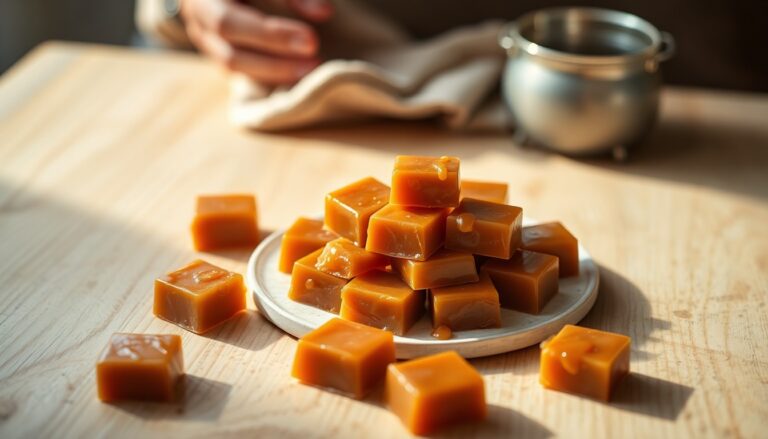
Caramel is a confection made by cooking sugar, which melts, browns and develops its characteristic notes of toasted hazelnut and butter. It comes in many forms: liquid caramel for pouring, hard caramel sweets, soft and chewy caramel, or its most indulgent version, buttery and salted. At around 324 kcal per 100 g, caramel is made up almost entirely of carbohydrate (81 g), with no protein or fat in its simplest version. It is therefore a pure sugary food, to be enjoyed with pleasure but in moderation as part of a balanced diet. Its rich aroma makes it a classic of baking and desserts.
Macronutrient breakdown
Nutrition table per 100 g
| Calories | 324 kcal |
| Kilojoules | 1380 kJ |
| Carbohydrate | 81 g |
Tips
Caramel is above all an occasional treat. In terms of nutrition facts, it is concentrated sugar: its high glycaemic index causes a rapid rise in blood sugar, followed by an equally rapid drop. It is therefore better to have it in small amounts, as an indulgent touch rather than an everyday food.
How to eat caramel?
- As a topping: a drizzle of liquid caramel over a pancake, plain yoghurt or ice cream turns a simple dessert into a treat.
- As a sweet: hard caramel is eaten slowly, which helps limit how much you consume.
- As salted butter caramel: richer in fat, salted butter caramel is also higher in calories than plain caramel.
- In baking: to flavour a flan, a tart or a layered dessert.
Storage and preparation. Homemade caramel is made from table sugar melted over a low heat. Watch the cooking closely: if it is heated too much, it turns bitter. Keep it in an airtight container, away from moisture, which softens it. If you like more subtle sweet flavours, maple syrup can be an aromatic alternative for topping your desserts.
For active people. Caramel provides quickly absorbed carbohydrate, which can give an energy boost before short, intense exercise, or a quick carbohydrate refill after training. Be aware, however, that it contains no protein, fibre or useful micronutrients. For recovery, it is better to combine it with a source of protein. Discover our protein snack ideas to balance your snack rather than relying on sugar alone.
Weight control. With nearly 81 g of carbohydrate per 100 g, caramel is a very sugar-dense food, sometimes described as empty calories because it provides energy without real nutritional value. If you are trying to lose weight, moderation is key: a small portion fully savoured is more satisfying than a large one eaten out of habit. You can compare its contribution with other sweet treats using the food calorie table, and explore the whole sugary foods family to make informed choices. Caramel keeps its place in a balanced diet, as long as it remains an occasional pleasure.