Group · Meat
Kid goat meat
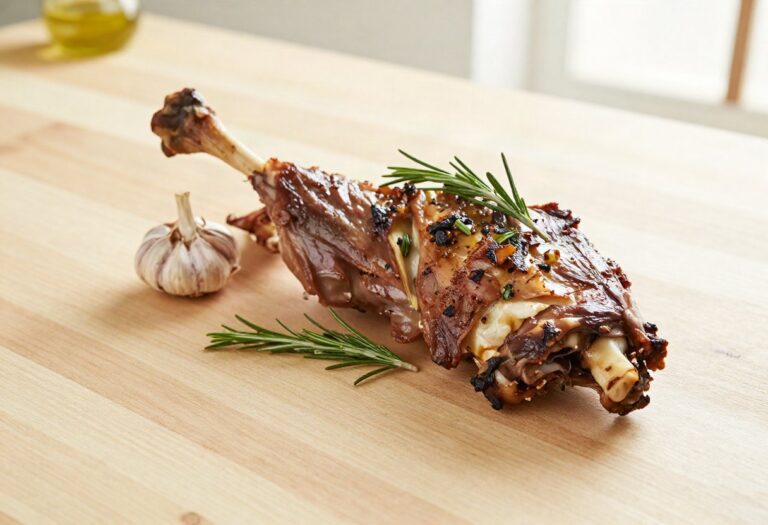
Kid (chevreau) is the young of the goat, slaughtered young. Its pale, very lean meat is traditional in the Mediterranean and the Middle East, and remains seasonal in France: it arrives in spring, when the goats give birth for milk production.
As for nutrition facts, raw: 103 kcal per 100 g, with 20.6 g of protein and only 2.31 g of fat including 0.71 g of saturated fat. It provides 4 mg of zinc, 385 mg of potassium, 2.83 mg of iron and 180 mg of phosphorus per 100 g, with 0.21 g of salt.
Macronutrient breakdown
Nutrition table per 100 g
| Calories | 103 kcal |
| Kilojoules | 436 kJ |
| Protein | 20,6 g |
| Fat | 2,4 g |
Micronutrients per 100 g
All measured nutrients, ranked by share of the daily reference intake.
- Vitamin B121,13 µg45 %
- Zinc4 mg40 %
- Vitamin B20,49 mg35 %
- Copper0,26 mg26 %
- Phosphorus180 mg26 %
- Vitamin B33,75 mg23 %
- Iron2,83 mg20 %
- Potassium385 mg19 %
See the other 4 nutrients
- Vitamin B10,11 mg10 %
- Vitamin B95 µg3 %
- Manganese0,04 mg2 %
- Calcium13 mg2 %
Anses Ciqual 2025. Source: Anses, 2025, Ciqual food composition table
Tips
103 kcal: it is the leanest meat in this batch. Less than a lean beef steak, and far less than lamb of the same age. Kid is one of the forgotten stars of the butcher’s counter.
4 mg of zinc for 2.31 g of fat. The ratio is excellent: a 150 g portion covers 60% of the zinc reference intake for 155 kcal.
Its leanness is also its difficulty. Without fat, it dries out after a few minutes too many. Shoulders and neck are slow-cooked; the leg is roasted covered, basted, and served pink.
It does not have the strong taste of mutton. That is the main surprise when you try it: its flesh is mild and fine, a long way from the prejudice about goat meat. It takes spices such as ras el hanout or cumin well.
Count 250 g raw per person with the bone. The loss is considerable on an animal of this size.