Group · Meat
Mortadella
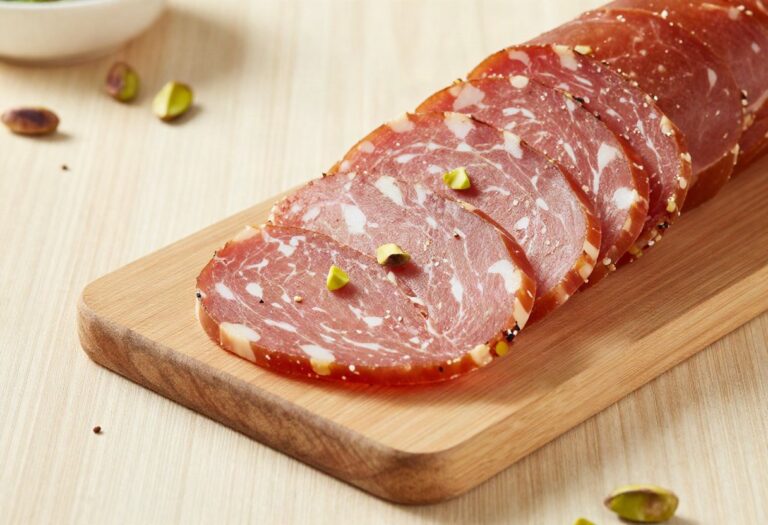
Mortadella is an emblematic cooked charcuterie of Italian gastronomy, originally from Bologna. Made from finely emulsified pork, it is recognisable by its small cubes of white fat evenly distributed through it and, often, by pistachios or peppercorns. Soft in texture and delicate in taste, it comes in thin slices, in cubes for drinks, or used in stuffings and terrines. Nutritionally, mortadella provides around 310 kcal per 100 g, with 14.8 g of protein, 4.46 g of carbohydrate and 25.8 g of fat. It is a tasty but rich food, to be included with discernment in a balanced diet.
Macronutrient breakdown
Nutrition table per 100 g
| Calories | 310 kcal |
| Kilojoules | 1280 kJ |
| Protein | 14,8 g |
| Carbohydrate | 4,5 g |
| Fat | 25,8 g |
Micronutrients per 100 g
All measured nutrients, ranked by share of the daily reference intake.
- Phosphorus180 mg26 %
- Vitamin B33,6 mg23 %
- Vitamin B20,26 mg19 %
- Vitamin B10,19 mg17 %
- Zinc1,6 mg16 %
- Potassium236 mg12 %
- Iron1,1 mg8 %
- Vitamin B60,08 mg6 %
See the other 2 nutrients
- Calcium19 mg2 %
- Vitamin B94 µg2 %
Anses Ciqual 2025. Source: Anses, 2025, Ciqual food composition table
Tips
Mortadella is above all a food for pleasure. To enjoy its nutrition facts without overdoing it, stick to small portions of 30 to 40 g, or two to three thin slices. Its high calorie density (310 kcal/100 g) and its fat content (25.8 g) make it a charcuterie to eat in moderation, ideally occasionally rather than daily.
How to eat mortadella It is enjoyed in slices on fresh bread, in a hot panini where it releases all its aroma, diced in a mixed salad, or in bite-sized rolls wrapped around breadsticks to go with drinks. Versions studded with pistachios or pepper offer a much-appreciated aromatic lift. For storage, keep it well wrapped in the fridge and eat it quickly once a slice has been cut to preserve its freshness.
- Protein: 14.8 g per 100 g, useful for your daily intake but accompanied by a lot of fat.
- Carbohydrates: very low (4.46 g), with a negligible glycaemic index.
- Fat: 25.8 g, including a share of saturated fat to keep an eye on.
- Sodium: like any charcuterie, mortadella is salty, so remember to go easy on salt in the rest of your meals.
For active people: although mortadella provides protein, its fat-to-protein ratio makes it a poor choice for a recovery snack. To support your muscles after exercise, turn instead to lean sources such as chicken breast or turkey breast, or discover our protein snack ideas. Mortadella remains a small indulgence to include now and then, especially during a muscle-building phase when calorie intake is higher.
Weight control: as part of a balanced diet, treat mortadella as an occasional food. Its high fat content can quickly weigh on your calorie balance if portions are not kept in check. Pair it with crunchy vegetables or a green salad to balance the meal and add the fibre that charcuterie lacks.
If you like to vary your charcuterie, compare it with Bologna sausage or salami, and explore the whole meat family to make informed choices according to your goals.