Group · Meat
Turkey breast
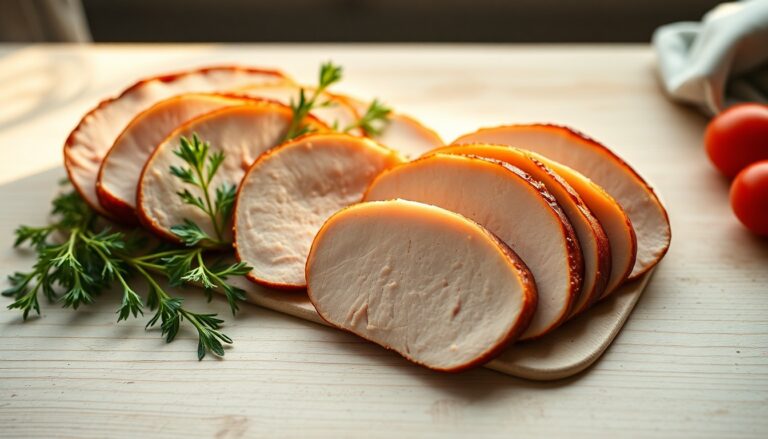
Turkey breast is one of the most popular cuts of poultry for its lean flesh and delicate taste. Taken from the turkey fillet, it is sold as fresh escalopes to cook or as slices of ready-cooked deli meat, handy for sandwiches and salads. With around 99.3 kcal per 100 g, it offers good-quality protein while staying low in fat. Its versatility makes it a great ally in a balanced diet, whether you want to vary your animal protein sources or put together quick meals. Its tender texture and low calorie content appeal as much to food lovers watching their figure as to athletes.
Macronutrient breakdown
Nutrition table per 100 g
| Calories | 99 kcal |
| Kilojoules | 420 kJ |
| Protein | 20,9 g |
| Carbohydrate | 0,1 g |
| Fat | 1,7 g |
| Fibre | 0,4 g |
Micronutrients per 100 g
All measured nutrients, ranked by share of the daily reference intake.
- Vitamin B38,86 mg55 %
- Vitamin C26,3 mg33 %
- Phosphorus230 mg33 %
- Vitamin B60,35 mg25 %
- Vitamin B120,6 µg24 %
- Potassium370 mg19 %
- Vitamin B50,61 mg10 %
- Zinc0,92 mg9 %
See the other 13 nutrients
- Vitamin B917,3 µg9 %
- Magnesium26 mg7 %
- Vitamin B10,06 mg5 %
- Vitamin B20,07 mg5 %
- Copper0,04 mg4 %
- Omega-6 LA0,39 g4 %
- Iron0,35 mg3 %
- Omega-3 ALA0,03 g2 %
- DHA0 g1 %
- Manganese0,02 mg1 %
- Vitamin E0,11 mg1 %
- Calcium7,1 mg1 %
- EPA0 g1 %
Anses Ciqual 2025. Source: Anses, 2025, Ciqual food composition table
Tips
Turkey breast has a thousand uses. As an escalope, choose gentle cooking in a frying pan, steamed or in the oven to preserve its tenderness and stop it drying out. A marinade of lemon, herbs and olive oil adds moistness and flavour without weighing the dish down. To discover other ways of preparing food that respect it, take a look at our tips on gentle cooking that preserves nutrients.
Nutrition facts and benefits: turkey breast stands out for its richness in protein (about 20.9 g per 100 g as slices) and its low fat content (1.67 g). It provides B vitamins, phosphorus, selenium and zinc. In its fresh form, it contains almost no carbohydrate; deli versions can contain a little added sugar and salt, hence the importance of reading labels.
- Portion: allow 100 to 150 g of cooked breast per meal, served with vegetables and a wholegrain starchy food.
- Pairings: rice, quinoa, sweet potato or raw vegetables for a complete, filling dish.
- Storage: 1 to 2 days in the fridge for fresh cooked meat, and follow the dates for sliced meat.
For active people: turkey breast is a benchmark for anyone watching their lean protein intake. Ideal as a snack or in a recovery meal, it helps cover muscle needs without excess fat. You can include it in a protein snack or combine it with fast sources of protein such as protein powder after training. To go further, our guidelines on fitness nutrition complement the subject well.
Weight control: turkey breast remains low in calories and is among the meats of interest for a balanced diet. Choose versions without a coating or breadcrumbs, which push up the calories. To vary your lean meat sources, also explore chicken breast or roast turkey, and find all the cuts in the meat family. With controlled cooking and reasonable portions, turkey breast fits easily into a slimming, tasty plate.