Group · Fish
Pangasius
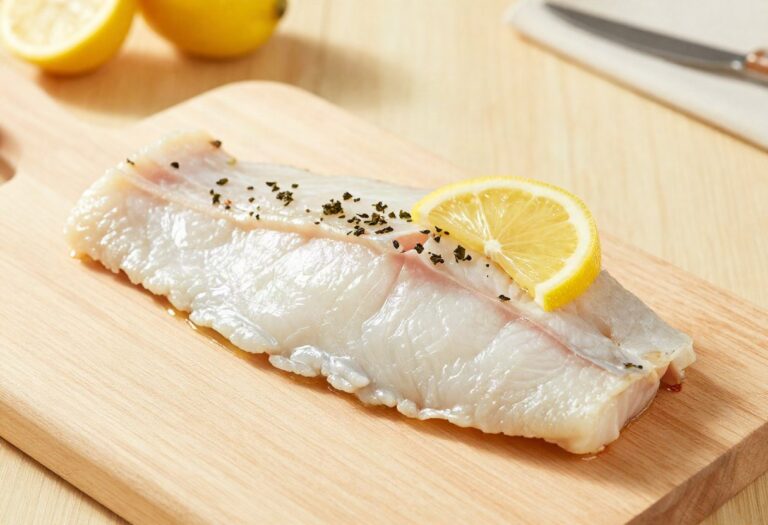
Pangasius (known in France as pangas) is a farmed catfish from the Mekong delta in Vietnam, which in fifteen years has become one of the best-selling fish in Europe. Its white, boneless and very cheap fillets explain its success.
In terms of nutrition facts, raw it provides 65.2 kcal per 100 g, with only 13.5 g of protein and 1.27 g of fat. It provides 200 mg of potassium and 107 mg of phosphorus per 100 g, and carries 0.68 g of salt, an unusual value for a fresh fish.
Macronutrient breakdown
Nutrition table per 100 g
| Calories | 65 kcal |
| Kilojoules | 276 kJ |
| Protein | 13,5 g |
| Fat | 1,3 g |
Micronutrients per 100 g
All measured nutrients, ranked by share of the daily reference intake.
- Vitamin B51,96 mg33 %
- Selenium9,6 µg17 %
- Phosphorus107 mg15 %
- Vitamin B120,3 µg12 %
- Potassium200 mg10 %
- Vitamin B31,35 mg8 %
- Vitamin B60,1 mg7 %
- DHA0,02 g7 %
See the other 14 nutrients
- Iodine7,95 µg5 %
- Vitamin B910 µg5 %
- Magnesium17,6 mg5 %
- Calcium36,7 mg5 %
- Vitamin K12,1 µg3 %
- Zinc0,24 mg2 %
- Vitamin B20,02 mg2 %
- Iron0,21 mg2 %
- Vitamin E0,16 mg1 %
- Total omega-30,02 g1 %
- EPA0 g1 %
- Omega-6 LA0,09 g1 %
- Omega-3 ALA0 g0 %
- Vitamin A1 µg0 %
Anses Ciqual 2025. Source: Anses, 2025, Ciqual food composition table
Tips
13.5 g of protein: the lowest of all the fish in our database. A cod or a pouting provides 50% more. This is the consequence of very watery flesh.
And almost no omega-3: 0.024 g per 100 g. That is fifty to a hundred times less than an oily fish. Pangasius counts for nothing towards the Anses recommendations on fish.
0.68 g of salt in a fresh fish. Unusual: it is explained by the preservation treatments applied to the fillets before freezing, notably polyphosphates, which retain water.
Its farming has drawn a lot of criticism. Pond density, the quality of Mekong water, the use of inputs: practices vary greatly from one farm to another. A responsible aquaculture certification is the only usable guide.
There are better options at the same price. Pouting, dab or whiting offer a much better nutritional profile, caught in Europe.