Group · Starchy foods
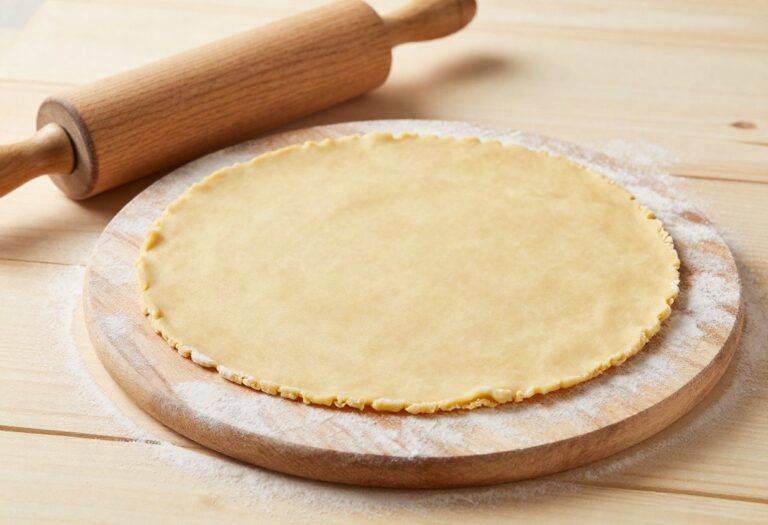
Sweet shortcrust pastry (pâte sablée)
Pâte sablée (sweet shortcrust pastry) is the pastry for sweet tarts and shortbread biscuits: flour, butter, sugar and often an egg yolk. Its crumbly texture comes from the proportion of fat, which coats the flour and stops the gluten from developing.
On the nutrition side, it provides 383 kcal per 100 g raw, with 53.6 g of carbohydrate, of which 13.4 g sugars, 15.8 g of fat, of which 10.6 g saturated, 5.95 g of protein and 1.65 g of fibre. Unlike savoury shortcrust (pâte brisée), it is very low in salt (0.035 g per 100 g) but noticeably sweeter.
Macronutrient breakdown
Nutrition table per 100 g
| Calories | 383 kcal |
| Kilojoules | 1610 kJ |
| Protein | 6 g |
| Carbohydrate | 53,6 g |
| Fat | 15,8 g |
| Fibre | 1,7 g |
Micronutrients per 100 g
All measured nutrients, ranked by share of the daily reference intake.
- Omega-6 LA0,57 g6 %
- Omega-3 ALA0,09 g4 %
Anses Ciqual 2025. Source: Anses, 2025, Ciqual food composition table
Tips
Fewer calories than savoury shortcrust, but sweeter. 383 kcal against 390: the difference is negligible. What changes is the split: sweet shortcrust trades fat for sugar, with 13.4 g of sugars per 100 g where savoury shortcrust has 2.5.
Glycaemic index. White flour and added sugar give a high glycaemic index. Pairing the tart with whole fruit rather than a sweetened compote, and serving it at the end of a meal, limits the spike.
Homemade. This is the pastry where cutting the sugar is least noticeable: a tart with ripe fruit easily copes with a third less sugar in the pastry, with the filling making up for it.