Group · Sweet foods
Frozen yoghurt
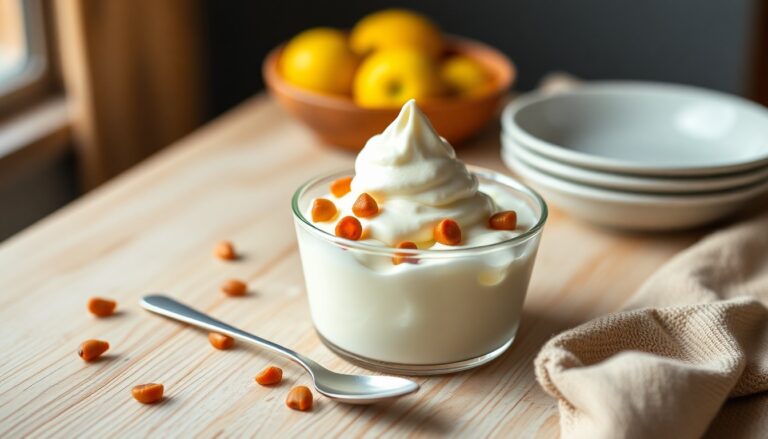
Frozen yoghurt, also called “froyo”, is a frozen dessert made from yoghurt, lighter than classic ice cream while still being indulgent. Its creamy texture and slightly tangy taste make it a popular alternative to rich ice creams. It comes plain, vanilla, red fruit, lemon, and is sometimes enriched with live cultures. With around 126 kcal per 100 g, it provides 3.38 g of protein, 22.7 g of carbohydrate and 2.2 g of fat. Its calorie density is more moderate than that of many frozen desserts. Topped with fresh fruit, it becomes a friendly treat that has its place, in moderation, in a balanced diet that leaves room for pleasure.
Macronutrient breakdown
Nutrition table per 100 g
| Calories | 126 kcal |
| Kilojoules | 533 kJ |
| Protein | 3,4 g |
| Carbohydrate | 22,7 g |
| Fat | 2,2 g |
Micronutrients per 100 g
All measured nutrients, ranked by share of the daily reference intake.
- Total omega-30,04 g2 %
- Omega-3 ALA0,02 g1 %
- Omega-6 LA0,03 g0 %
Anses Ciqual 2025. Source: Anses, 2025, Ciqual food composition table
Tips
Frozen yoghurt is best enjoyed as a dessert or a refreshing snack, especially in warm weather. A sensible portion is around 80 to 120 g: enough to treat yourself without weighing down the day’s calorie count. To enjoy its nutrition facts without overdoing it, watch the toppings above all, as they are often what pushes up the total of sugars and calories.
- Smart pairings: add fresh fruit (blueberries, strawberries, kiwi), a few flaked almonds or a drizzle of unsweetened coulis rather than shop-bought sauces, sweets or crumbled biscuits.
- Ways to enjoy it: by the spoonful, in a bowl, or homemade from plain yoghurt churned in an ice cream maker, which lets you control the added sugar.
- Storage: keep it in the freezer and take it out a few minutes before serving to bring back its creamy texture.
Nutritionally, frozen yoghurt provides dairy protein (around 3.38 g per 100 g), a little calcium, and carbohydrates that come mainly from lactose and added sugar. Its glycaemic index depends largely on the amount of sugar and the accompaniments. For a lighter version, go for plain, low-sugar recipes and compare it with other frozen desserts such as reduced-sugar sorbet or vanilla ice cream, which is generally higher in fat.
For active people: thanks to its carbohydrate and protein pairing, frozen yoghurt can fit into a recovery snack after exercise, when the aim is to replenish glycogen stores and give your muscles a little protein. To get more from it, pair it with an additional protein source or take inspiration from other high-protein snack ideas. Go easy on very sweet versions, though, which are more about pleasure than performance.
Weight control: although lighter than traditional ice cream, froyo is still a sugary product. Limit large portions, beware of topping bars where the calories soon add up, and put quality before quantity. If you are following a balanced diet plan, think of it as an occasional treat. To place this food in context, explore the sugary foods family and compare its figures in the food calorie table. Eaten sensibly, frozen yoghurt remains a fresh, light pleasure.