Group · Condiments & sauces
Sweet gherkins
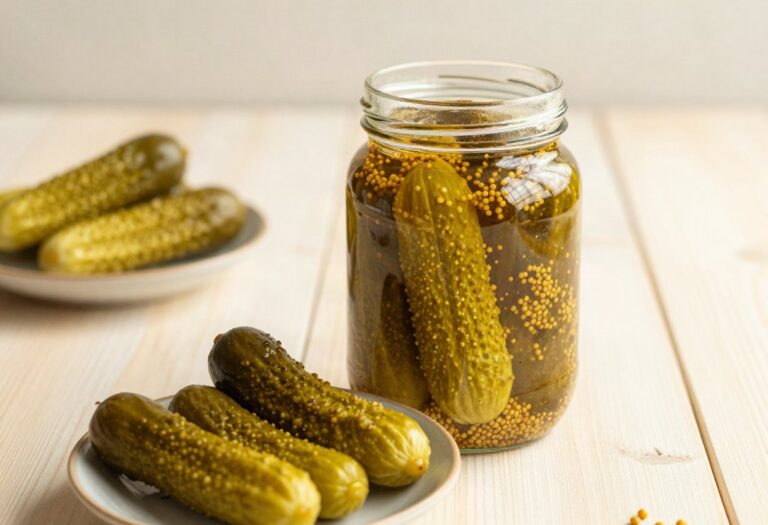
Sweet gherkins, sometimes called sweet pickles in the American style, are small cucumbers preserved in a mixture of vinegar, water and sugar, often flavoured with spices such as mustard, dill or cinnamon. Unlike their tangier cousins, they rely on a sweet, crunchy flavour that is popular in sandwiches, burgers and American-style cabbage slaws. Nutritionally, they provide about 36 kcal per 100 g, with a notable share of carbohydrate (5 g) from the added sugar, but very little protein and fat. A small treat of a condiment, they have a place in a balanced diet as long as they stay a side and not a staple.
Macronutrient breakdown
Nutrition table per 100 g
| Calories | 36 kcal |
| Kilojoules | 152 kJ |
| Protein | 1,3 g |
| Carbohydrate | 5 g |
| Fat | 0,4 g |
| Fibre | 1,5 g |
Tips
Sweet gherkins are enjoyed cold, straight from the jar, alongside cold meats, charcuterie and cheese, or to liven up a homemade burger. Finely chopped, they go into relish-style sauces, tartare or remoulade, and add a sweet and sour note to a potato salad.
What portion and what nutrition facts? With 91 calories and 5 g of carbohydrate per 100 g, most of their energy comes from the sugar added during the vinegar pickling. A realistic portion stays modest: two or three small gherkins are enough to flavour a dish. They contain a little fibre (1.5 g) but almost no protein or fat. Their glycaemic index is higher than that of the unsweetened versions, something to keep in mind if you are watching your weight.
- Storage: keep the jar in the fridge after opening and use a clean spoon to preserve the brine.
- Smart pairings: combine them with low-sugar foods to balance the meal, for example crunchy vegetables or lean protein.
- Tangy alternative: if you want to cut down on sugar, go for classic gherkins, which are far lower in calories.
Something to watch for weight control. The sweet flavour comes from added sugar, which bumps up the calories without adding much nutritional value. It is a good example of a small treat to keep in check, in the same vein as what we say about empty calories. Also check the salt content, which varies by brand, as some brines stay salty despite the sweet taste. To vary your condiments, explore the rest of the Condiments & Sauces family and favour lower-sugar options day to day.
What about active people? Sweet gherkins are not a useful source of carbohydrate for exercise: the amount actually eaten is far too small to refill glycogen stores. Their brine can, however, provide a little sodium, which is useful when you sweat heavily. For recovery and protein intake, stick to suitable sources and proper hydration strategies, drawing for example on the principles of a balanced diet. Sweet gherkins therefore keep their role as a treat condiment: a little crunch, plenty of flavour, but to be measured out sensibly.