Group · Nuts & seeds
Pistachios
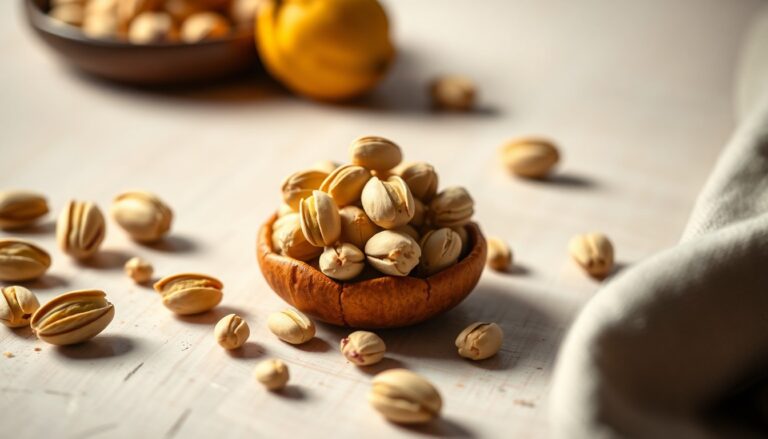
The pistachio is a nut originating in the Middle East, recognisable by its green kernel protected by a beige shell that splits open as it ripens. It is found plain, roasted, salted, or shelled for baking and cooking. Green and slightly sweet, it slips just as easily into ice cream, a loaf cake or a nibbles mix. Nutritionally, the pistachio provides plant protein (22.3 g per 100 g), mostly unsaturated fat, fibre and a fine range of minerals. Rich in energy, it has its place in a balanced diet, as long as you stick to small portions. It is a tasty option enjoyed by active people and healthy snackers alike.
Macronutrient breakdown
Nutrition table per 100 g
| Calories | 617 kcal |
| Kilojoules | 2550 kJ |
| Protein | 22,3 g |
| Carbohydrate | 15,9 g |
| Fat | 49,5 g |
| Fibre | 9,4 g |
Micronutrients per 100 g
All measured nutrients, ranked by share of the daily reference intake.
- Omega-6 LA13,2 g132 %
- Copper1,1 mg110 %
- Vitamin B61,41 mg101 %
- Phosphorus437 mg62 %
- Vitamin B10,67 mg61 %
- Potassium655 mg33 %
- Manganese0,65 mg33 %
- Magnesium105 mg28 %
- Vitamin B9dietary folate equivalents94,2 µg
See the other 10 nutrients
- Zinc2,3 mg23 %
- Vitamin K113,2 µg18 %
- Iron2,4 mg17 %
- Calcium98,5 mg12 %
- Vitamin B20,17 mg12 %
- Omega-3 ALA0,22 g11 %
- Vitamin B31,2 mg8 %
- Vitamin B50,43 mg7 %
- Iodine6,2 µg4 %
- Vitamin A13 µg2 %
Anses Ciqual 2025. Source: Anses, 2025, Ciqual food composition table
Tips
With around 617 kcal per 100 g, the pistachio is one of the most calorie-dense nuts. The good news is that a reasonable portion is enough to enjoy its benefits: count on a handful of about 25 to 30 g, or around thirty pistachios. Having to shell them naturally slows down how fast you eat them, an advantage for weight control.
Nutrition facts and key nutrients:
- Protein: 22.3 g per 100 g, useful for vegetarian diets and active people.
- Fat: 49.5 g, mostly unsaturated fatty acids.
- Carbohydrates: 15.9 g, with a moderate glycaemic index.
- Fibre: 9.32 g, helpful for fullness and digestion.
- Minerals and vitamins: potassium, magnesium, phosphorus, vitamin B6 and antioxidants.
How to eat pistachios? Choose plain or lightly salted to avoid too much sodium. They go well in a yoghurt, a porridge, a raw vegetable salad, a tabbouleh or a slow-cooked dish. Crushed, they add crunch to a dessert or a piece of fish. As a paste, they form the base of creams, ice creams and cakes. For storage, keep them in an airtight container, away from light and heat, to protect their fats from going rancid.
Tip for active people: thanks to its trio of protein, carbohydrate and healthy fat, the pistachio is a handy snack before or after exercise. Pair it with a piece of fresh fruit for an energy recharge, or add it to your protein snack ideas. Its potassium contributes to balance during training, as long as you stay well hydrated. When cutting, measure portions precisely, as the calorie density climbs quickly.
To vary your nut mix, alternate with other treasures from the Nuts & Seeds family, such as almonds or cashew nuts. If you compare the energy content of your snacks, the food calorie table will help you manage your portions. For weight loss, the pistachio is still a tasty asset: rely on small, regular amounts rather than uncontrolled nibbling in front of an open packet.