Group · Nuts & seeds
Cashew nuts
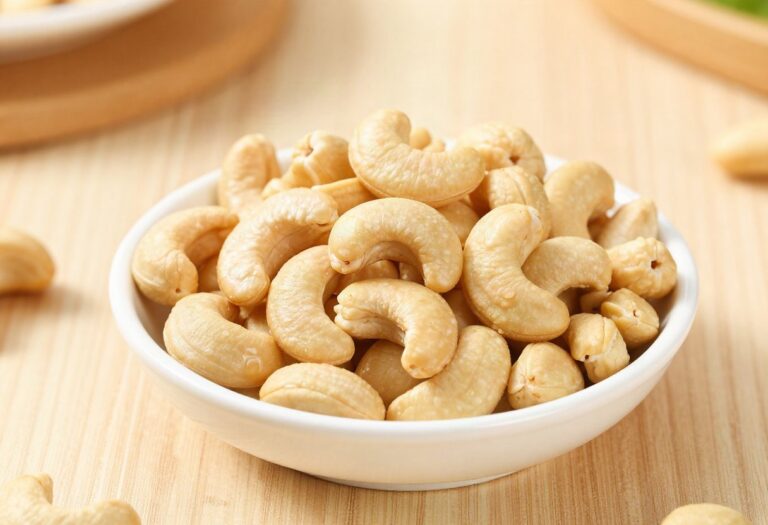
The cashew nut is the crescent-shaped seed that grows beneath the cashew apple, the fruit of the cashew tree. With its tender texture and mild, slightly buttery taste, it is eaten plain, roasted, salted, or made into a paste and a plant-based drink. Versatile, it slips as easily into savoury dishes (stir-fries, curries, creamy sauces) as into sweet recipes and snacks. In terms of nutrition facts, the cashew nut provides 632 kcal per 100 g, about 18 g of protein, 26.7 g of carbohydrate, 49.5 g of fat and 3.85 g of fibre. Rich in healthy fats and minerals, it has its place in a balanced diet, as long as you respect portions.
Macronutrient breakdown
Nutrition table per 100 g
| Calories | 632 kcal |
| Kilojoules | 2620 kJ |
| Protein | 18 g |
| Carbohydrate | 26,7 g |
| Fat | 49,5 g |
| Fibre | 3,9 g |
Micronutrients per 100 g
All measured nutrients, ranked by share of the daily reference intake.
- Copper2 mg200 %
- Omega-6 LA8,45 g85 %
- Phosphorus452 mg65 %
- Magnesium223 mg59 %
- Manganese1,1 mg55 %
- Zinc5,4 mg54 %
- Vitamin K134,7 µg46 %
- Vitamin B10,36 mg33 %
- Vitamin B9dietary folate equivalents51,4 µg
See the other 9 nutrients
- Iron3,9 mg28 %
- Potassium546 mg27 %
- Vitamin B60,38 mg27 %
- Vitamin B20,15 mg11 %
- Vitamin B50,49 mg8 %
- Vitamin B31,14 mg7 %
- Calcium40,3 mg5 %
- Omega-3 ALA0,1 g5 %
- Iodine6,2 µg4 %
Anses Ciqual 2025. Source: Anses, 2025, Ciqual food composition table
Tips
The cashew nut is high in calories but nourishing: a reasonable portion of 20 to 30 g (a small handful) is enough to enjoy its benefits without weighing down your energy balance for the day. Choose it plain or simply roasted rather than the heavily salted or coated versions, which have less nutritional value.
- How to eat cashew nuts? As a snack, in a muesli, on a salad, in a vegetable stir-fry or a curry. Blended, they make a smooth nut butter and a plant-based cream ideal for sauces without dairy.
- Pairings: with dried fruit, a plain yoghurt, or other nuts such as almonds and hazelnuts to vary your intake.
- Storage: in an airtight jar, away from light and heat, to stop the fats going rancid.
Nutritionally, the cashew nut stands out for its mostly unsaturated fat, its plant protein and its richness in minerals: magnesium, phosphorus, copper, zinc, iron and manganese. It also provides fibre and carbohydrate, giving it a moderate glycaemic index compared with shop-bought sugary snacks. It is a good alternative to sugary foods when you get a craving.
For active people, the cashew nut is a handy snack before or after exercise: it combines carbohydrate for energy, protein to support muscle recovery and minerals useful for cell hydration and muscle contraction. Slip a few into a homemade bar or a protein snack, or pair them with a piece of fruit for a quick recharge. When bulking up, they help to increase your calorie intake without a large volume to digest.
For weight control: their calorie density calls for moderation. Measure out your portion rather than dipping straight into the bag, and avoid salted or caramelised versions, which add sodium and sugar. Eaten in moderation, cashew nuts fit very well into a weight-loss plan or a balanced diet.
Want to explore other nuts and seeds? Discover the whole Nuts & Seeds family to vary your snacks and everyday recipes.