Group · Meat
Bison
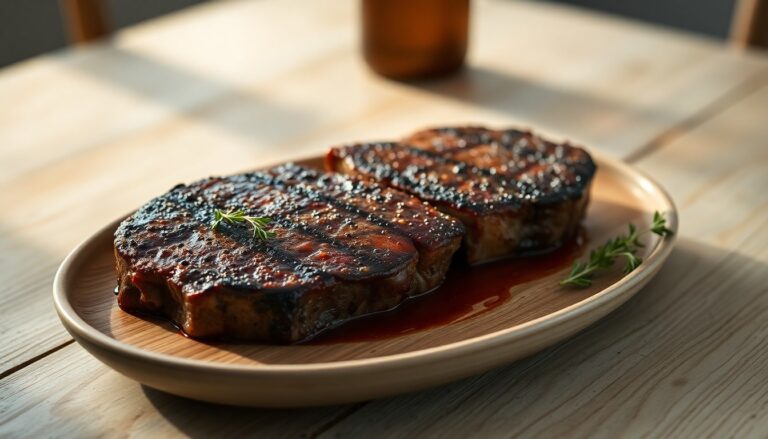
Bison is a red meat from a large wild or pasture-raised bovine, still uncommon in France but appreciated by fans of lean, tasty meats. Its deep red flesh has a slightly sweet, robust taste and is less fatty than that of ordinary beef. As for nutrition facts, bison stands out for an excellent protein content (28.44 g per 100 g), a low proportion of fat (2.42 g) and no carbohydrate, for only 143 calories per 100 g. Rich in iron and B vitamins, it fits perfectly into a balanced diet, whether you want to vary your protein sources or favour low-fat meats.
Macronutrient breakdown
Nutrition table per 100 g
| Calories | 143 kcal |
| Kilojoules | 598 kJ |
| Protein | 28,5 g |
| Fat | 2,5 g |
Micronutrients per 100 g
All measured nutrients, ranked by share of the daily reference intake.
- Vitamin B122,86 µg114 %
- Selenium35,5 µg65 %
- Zinc3,68 mg37 %
- Phosphorus209 mg30 %
- Vitamin B60,4 mg29 %
- Iron3,42 mg24 %
- Vitamin B33,71 mg23 %
- Vitamin B20,27 mg19 %
See the other 8 nutrients
- Potassium361 mg18 %
- Copper0,11 mg11 %
- Vitamin B10,1 mg9 %
- Magnesium26 mg7 %
- Vitamin E0,36 mg3 %
- Vitamin K11,3 µg2 %
- Calcium8 mg1 %
- Manganese0,01 mg0 %
USDA FoodData Central (SR Legacy)
Tips
Bison is cooked like a classic red meat, but needs a little vigilance: low in fat, it dries out quickly. Aim for rare to medium for a steak, sirloin or rib, searing over a high heat for a few minutes on each side. For cuts to be simmered, opt for slow, gentle cooking that tenderises the fibres: you can take inspiration from the techniques of gentle cooking to preserve nutrients and flavour.
- Recommended portion: 100 to 150 g per meal for an adult, a good protein intake without excess calories.
- Pairings: green vegetables, sweet potato, mushrooms or a red fruit sauce that brings out its slightly sweet taste.
- Storage: 2 to 3 days in the fridge, several months in the freezer. Thaw slowly in the fridge.
Nutritionally, bison is an excellent source of complete protein (nearly 28.44 g per 100 g), well-absorbed haem iron, zinc and vitamins B12 and B6. Its glycaemic index is zero since it contains no carbohydrate, and its calorie density remains moderate. These strengths make it an interesting alternative to minced beef or other fattier meats, while staying within the same meat family.
For active people, bison is an ally of choice. Its richness in lean protein supports muscle recovery and gain, while its low fat content suits cutting phases well. Eat it after exercise, served with a carbohydrate source such as rice or other starchy foods, to replenish glycogen. For a more practical protein snack, you can vary with other options presented in our protein snack ideas. The iron it provides also contributes to oxygen transport, useful for endurance efforts.
For weight control, bison ticks many boxes: few calories, zero sugar, plenty of filling protein. Beware of the preparation methods, though: breadcrumbs, frying and fatty sauces push up the calorie total. It is better to grill it, pan-fry it with little fat or roast it. As with any food, consistency and variety come first: include it as part of a well-planned balanced diet rather than relying on a single product. That way, bison naturally finds its place on an indulgent and sensible plate.