Group · Meat
Chicken (cooked)
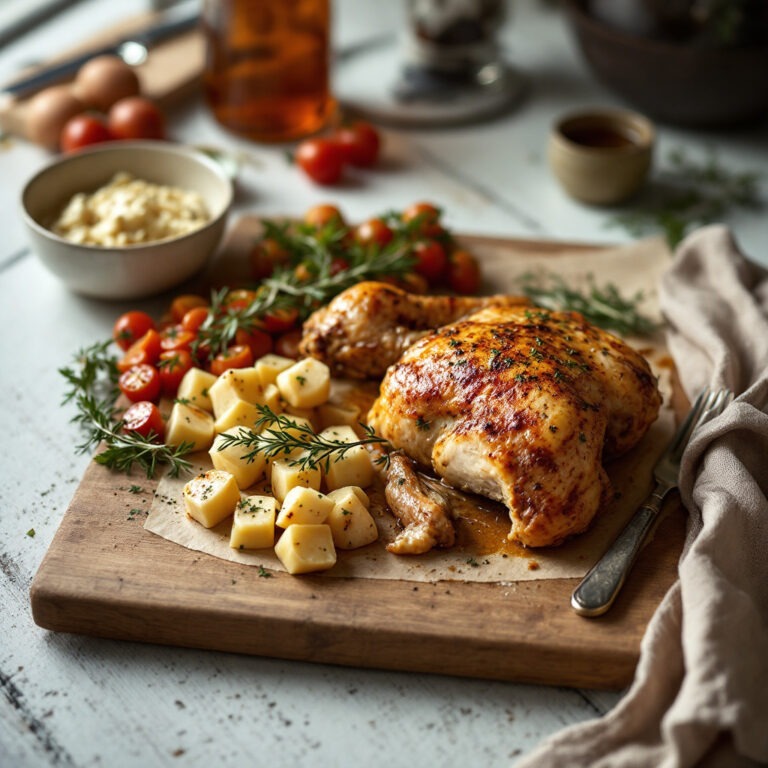
Chicken is the most-eaten meat in France. Its composition varies considerably depending on the cut, and above all on whether the skin is eaten or not. The values on this page correspond to the Ciqual line « roast meat and skin« .
In terms of nutrition facts, measured this way, it provides 204 kcal per 100 g, with 28.9 g of protein and 9.88 g of fat. It provides 8.55 mg of vitamin B3, 414 mg of potassium and 1.5 µg of vitamin D per 100 g. Without the skin, the fat drops sharply, as explained below.
Macronutrient breakdown
Nutrition table per 100 g
| Calories | 204 kcal |
| Kilojoules | 856 kJ |
| Protein | 28,9 g |
| Fat | 9,9 g |
Micronutrients per 100 g
All measured nutrients, ranked by share of the daily reference intake.
- Vitamin B38,55 mg53 %
- Vitamin D1,5 µg30 %
- Phosphorus181 mg26 %
- Vitamin B60,32 mg23 %
- Vitamin B120,52 µg21 %
- Potassium414 mg21 %
- Omega-6 LA1,93 g19 %
- Vitamin B50,97 mg16 %
See the other 18 nutrients
- DHA0,04 g14 %
- Zinc1,27 mg13 %
- Vitamin B20,16 mg11 %
- Magnesium39,6 mg11 %
- Selenium5,66 µg10 %
- Total omega-30,21 g8 %
- Omega-3 ALA0,16 g8 %
- Vitamin A48 µg6 %
- Vitamin B10,06 mg5 %
- Copper0,05 mg5 %
- Iron0,68 mg5 %
- EPA0,01 g4 %
- Iodine5 µg3 %
- Vitamin K12,4 µg3 %
- Vitamin B95 µg3 %
- Calcium19,4 mg2 %
- Vitamin E0,27 mg2 %
- Manganese0,01 mg1 %
Anses Ciqual 2025. Source: Anses, 2025, Ciqual food composition table
Tips
The skin is most of the fat. The 9.88 g of fat is almost entirely explained by it. A skinless chicken breast falls to around 2 g. Removing the skin after cooking, not before, as it protects the flesh from drying out, is the most worthwhile step with this meat.
Breast and thigh are not the same food. The breast is the lean cut; the thigh is fattier but also richer in iron and zinc, and much tastier. Alternating makes sense.
28.9 g of protein: that is what you come for. Chicken is one of the most accessible sources of protein, and its amino acid profile is complete. A 150 g portion comfortably covers the need for one meal.
It must be cooked right through. Unlike beef, poultry can carry salmonella: 75°C at the centre, clear juices, no pink flesh at the bone. And wash the chopping board afterwards, not the chicken: rinsing raw poultry spreads bacteria.
What goes with it decides the dish. Roasted with vegetables, it is a model meal; breaded and fried, or drowned in cream sauce, it is another. The meat itself is never the problem.
Sources
Average nutritional values per 100 g, provided for guidance only (may vary by brand, cut and preparation).