Group · Drinks
Cognac
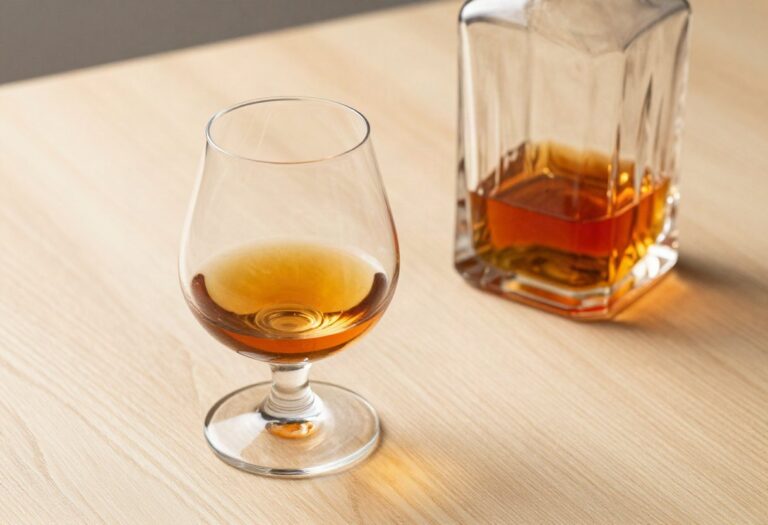
Cognac is a wine brandy aged in oak casks, at 40% alcohol by volume. In cooking, it is used for flambéing and deglazing; the values below correspond to the drink as it is.
On the nutrition side, it provides 222 kcal per 100 g, with no protein, no fat and just 0.76 g of carbohydrate. All of its energy comes from alcohol: 31.3 g per 100 g, or about 219 kcal of the 222.
Macronutrient breakdown
Nutrition table per 100 ml
| Calories | 222 kcal |
| Kilojoules | 922 kJ |
| Carbohydrate | 0,8 g |
Micronutrients per 100 ml
All measured nutrients, ranked by share of the daily reference intake.
- Copper0,16 mg16 %
- Iodine1,2 µg1 %
- Zinc0,01 mg0 %
- Potassium2 mg0 %
Anses Ciqual 2025. Source: Anses, 2025, Ciqual food composition table
Tips
Calories with no nutrients at all. This is the very definition of empty calories: 222 kcal per 100 g, and nothing else, no vitamins and no minerals beyond traces. A 3 cl glass provides around 60 kcal.
In cooking, the alcohol evaporates, but some of the calories remain. Flambéing or reducing for a long time removes a large part of the alcohol; a spoonful in a sauce weighs almost nothing in the total for a dish anyway. It is drinking it that counts, not using it in cooking.
Drinking guidelines. Santé publique France recommends not exceeding 10 standard drinks a week and 2 a day, with days off. A standard drink of spirits is 3 cl. Our alcohol calorie calculator works out the total for an evening.
Alcohol and weight. The body metabolises alcohol first, which puts fat use on hold. Regular after-dinner drinks are a classic cause of a plateau in a move to a balanced diet, especially as they come at the end of a meal, when intake is already complete.