Group · Pulses
Edamame (soya beans)
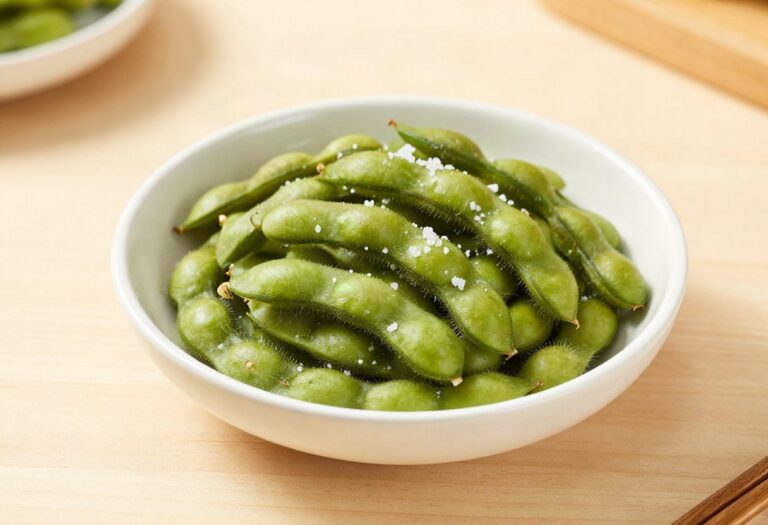
Edamame are young soya beans harvested before they mature, eaten cooked in their pods. Stars of Japanese restaurants, they win people over with their fresh taste and firm texture. Rich in complete plant protein and fibre, and low in calories, edamame are a top-quality healthy snack and ingredient.
Macronutrient breakdown
Nutrition table per 100 g
| Calories | 121 kcal |
| Kilojoules | 507 kJ |
| Protein | 12 g |
| Carbohydrate | 9 g |
| Fat | 5,2 g |
| Fibre | 5,2 g |
Micronutrients per 100 g
All measured nutrients, ranked by share of the daily reference intake.
- Manganese1,02 mg51 %
- Vitamin K126,7 µg36 %
- Copper0,35 mg35 %
- Phosphorus169 mg24 %
- Potassium436 mg22 %
- Vitamin B10,2 mg18 %
- Omega-3 ALA0,36 g18 %
- Omega-6 LA1,79 g18 %
See the other 13 nutrients
- Magnesium64 mg17 %
- Iron2,27 mg16 %
- Zinc1,37 mg14 %
- Vitamin B20,16 mg11 %
- Calcium63 mg8 %
- Vitamin C6,1 mg8 %
- Vitamin B60,1 mg7 %
- Vitamin B50,4 mg7 %
- Vitamin B30,92 mg6 %
- Vitamin E0,68 mg6 %
- Vitamin A15 µg2 %
- Selenium0,8 µg1 %
- EPA0 g1 %
USDA FoodData Central (SR Legacy)
Tips
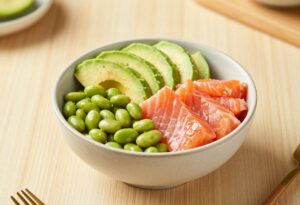
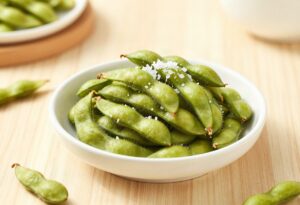
Edamame cook in a few minutes in boiling salted water or in a steamer, then are eaten plain, sprinkled with salt, squeezing the pod to release the beans. Shelled, they enrich salads, bowls and stir-fried dishes such as the poke bowl or the teriyaki bowl.
- Nutrition values: one of the few plant sources of complete protein, rich in fibre, folate and iron.
- For athletes: an excellent, filling protein snack, ideal as a healthy bite.
Like other pulses, edamame suit a vegetarian diet perfectly. They are sold frozen (with or without pods), ready to cook. Pair them with tofu for a plant-based meal rich in protein.
Sources
Average nutrition values per 100 g, given as a guide only (they may vary by brand and preparation).