Group · Drinks
Espresso
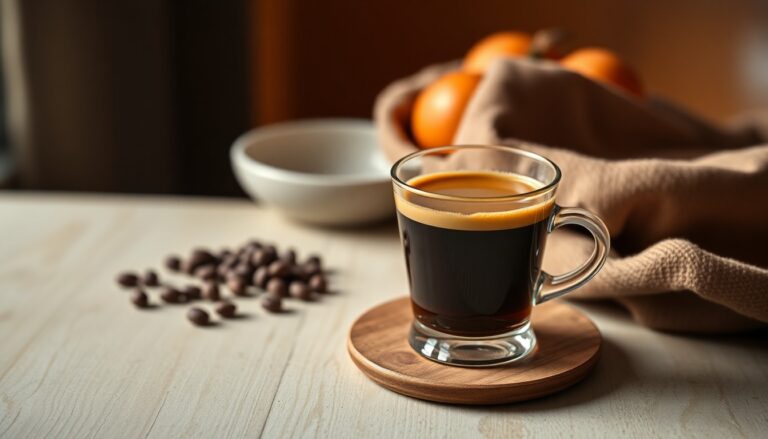
Espresso is a concentrated drink made by quickly passing hot pressurised water through finely ground roasted coffee. Short, intense and topped with a golden crema, it is the base of many preparations such as the ristretto, the lungo, the macchiato or the cappuccino. Nutritionally, espresso is remarkably light: with only 6.54 kcal per 100 g, and no carbohydrate or added sugar, it fits easily into a balanced diet and a weight-loss plan, as long as you drink it plain. Its richness in caffeine and aromatic compounds makes it a stimulating drink enjoyed every day, to be savoured in moderation to appreciate its flavour.
Macronutrient breakdown
Nutrition table per 100 ml
| Calories | 7 kcal |
| Kilojoules | 28 kJ |
| Protein | 0,3 g |
| Carbohydrate | 1,2 g |
| Fat | 0,2 g |
Micronutrients per 100 ml
All measured nutrients, ranked by share of the daily reference intake.
- Vitamin B60,74 mg53 %
- Vitamin B31,73 mg11 %
- Potassium150 mg8 %
- Manganese0,05 mg3 %
- Magnesium7,9 mg2 %
- Phosphorus6,9 mg1 %
- Vitamin B50,03 mg0 %
- Calcium3,5 mg0 %
Voir le dernier nutriment
- Vitamin A0,21 µg0 %
Anses Ciqual 2025. Source: Anses, 2025, Ciqual food composition table
Tips
Espresso is ideally enjoyed plain, at the end of a meal or mid-morning. Its nutrition facts are almost nil as long as it stays unsweetened: it is the addition of sugar, syrups or whole milk that pushes up the calories. To keep it light, limit or cut out the sugar and appreciate the natural flavours of the bean.
- Portion and frequency: a cup of 25 to 35 ml at a time, and ideally no more than 3 to 4 espressos a day to stay sensible on caffeine.
- Timing: avoid it late in the day so as not to disrupt falling asleep. You will find useful pointers in this article on foods that support restful sleep.
- Variations: ristretto (shorter and more concentrated), lungo (longer), or the base of a cappuccino, which is higher in calories because of the milk.
As for aromas, it all depends on the origin of the bean (arabica milder and fruitier, robusta stronger and richer in caffeine), the roast and the fineness of the grind. A good espresso reveals notes of cocoa, hazelnut or dried fruit, topped with a creamy crema, the sign of a successful extraction.
For active people, espresso is a useful ally. Caffeine is known for its stimulating effect: taken 30 to 45 minutes before exercise, it can support alertness and the feeling of energy, without adding calories. Be careful not to replace your hydration with coffee: remember to drink water around your sessions. To structure your nutrition around training, see this guide to fitness nutrition and, after exercise, rely on suitable intakes such as a post-training shaker.
For weight control, plain espresso is an excellent choice: its energy density is negligible. The real trap is the sugary drinks and pastries that often go with it. If you compare hot drinks, espresso is far lighter than hot chocolate powder. Explore all the drinks in the guide to make informed choices according to your goals.
Storage: keep your beans or ground coffee in an airtight container, away from light and moisture, and grind the coffee just before extraction to keep all its aroma.