Group · Condiments & sauces
Gelatine
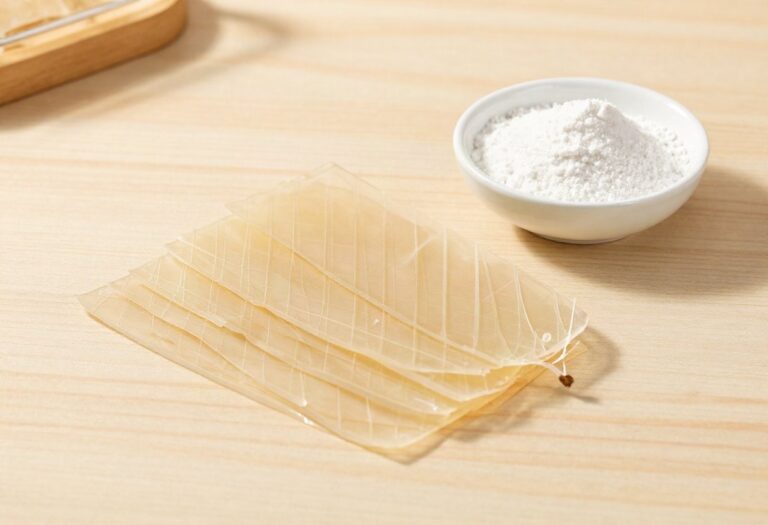
Gelatine is a protein extracted from animal collagen, sold in leaves or as a powder. It is used only as a texturiser: it sets bavarois, panna cotta and mousses.
On the nutrition side, it provides 348 kcal per 100 g dry, with 86.9 g of protein and no carbohydrate or fat. These figures are impressive, but a leaf weighs 2 g: its real contribution is negligible.
Macronutrient breakdown
Nutrition table per 100 g
| Calories | 348 kcal |
| Kilojoules | 1480 kJ |
| Protein | 86,9 g |
| Fat | 0,1 g |
Micronutrients per 100 g
All measured nutrients, ranked by share of the daily reference intake.
- Calcium280 mg35 %
- Iron1,2 mg9 %
- Magnesium22 mg6 %
- Vitamin B20,07 mg5 %
- Phosphorus32 mg5 %
- Iodine5 µg3 %
- Potassium14 mg1 %
- Vitamin B60,01 mg0 %
See the other 2 nutrients
- Omega-3 ALA0 g0 %
- Omega-6 LA0 g0 %
Anses Ciqual 2025. Source: Anses, 2025, Ciqual food composition table
Tips
Misleading figures. 86.9 g of protein per 100 g make it the highest-protein food in the database, and yet it has no nutritional value to speak of. Three leaves, the amount for a dessert serving six, weigh 6 g and provide 21 kcal spread across the dish.
Its protein is incomplete. Collagen is very low in tryptophan, an essential amino acid: gelatine cannot serve as a protein source, contrary to what you sometimes read.
Plant-based alternative. Agar-agar replaces gelatine, with a much greater gelling power: about 2 g for 500 ml of liquid.