Group · Fats & oils
Hemp oil
Hemp oil is cold-pressed from the seeds of Cannabis sativa varieties that contain no THC. It has no psychoactive effect: the seeds contain none, unlike the flowers.
In terms of nutrition facts: 900 kcal per 100 g and 100 g of fat, including 74.4 g of polyunsaturated, a record among oils, 15.1 g of monounsaturated and only 10.5 g of saturated fat.
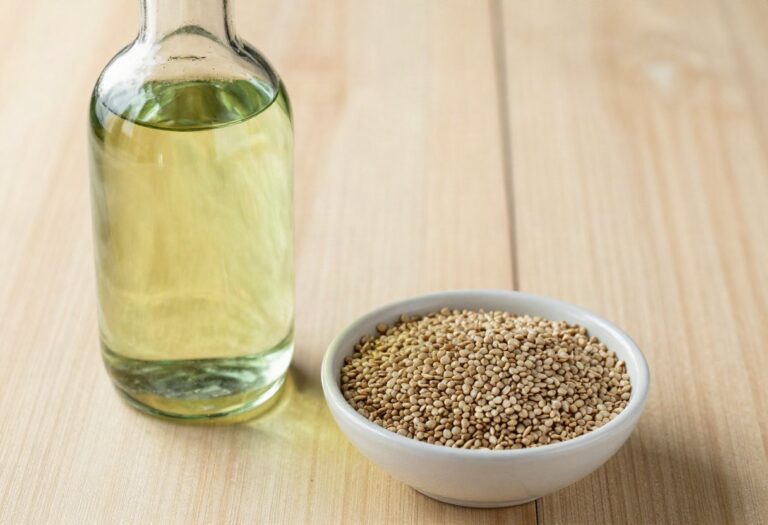
Macronutrient breakdown
Nutrition table per 100 g
| Calories | 900 kcal |
| Kilojoules | 3700 kJ |
| Fat | 100 g |
Micronutrients per 100 g
All measured nutrients, ranked by share of the daily reference intake.
- Omega-3 ALA16,6 g830 %
- Omega-6 LA51,9 g519 %
Anses Ciqual 2025. Source: Anses, 2025, Ciqual food composition table
Tips
74.4 g of polyunsaturated: that is both its appeal and its weakness. A level like this makes it an excellent source of essential fatty acids, and an oil that oxidises very quickly. The two go together.
Never heat it. Polyunsaturated fatty acids break down with heat and form unwanted compounds. Use it cold, as a dressing only.
In the fridge, and in a small bottle. Once opened, it goes rancid within a few weeks. A hemp oil that smells of cardboard or fish is oxidised and should be thrown away.
Its omega-6 to omega-3 ratio is favourable. That is what sets it apart from sunflower oils or corn oil, which are heavily skewed towards omega-6. A spoonful a day as a dressing makes sense.
No THC, no effect. Edible hemp oils are subject to strict regulatory limits. They have nothing to do with CBD oils, which are sold as supplements.