Group · Pulses
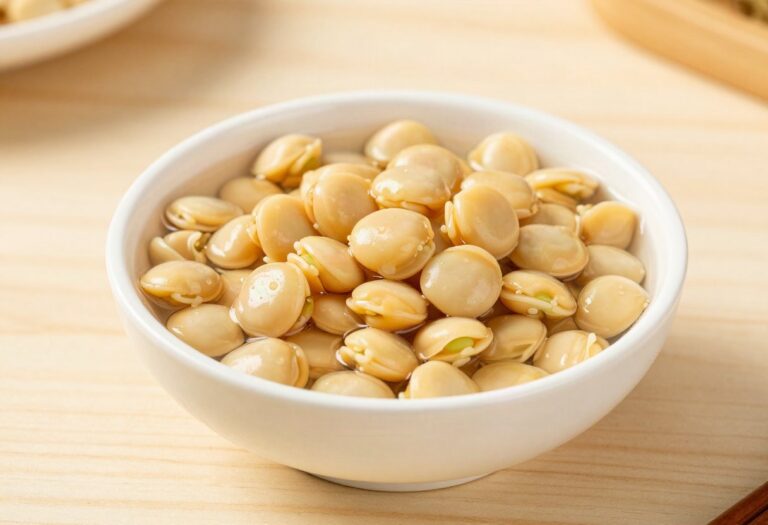
Lupin beans
Lupin is a Mediterranean pulse whose seed has been eaten since antiquity, as a snack with drinks in Portugal and Italy. Its flour is also used as a protein ingredient in industry, often without people knowing.
In terms of nutrition facts, dry seed: 356 kcal per 100 g with 36.2 g of protein, the record among pulses, 18.9 g of fibre and only 21.5 g of carbohydrate. It provides 1,010 mg of potassium, 440 mg of phosphorus, 198 mg of magnesium, 176 mg of calcium and 4.75 mg of zinc per 100 g.
Macronutrient breakdown
Nutrition table per 100 g
| Calories | 356 kcal |
| Kilojoules | 1490 kJ |
| Protein | 36,2 g |
| Carbohydrate | 21,5 g |
| Fat | 9,8 g |
| Fibre | 18,9 g |
Micronutrients per 100 g
All measured nutrients, ranked by share of the daily reference intake.
- Manganese2,38 mg119 %
- Copper1,02 mg102 %
- Phosphorus440 mg63 %
- Vitamin B10,64 mg58 %
- Magnesium198 mg53 %
- Potassium1010 mg51 %
- Zinc4,75 mg48 %
- Iron4,36 mg31 %
- Vitamin B9dietary folate equivalents355 µg
See the other 6 nutrients
- Vitamin B60,36 mg26 %
- Calcium176 mg22 %
- Vitamin B20,22 mg16 %
- Vitamin B32,19 mg14 %
- Vitamin B50,75 mg13 %
- Vitamin C4,8 mg6 %
Anses Ciqual 2025. Source: Anses, 2025, Ciqual food composition table
Tips
36.2 g of protein and only 21.5 g of carbohydrate. This is a unique profile among pulses: a chickpea is the opposite. It makes lupin one of the few plant sources of protein with a low carbohydrate load.
18.9 g of fibre: nothing beats it. A 50 g portion provides 9.5 g of fibre, a third of the recommended daily intake.
Bitter seeds must be debittered and soaked. Traditional varieties contain toxic alkaloids, which are removed by several days of soaking in changed water. Seeds sold in jars have already been treated; never harvest ornamental lupin.
A mandatory-labelling allergen. Lupin is one of the fourteen regulated allergens, and cross-allergies with peanut are common. It hides in flours, pasta and bakery products without being expected.
It complements a grain well. Like all pulses, it provides the lysine that wheat or rice lack: the combination gives a complete protein intake.