Group · Sweet foods
Marshmallows
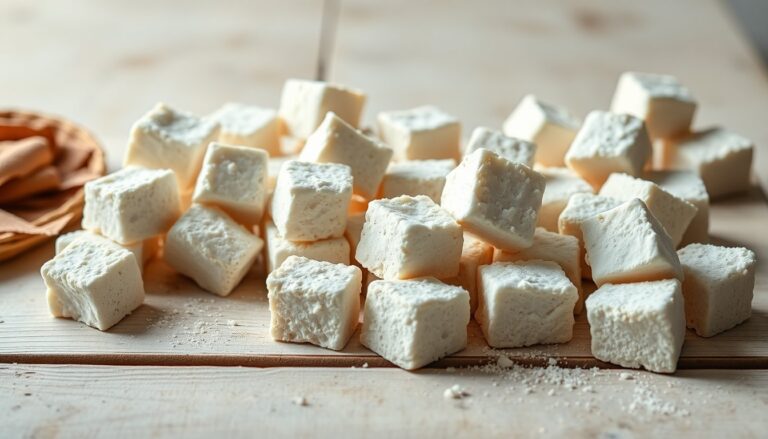
The marshmallow is a light, soft confection made from sugar, glucose syrup, water and gelatine (or egg white), whipped into a foam and then cut. It comes in many forms: little pink or white cubes, long twisted sticks, round marshmallows for toasting, or even chocolate-coated ones. Very low in fat but rich in sugars, it belongs to the sugary foods family. With around 336 kcal per 100 g, it is an essentially carbohydrate-based sweet whose nutrition facts rest almost entirely on sugar. It is best enjoyed in small amounts, as an occasional treat within a balanced diet.
Macronutrient breakdown
Nutrition table per 100 g
| Calories | 336 kcal |
| Kilojoules | 1430 kJ |
| Protein | 3,4 g |
| Carbohydrate | 80,7 g |
| Fat | 0,1 g |
| Fibre | 0,1 g |
Micronutrients per 100 g
All measured nutrients, ranked by share of the daily reference intake.
- Copper0,1 mg10 %
- Iron0,23 mg2 %
- Phosphorus8 mg1 %
- Magnesium2 mg1 %
- Vitamin B91 µg1 %
- Vitamin B30,08 mg0 %
- Zinc0,04 mg0 %
- Manganese0,01 mg0 %
See the other 8 nutrients
- Total omega-30,01 g0 %
- Calcium3 mg0 %
- Potassium5 mg0 %
- Vitamin B60 mg0 %
- Omega-6 LA0,02 g0 %
- Vitamin B10 mg0 %
- Vitamin B50,01 mg0 %
- Vitamin B20 mg0 %
Anses Ciqual 2025. Source: Anses, 2025, Ciqual food composition table
Tips
The marshmallow appeals with its melting texture and its playful side. In terms of nutrition facts, it provides around 318 calories, 80.7 g of carbohydrate, barely 3.31 g of protein and 0.08 g of fat per 100 g. In other words, it is almost pure sugar, with a high glycaemic index and very little fibre. Its energy density is, however, lower than that of fatty sweets such as chocolate, because it contains almost no fat.
To enjoy its pleasure benefits without overdoing it, it is best to stick to small portions: two or three marshmallows are enough for a treat. You can eat them plain at teatime, toast them over a campfire (the famous s’mores), dip them in hot chocolate or drop them into a hot drink. In baking, they are used to make crispy rice cereal squares, fruit skewers or indulgent decorations.
- Storage: keep them in an airtight bag, away from damp and heat, otherwise they harden or stick together.
- Pairings: they go well with fresh fruit, a touch of cocoa or a little maple syrup to vary your sweet treats.
- Timing: better as an occasional snack than as a daily nibble.
For active people, the marshmallow provides fast, easily absorbed carbohydrate, useful before an intense effort or when you hit the wall during endurance exercise and want an immediate, digestible source of energy. However, it provides neither protein nor micronutrients useful for recovery. To replenish your stores after training, go instead for more complete options such as these protein snack ideas or a proper balanced meal.
For weight control, the marshmallow remains a sweet to keep in check: its richness in sugars puts it among the empty calorie foods, which are not very filling and encourage snacking. Eaten occasionally and in small amounts, it has its place in a flexible approach to eating. You can compare its figures with other sweets such as nougat or explore the whole family of sugary foods to make informed choices based on your goals.