Group · Meat
Pork liver
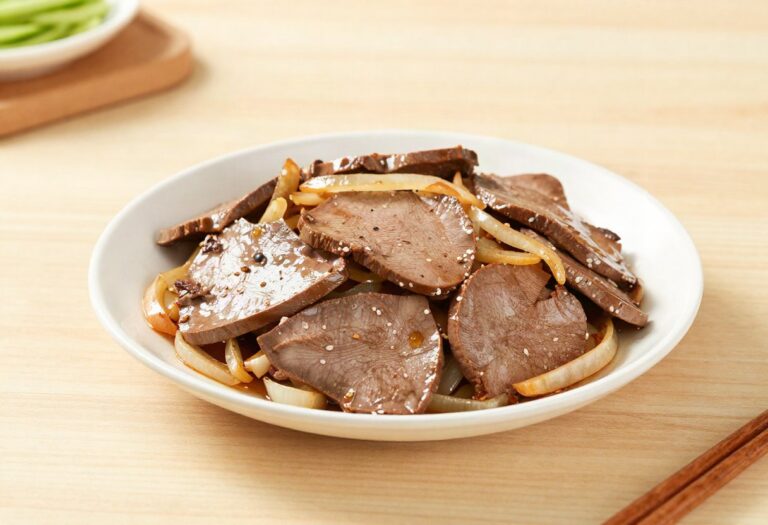
Pork liver is one of the offal meats, cuts that were long popular in traditional cooking and are now being rediscovered for their nutritional richness. With its dense texture and strong flavour, this offal is pan-fried, made into pâté or terrine, or used as the base for stuffings and homemade rillettes. At around 159 kcal per 100 g, it has an interesting profile: 26 g of protein, only 4.4 g of fat and 3.76 g of carbohydrate, making it a lean meat packed with nutrients. Naturally rich in iron, B vitamins and vitamin A, pork liver has a place in a varied diet, provided it is eaten in moderation and well prepared.
Macronutrient breakdown
Nutrition table per 100 g
| Calories | 159 kcal |
| Kilojoules | 669 kJ |
| Protein | 26 g |
| Carbohydrate | 3,8 g |
| Fat | 4,4 g |
Micronutrients per 100 g
All measured nutrients, ranked by share of the daily reference intake.
- Vitamin B1218,7 µg748 %
- Vitamin B22,2 mg157 %
- Iron17,9 mg128 %
- Vitamin B9163 µg82 %
- Vitamin B54,77 mg80 %
- Zinc6,72 mg67 %
- Copper0,63 mg63 %
- Vitamin B38,44 mg53 %
See the other 10 nutrients
- Vitamin B60,57 mg41 %
- Phosphorus241 mg34 %
- Vitamin C23,6 mg30 %
- Vitamin B10,26 mg24 %
- Manganese0,3 mg15 %
- DHA0,03 g12 %
- Potassium150 mg8 %
- Magnesium14 mg4 %
- Calcium10 mg1 %
- Total omega-30,03 g1 %
Anses Ciqual 2025. Source: Anses, 2025, Ciqual food composition table
Tips
Pork liver lends itself to many preparations, but a few good habits help you get the best from it, in both flavour and nutrition.
- Recommended portion: a serving of 100 to 120 g is plenty, once or twice a month. Its density in vitamin A calls for moderation, especially for pregnant women.
- Cooking: pan-fried quickly over a high heat, it stays tender, but it becomes dry and bitter if overcooked. Cooking it pink in the centre preserves its tenderness. To limit added fats, favour gentle cooking that protects nutrients.
- Pairings: a splash of vinegar, soft onions, herbs or a hint of spice balance its strong taste. Serve it with green vegetables or starchy foods for a complete meal.
- Storage: highly perishable, it should be eaten within 24 to 48 hours of purchase, or frozen quickly.
In terms of nutrition facts, pork liver stands out for its concentration of well-absorbed haem iron, zinc, copper and B vitamins (notably B12, B9 and B2). Its 26 g of protein per 100 g make it an excellent source of amino acids, with moderate fat and a reasonable calorie content. Its glycaemic index is very low, as the carbohydrate it contains is negligible.
For athletes, this offal is a useful source of protein during recovery or a muscle-building phase, especially as its iron contributes to the oxygen transport that supports endurance. Include it in a structured meal rather than as a quick snack: for snacks around training, options such as a protein snack are more practical. You can also discover other sources of protein in the meat family, such as beef liver or calf liver, which have similar profiles.
For weight control, pork liver remains an ally: its protein density promotes fullness for a contained calorie load. Do watch out for fatty preparations (butter, rich sauces, breadcrumb coatings) that push the total up. Prepared simply, it fits easily into a weight-loss plan or a balanced diet. The main point to watch remains its high vitamin A content: occasional consumption is the key to enjoying its benefits without overdoing it.