Group · Vegetables
Romanesco cauliflower
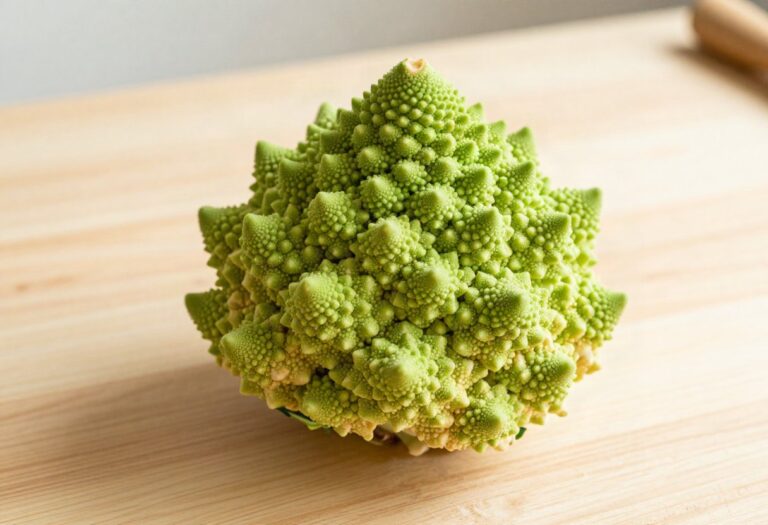
Romanesco is a cousin of cauliflower and broccoli, recognisable by its pale green points arranged in a spiral. This fractal structure is a botanical curiosity as much as a selling point.
In terms of nutrition facts, raw it provides 29.7 kcal per 100 g, with 2.95 g of protein and 3.2 g of fibre. It provides 88.1 mg of vitamin C, more than the reference intake, 300 mg of potassium, 33 mg of calcium and 20.2 µg of vitamin K1 per 100 g.
Macronutrient breakdown
Nutrition table per 100 g
| Calories | 30 kcal |
| Kilojoules | 124 kJ |
| Protein | 3 g |
| Carbohydrate | 2,2 g |
| Fat | 0,3 g |
| Fibre | 3,2 g |
Micronutrients per 100 g
All measured nutrients, ranked by share of the daily reference intake.
- Vitamin C88,1 mg110 %
- Vitamin K120,2 µg27 %
- Vitamin B60,22 mg16 %
- Potassium300 mg15 %
- Manganese0,25 mg13 %
- Vitamin B50,7 mg12 %
- Phosphorus62 mg9 %
- Vitamin B10,08 mg7 %
- Vitamin B9dietary folate equivalents57 µg
See the other 9 nutrients
- Vitamin B20,1 mg7 %
- Zinc0,64 mg6 %
- Magnesium20 mg5 %
- Iron0,73 mg5 %
- Vitamin B30,73 mg5 %
- Calcium33 mg4 %
- Copper0,04 mg4 %
- Vitamin A7,75 µg1 %
- Vitamin E0,04 mg0 %
Anses Ciqual 2025. Source: Anses, 2025, Ciqual food composition table
Tips
88.1 mg of vitamin C: one portion covers your daily need. Along with citrus fruits and peppers, cruciferous vegetables are the best sources of vitamin C in everyday food.
Short cooking, without fail. Vitamin C is water-soluble and sensitive to heat: ten minutes in boiling water destroys a large part of it. Five minutes steamed, or roasted in the oven, preserve far more.
It is easier to digest than cauliflower. This is a common observation, backed up by a lower content of sulphur compounds. A good choice for anyone who tolerates cabbage poorly.
Roasted, it is completely different. Twenty minutes at 200 °C with a drizzle of olive oil: the points caramelise and the cabbage taste gives way to a nutty note.
3.2 g of fibre for 30 kcal. An excellent ratio, on a par with white cabbage: this is what makes cruciferous vegetables so filling.