Group · Starchy foods
Rösti
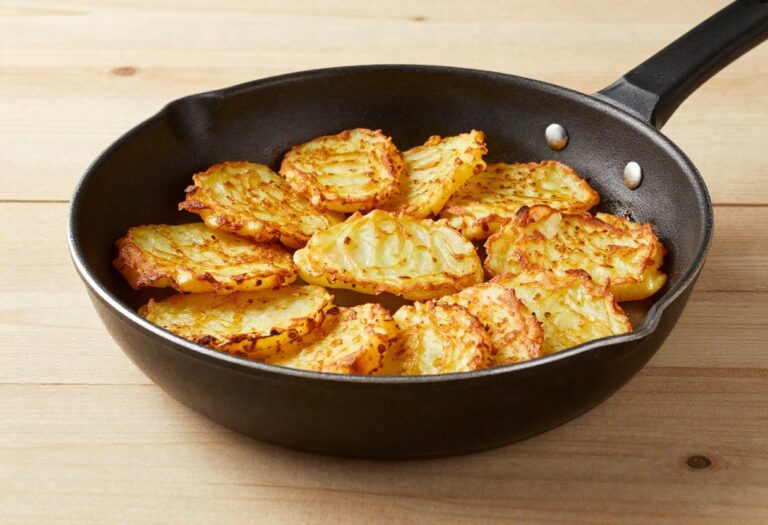
The rösti is a Swiss cake of grated potato, pressed and browned in a frying pan. It comes from Bern, where it was a farmer’s breakfast before becoming a national side dish.
In terms of nutrition facts: 182 kcal per 100 g, with 22.5 g of carbohydrate, 8.3 g of fat and 3.3 g of fibre. It provides 460 mg of potassium, 70 mg of phosphorus and 22 mg of magnesium per 100 g, and contains 0.82 g of salt.
Macronutrient breakdown
Nutrition table per 100 g
| Calories | 182 kcal |
| Kilojoules | 762 kJ |
| Protein | 2,4 g |
| Carbohydrate | 22,5 g |
| Fat | 8,3 g |
| Fibre | 3,3 g |
Micronutrients per 100 g
All measured nutrients, ranked by share of the daily reference intake.
- Omega-6 LA3,58 g36 %
- Vitamin E2,92 mg24 %
- Potassium460 mg23 %
- Copper0,13 mg13 %
- Phosphorus70 mg10 %
- Vitamin B60,12 mg9 %
- Vitamin B50,44 mg7 %
- Omega-3 ALA0,12 g6 %
See the other 10 nutrients
- Magnesium22 mg6 %
- Vitamin B10,06 mg6 %
- Manganese0,11 mg6 %
- Vitamin B99,13 µg5 %
- Vitamin B30,68 mg4 %
- Iron0,55 mg4 %
- Zinc0,35 mg4 %
- Vitamin K12,31 µg3 %
- Calcium18 mg2 %
- Vitamin A10,7 µg1 %
Anses Ciqual 2025. Source: Anses, 2025, Ciqual food composition table
Tips
8.3 g of fat: that is the cooking fat. Grated potato contains none. A homemade rösti in a non-stick pan, with a teaspoon of oil instead of butter, comes out noticeably lower.
Rinse the grated potato, then squeeze it dry. This is the step that makes the cake hold together: the surface starch binds it, while leftover water stops it browning.
3.3 g of fibre and 460 mg of potassium. Grated potato with its skin keeps most of what it provides, which is the advantage over mash.
A 120 g cake is worth 218 kcal. It is a filling side dish: serve it with a salad rather than with a second starchy food.
Homemade, it needs just two ingredients. Potato and a little fat. Frozen versions often add salt, starch and flavourings: the ingredients list settles it.