Group · Fish
Sole
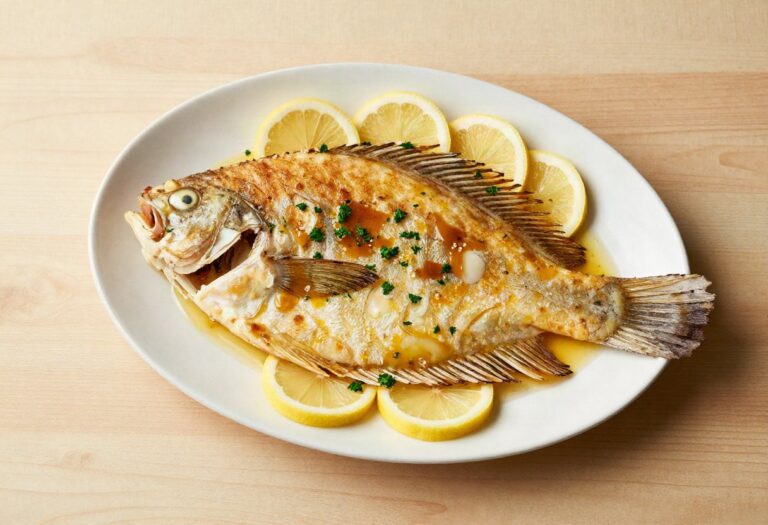
Sole is a flatfish much appreciated for its fine, white, delicate flesh. You can recognise it by its oval shape and the brownish skin on top. Found at the fishmonger’s as whole soles, fillets or portions, it comes in several varieties (Dover sole, lemon sole, similar to dab). In terms of nutritional values, it is a lean fish par excellence: only 94.6 kcal per 100 g, over 20.3 g of protein and barely 1.48 g of fat, with no carbohydrates at all. Rich in high-quality protein and low in fat, sole fits naturally into a balanced diet, whether you are watching your waistline or looking for light, tasty meals.
Macronutrient breakdown
Nutrition table per 100 g
| Calories | 95 kcal |
| Kilojoules | 400 kJ |
| Protein | 20,3 g |
| Fat | 1,5 g |
Micronutrients per 100 g
All measured nutrients, ranked by share of the daily reference intake.
- Selenium103 µg187 %
- DHA0,16 g64 %
- Vitamin B121,12 µg45 %
- Phosphorus128 mg18 %
- EPA0,04 g17 %
- Vitamin B60,22 mg16 %
- Vitamin B32,39 mg15 %
- Vitamin B20,2 mg14 %
See the other 10 nutrients
- Calcium96 mg12 %
- Iodine14,5 µg10 %
- Potassium175 mg9 %
- Total omega-30,2 g8 %
- Magnesium23,1 mg6 %
- Vitamin B10,06 mg6 %
- Iron0,72 mg5 %
- Zinc0,39 mg4 %
- Copper0,03 mg3 %
- Manganese0,01 mg0 %
Anses Ciqual 2025. Source: Anses, 2025, Ciqual food composition table
Tips
Sole is one of the most versatile fish in the kitchen. Its tender flesh suits gentle cooking that preserves its qualities: steamed, poached in court-bouillon, baked in a parcel or pan-fried meunière style with a squeeze of lemon juice. To limit calories, choose gentle cooking methods that preserve nutrients and flavour rather than frying, which is higher in fat.
A typical portion is around 120 to 150 g of fillet per person. Sole is ideally served with green vegetables (spinach, beans, courgettes) and a measured portion of starchy foods for a complete, balanced meal. It also goes very well with fresh herbs such as dill, parsley or tarragon.
- Protein: with over 20 g per 100 g, sole provides complete protein that is easy to digest.
- Calories: at 94.6 kcal per 100 g, it is among the lightest fish.
- Fat: very low (1.48 g), which is a plus for weight-loss meals.
- Minerals and vitamins: it notably provides phosphorus, selenium and B vitamins.
Tip for active people: sole is an excellent source of lean protein for muscle recovery after exercise, without excess fat. Paired with a source of complex carbohydrates (brown rice, sweet potato), it makes an ideal dinner when cutting or lean bulking. To go further, discover our advice on fitness nutrition, a useful complement to a diet rich in fish.
If you want to ring the changes while staying light, explore other lean fish such as cod or the delicate turbot, also low in fat. You can also browse the whole fish family to put together varied menus week after week.
Point to watch: plain sole is low in calories, but beware of preparations that change the picture. Breaded and fried sole, or sole coated in a generous butter sauce, quickly becomes much more calorie-dense. To keep all its benefits when you are watching your weight, rely on light seasonings: lemon, herbs, a touch of olive oil. For storage, eat fresh sole within 24 to 48 hours, or freeze it quickly. Ideal at lunch or dinner, it fits easily into a balanced diet thanks to its excellent protein-to-calorie ratio.